Description
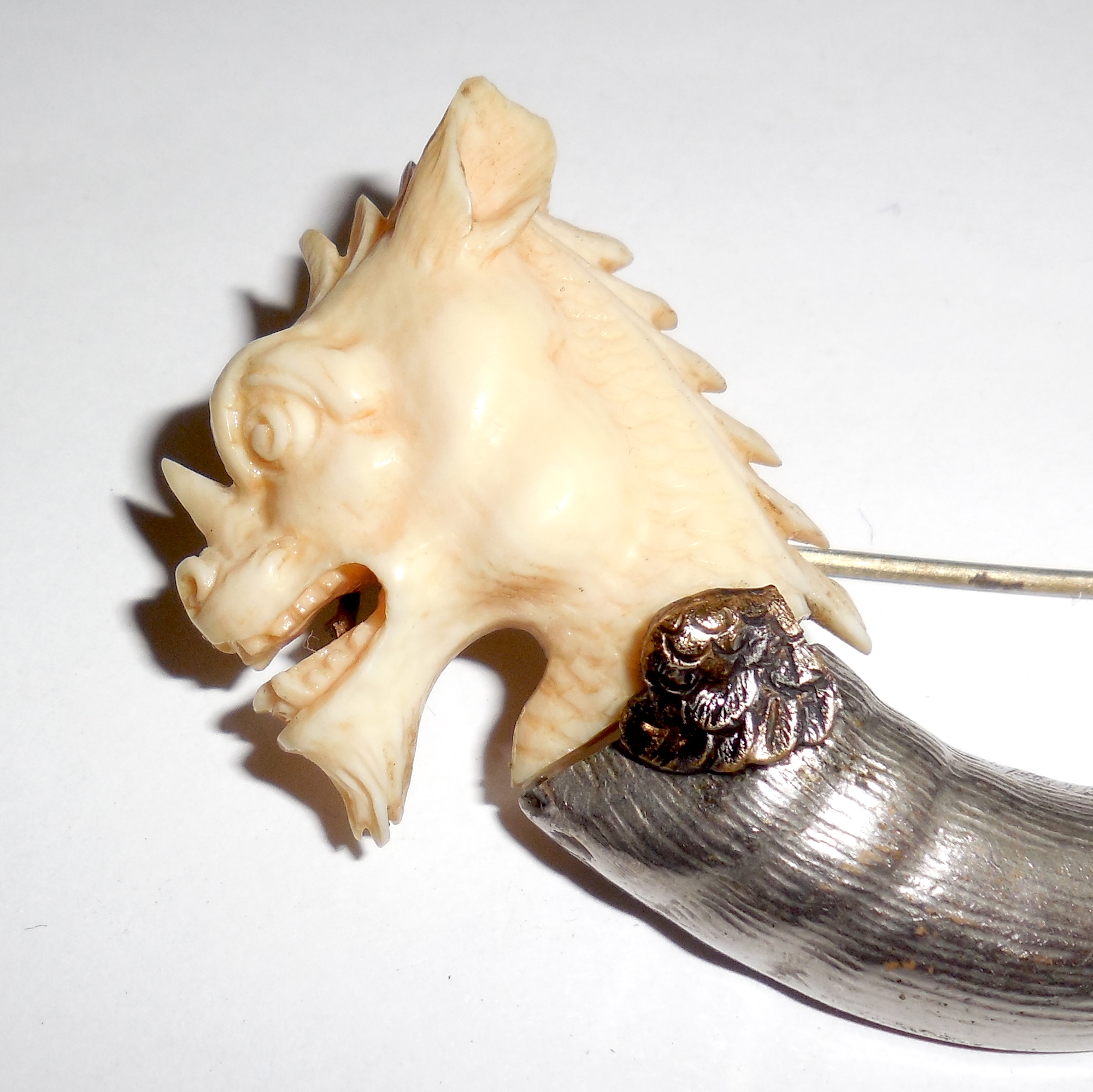
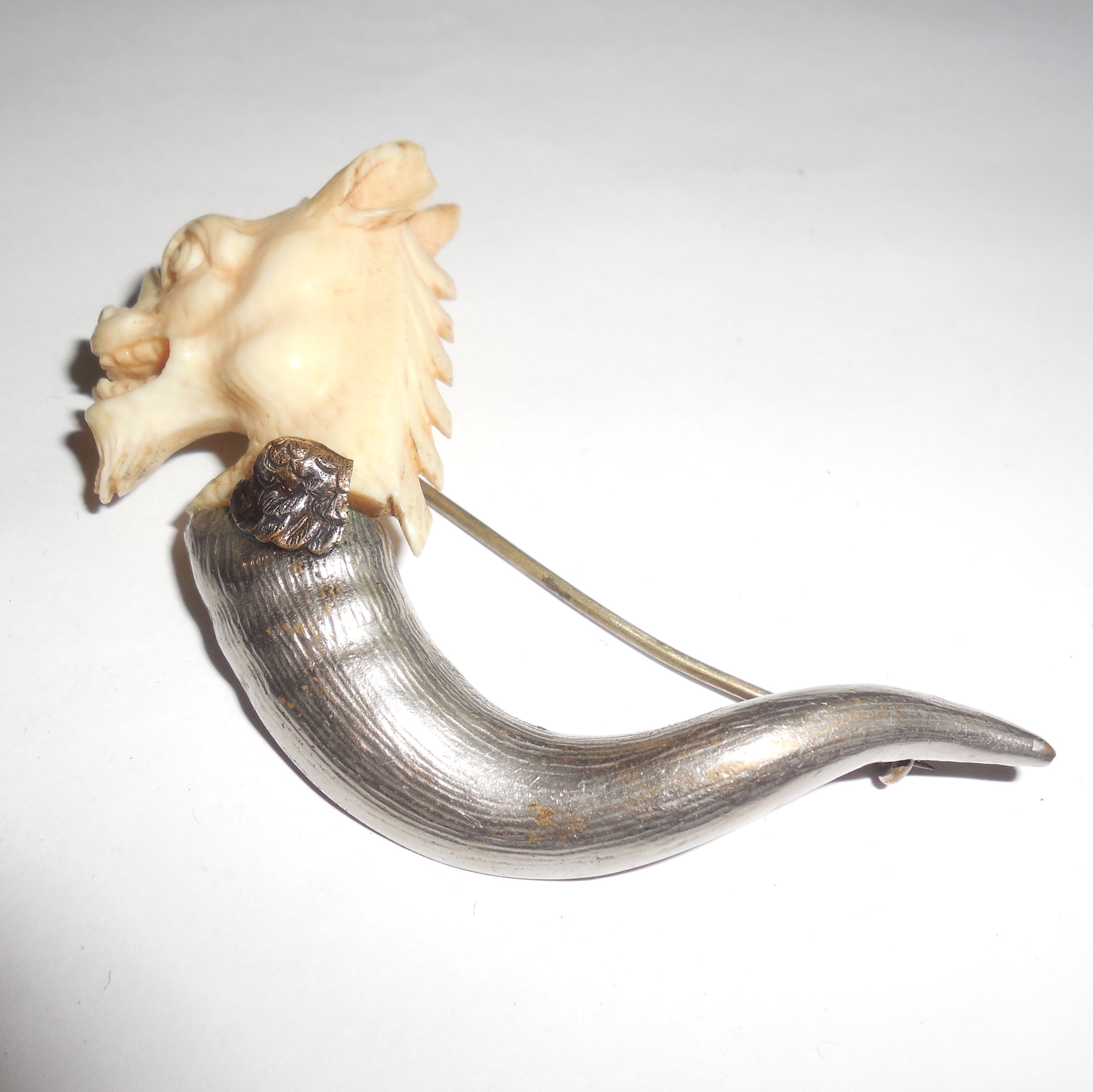
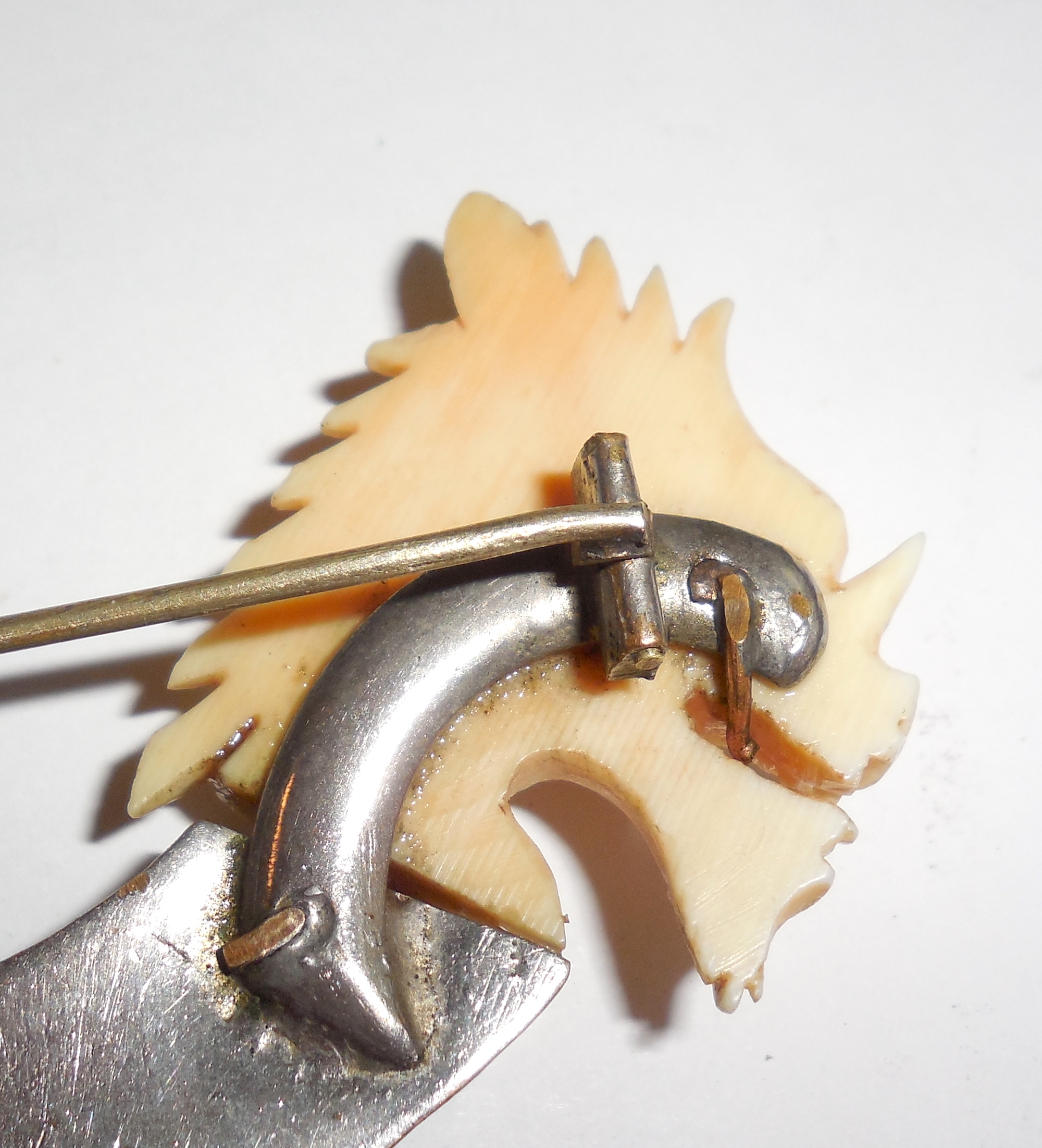
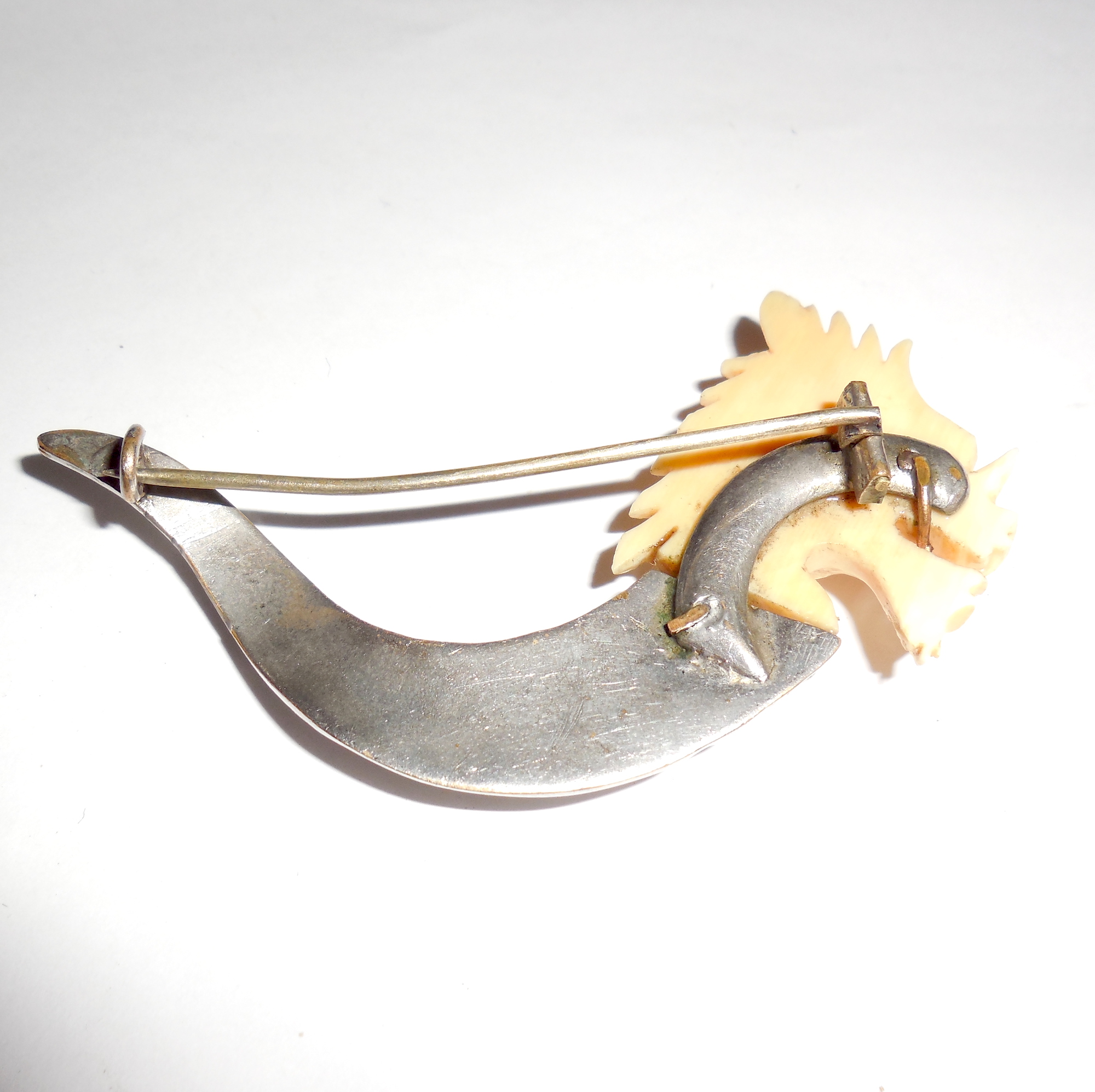
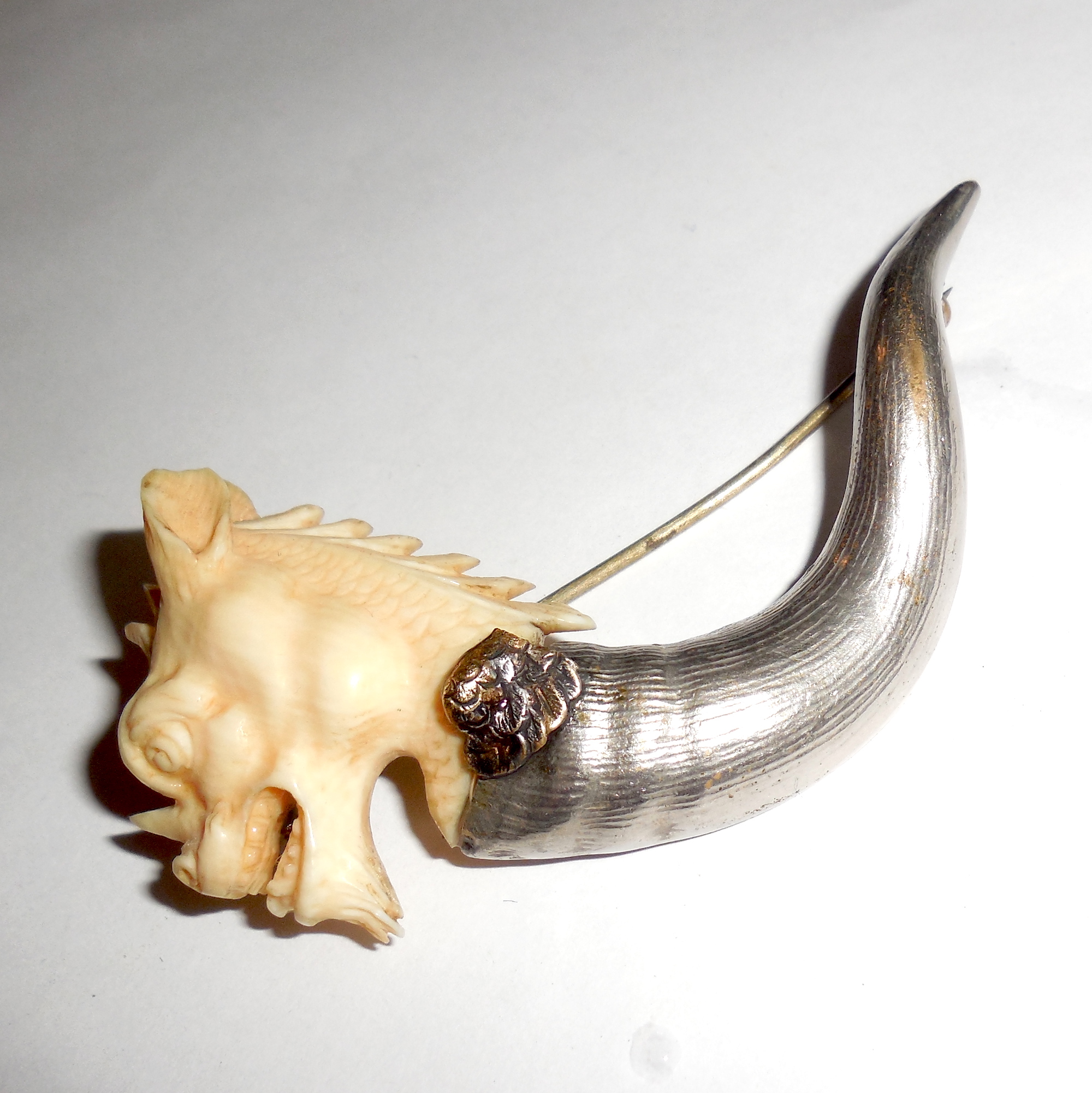
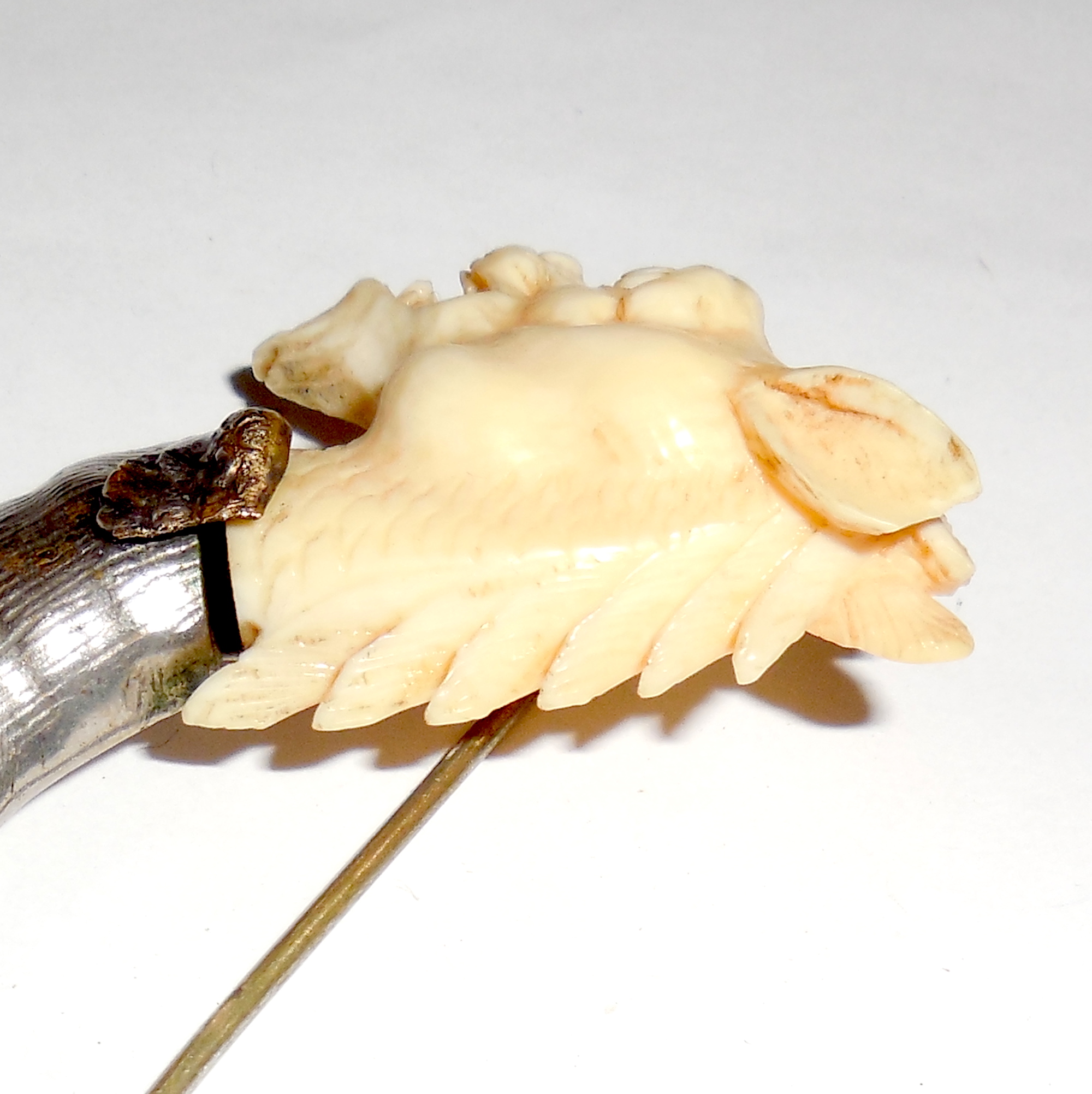
Antique Carved Horned Dragon Pin Brooch English, Viking, Norse, Celtic – A lovely antique Victorian era pin brooch of a hand-carved bone horned dragon. The body is silver metal with a small silver over copper applied shell decoration. Size is 3″ long east to west by 1 1/8″ wide north to south. The head body connection is a little loose from age but still secure. No spinning or coming apart. Just a little loose…Other than this the condition is excellent. It has strongly detailed carving, is all handmade with its original Victorian C Clasp is still intact. The silver is still good, not worn down. Beautiful unique estate find for your antique Victorian jewelry collection.
AI Validation:
It’s a very interesting piece. Based on the visible features, here is the most likely origin and period.
Visual characteristics
What stands out on your brooch
1. The dragon head carving
- The head appears carved from bone, not horn.
- The style is European dragon, not Chinese:
- blunt snout
- open mouth with teeth
- small horn/ear ridge
- spined crest down the back
Chinese dragons are typically longer, serpentine, with whiskers and a flaming pearl, which this carving lacks.
2. The curved “horn” body
- The silver piece is shaped like a drinking horn or powder horn.
- The linear ribbing suggests it was pressed or cast metal, probably silver-plated brass or German silver rather than solid sterling.
3. Decorative collar
The small collar between the head and horn has a repoussé leaf/scale motif, which is typical of Central European decorative metalwork around 1880-1910
Most likely origin
The style strongly suggests:
Central Europe (Germany or Austria)
particularly Black Forest / Bavarian carving traditions.
These regions produced many animal-head carvings in bone or stag horn mounted to metal objects and jewelry.
Estimated date
Circa 1880–1905 (late Victorian to early Art Nouveau)
Reasons:
- fantasy creature motifs were very popular then
- horn-shaped brooches and stickpins were fashionable
- the pin wire style looks consistent with late 19th-century jewelry findings
✅ My best estimate:
German or Austrian, c. 1880–1905, bone carving with silver-plated metal horn.
Origin: Central Europe (most likely Germany or Austria)
Date: circa 1880–1900
Materials:
- carved bone or ivory dragon head
- silver-plated brass or nickel silver horn body
- steel or brass pin
One interesting stylistic clue
The dragon has a slightly grotesque fantasy look, which was very popular in late Victorian Gothic revival jewelry and Austrian Jugendstil fantasy pieces around 1890.
It is not Chinese export jewelry, which many people initially assume with dragons.
Collector note:
Pieces like this were often sold as tourist jewelry in Alpine regions (Black Forest, Tyrol, Bavaria). The dragon motif symbolized strength and protection.
1. Why the horn shape was used
The curved metal form on your brooch represents a drinking horn, a symbol that appears widely in Germanic and Alpine culture.
During the late 1800s, jewelry designers used the horn shape to represent
- Strength and vitality
- Good fortune or abundance (similar to a cornucopia)
- Hunting culture and Alpine traditions
In Germany, Austria, and Switzerland, small jewelry versions of horns were popular souvenir items for travelers visiting the Alps or the Black Forest.
Adding an animal or mythical head made the piece more decorative and dramatic.
From the photos, the material is most likely bone.
Signs pointing to bone:
- The color is creamy with slight yellowing, typical of aged bone.
- The carving edges look slightly fibrous rather than glassy smooth.
- The underside shows subtle porous texture.
However, the difference can be subtle in photos, and many Black Forest carvings used bone or stag antler.
One interesting detail about this dragon
This dragon has a slightly humorous expression with a protruding tongue and exaggerated eye. That style is typical of German folk carving, especially from the Black Forest region in the late 19th century.
These carvings were often done by woodcarvers who also worked in bone or antler, which explains the folk-art look.
Key carving features used to identify region
1. The “grotesque eye”
Your dragon has a large rounded eye with a carved rim around it.
That exaggerated eye style is typical of Black Forest folk carving, where animals and mythical creatures often had:
- bulging eyes
- humorous or mischievous expressions
Tyrolean carvings are usually more naturalistic, while Black Forest carvings are often more expressive or caricature-like.
2. The serrated mane
The spiked ridge along the back of the dragon’s head is carved in simple triangular cuts.
This technique is very common in Black Forest carving workshops, where artisans used quick repetitive knife cuts to create texture.
3. Open mouth with protruding tongue
That slightly comic open mouth is another folk-carving trait.
Many Black Forest animal carvings from the late 1800s have this same lively expression.
What this likely indicates
Those features together suggest the carving was likely produced in the Black Forest region of southern Germany rather than Austria or Switzerland.
The Black Forest area was famous in the 19th century for:
- carved wood animals
- bone and antler carvings
- souvenir objects for tourists
Many small workshops produced brooches, stickpins, and desk objects using the same carving style.
One more interesting clue on your brooch
The dragon head is carved separately and then fitted into the metal collar, rather than carved as one piece with the horn.
That construction method was common in German souvenir jewelry workshops, where:
- metalworkers made the mounts
- carvers supplied the animal heads
So it was often a collaborative craft piece.
✅ Most probable identification
- Region: Black Forest, Germany
- Date: about 1880–1895
- Material: carved bone or antler + silver-plated metal horn
- Type: Alpine tourist brooch with dragon motif