Description
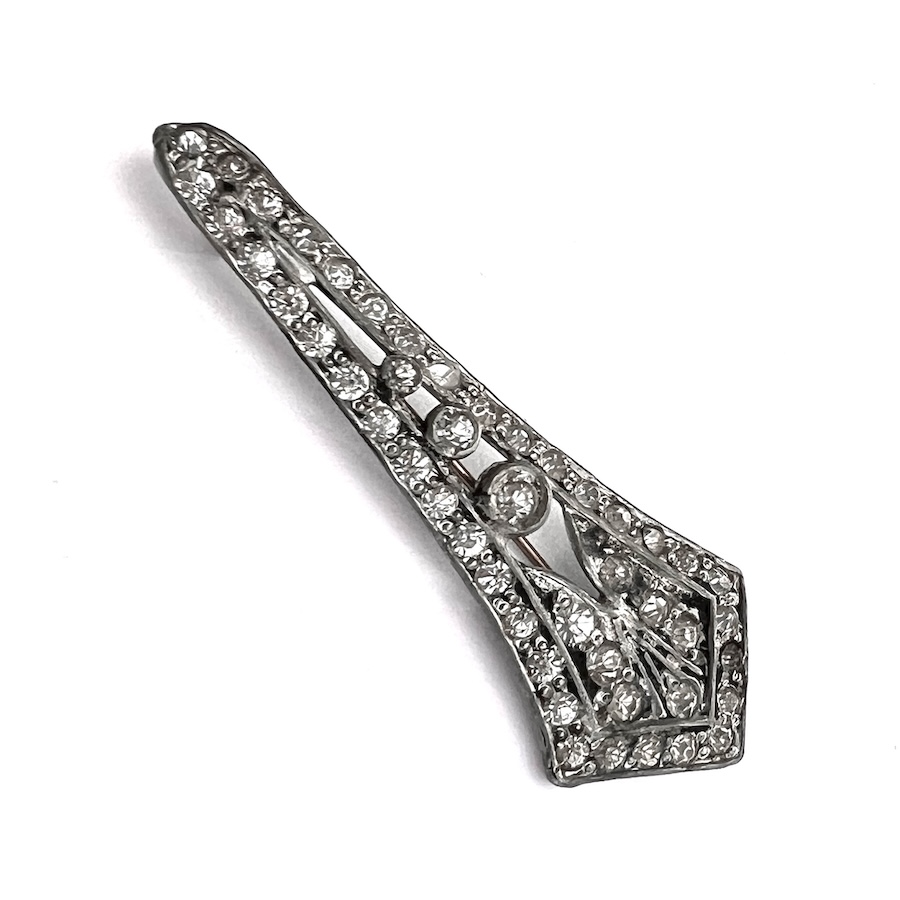
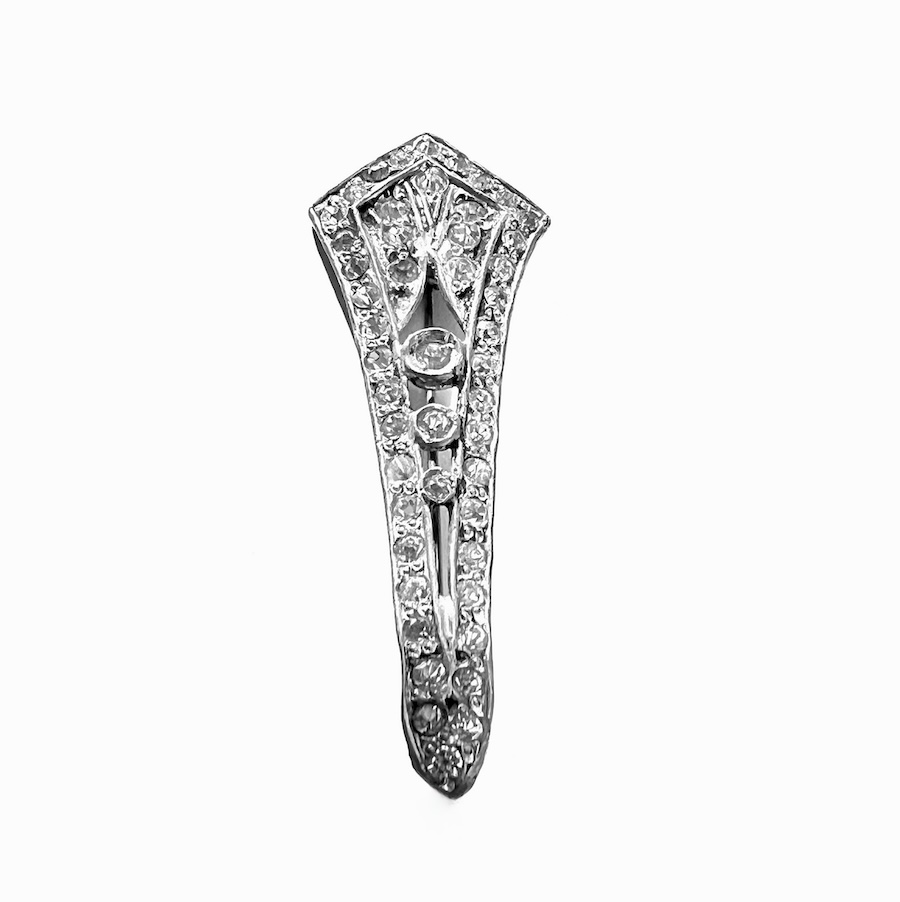
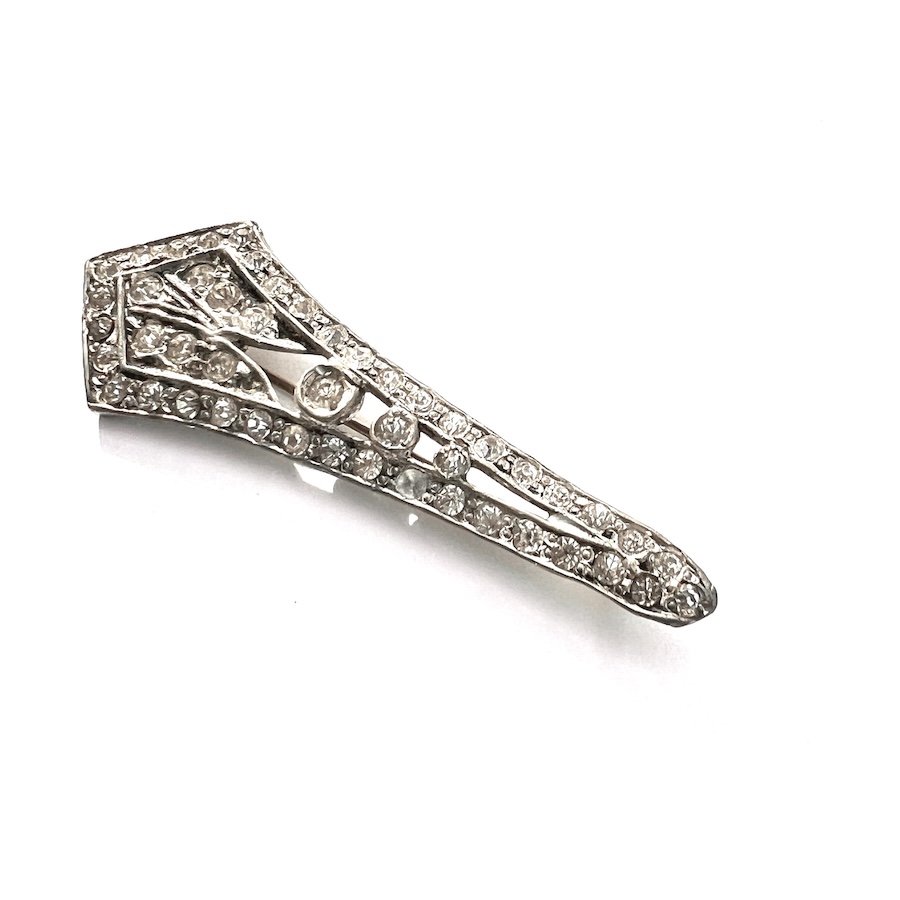
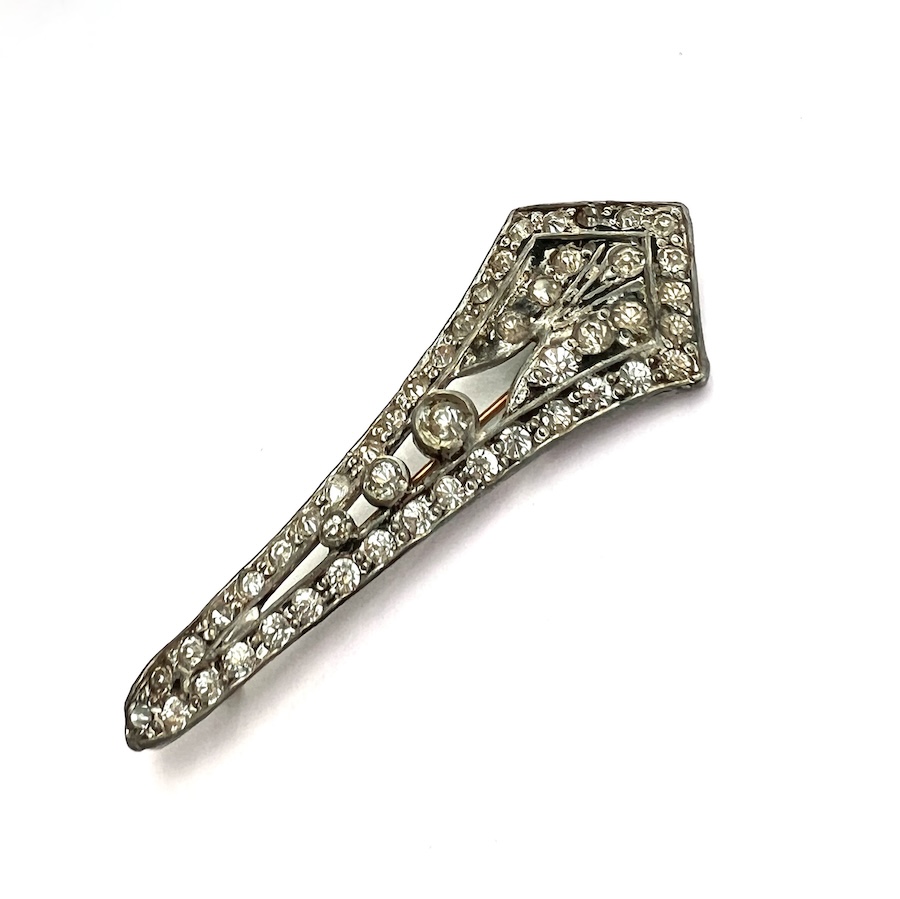
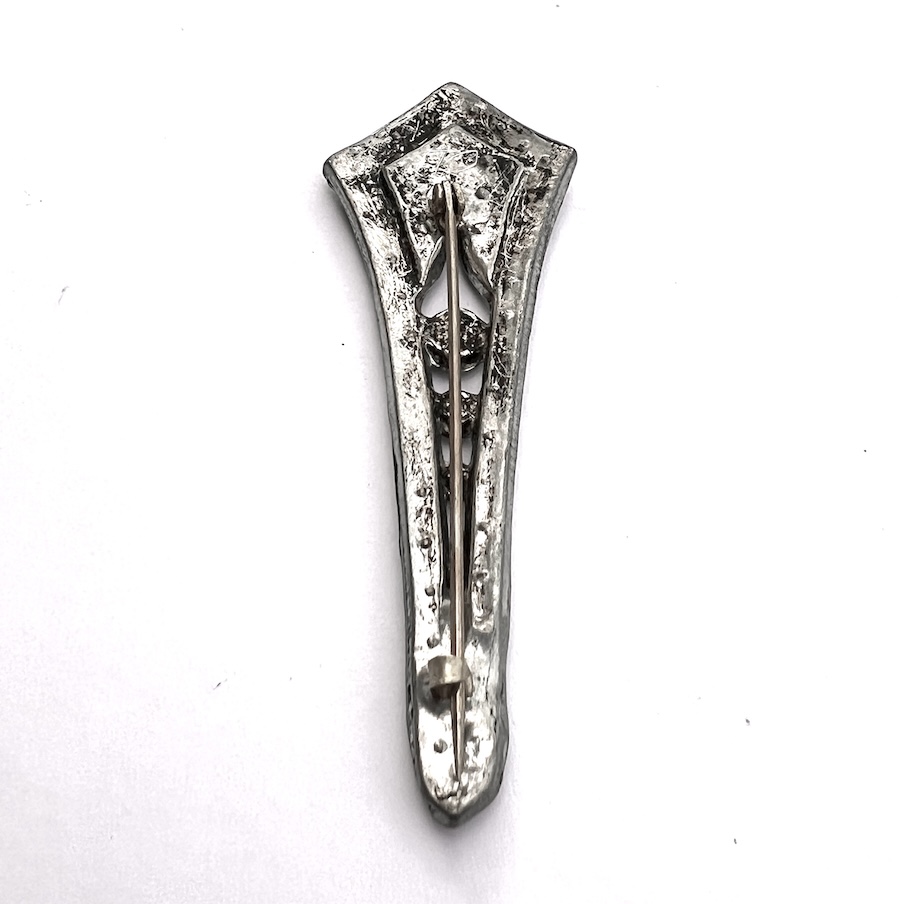
**See photos….we have the 1 missing stone and it will be sent with the pin…..This is an original antique 1900 Edwardian paste and silver gilt long Halley’s Comet pin. Size is 2 3/4″ long north to south by 1″ wide across top at its widest point east to west. The bottom is about 1/4″ wide. Some of the stones have dulled with age and will need a cleaning. The back has black spots on the silver gilt. This is a lovely large antique Halley’s Comet pin for your vintage and antique jewelry collection.
About Antique Halley’s Comet Pin
Google AI:
Antique silver-plated Halley’s Comet pins featuring cushion-cut rhinestones (often called “paste” in that era) and a C-clasp were typically produced around the comet’s 1835 passing and, to a lesser extent, the 1910 passing.
Key Dating Information:
Primary Period (1830s–1840s): The majority of these pins, particularly those with silver settings (often on gold-filled or gilded bases), were created during the Georgian period to celebrate the 1835 appearance of the comet.
The “C” Clasp: The presence of a simple “C” clasp and a tube hinge is a strong indicator of an early piece, dating from the early-to-mid 19th century.
Paste Stones (Rhinestones): While fine examples used diamonds, many pins used foiled paste stones (hand-cut glass) to emulate diamonds, allowing them to be more affordable to the middle class.
1910 Revival: When the comet returned in 1910 (Edwardian period), a new wave of comet jewelry was created, which can also feature similar designs.
Key Characteristics:
Design: Often a horizontal bar pin with a large “head” (cushion-cut rhinestone) and a long, narrow “tail”.
Tail Work: Earlier 1835 examples frequently feature hand-chased metalwork representing the tail, while 1910 pieces are generally more streamlined.
Pin Length: Frequently, the pin stem extends longer than the brooch itself, allowing it to be pinned securely into fabric.
Given the combination of silver-plating (likely low-karat/gilt/silver-on-copper, often called “paste and silver”), cushion-cut paste stones, and a “C” clasp, the piece is most likely from circa 1835 or shortly thereafter.
**However, we believe this to be a later 1900 example given that the rod for C-clasp is well within the perimeter of the pin and the the tail of the pin is definitely streamline like a very early pre Art Deco example.