bird
Showing the single result
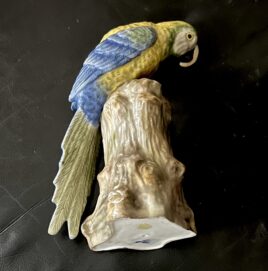
1900-1920 Old Mark Ernst Bohne Sohne Thuringia German Fine Porcelain Parrot Figure
This beautiful parrot figure was manufactured by the famous Ernst Bohne Söhne (EBS) porcelain factory located in Rudolstadt, Thuringia, Germany, and dates precisely between 1901 and 1920. It emulates hand painted Capodimonte fine porcelain which was popular at the time. The parrot statue is in excellent, ready to displayed condition. This early example of Ernst Sohne, Thuringia porcelain is beautifully crafted by hand with very pretty coloring and strong attention to fine details within the fine hand painting. The porcelain is thick and solid and the bottom has a very small air hold so you know it is an early one. Size is 6″ tall north to south. Width ranges from 3″ to 3 1/2″ across. Condition is excellent. No cracks or chips or hairlines. No damage or repair. Made by a well-known maker this is a beautiful example of the EBS, Thuringia parrot figures for your collection.
As per Ai:
Your beautiful parrot figure was manufactured by the famous Ernst Bohne Söhne (EBS) porcelain factory located in Rudolstadt, Thuringia, Germany, and dates precisely between 1901 and 1920.
The "N": German makers in the Thuringia and Dresden regions frequently used the "Crowned N" mark to bypass Italian import protections that mimic the high-value style of Capodimonte porcelain, appealing directly to affluent international collectors.
This specific cobalt underglaze stamp is highly prone to bleeding in the kiln, which is a known signature of EBS factory production from this early 20th-century era.
The "Capodimonte style" paintwork you recognized is a high-glaze, soft-blended coloring technique highly popular across European studios at the turn of the century. German Thuringian factories were master artisans at replicating the lifelike, fluid feather details seen on your piece.
The flat, unglazed base with a single small pinhole confirms the piece was hollow-cast. Rather than 20th-century mass-produced Italian earthenware, Ernst Bohne Söhne used a high-fired, dense white German hard-paste porcelain body, giving the unglazed bottom its smooth, stone-like edge.