Description
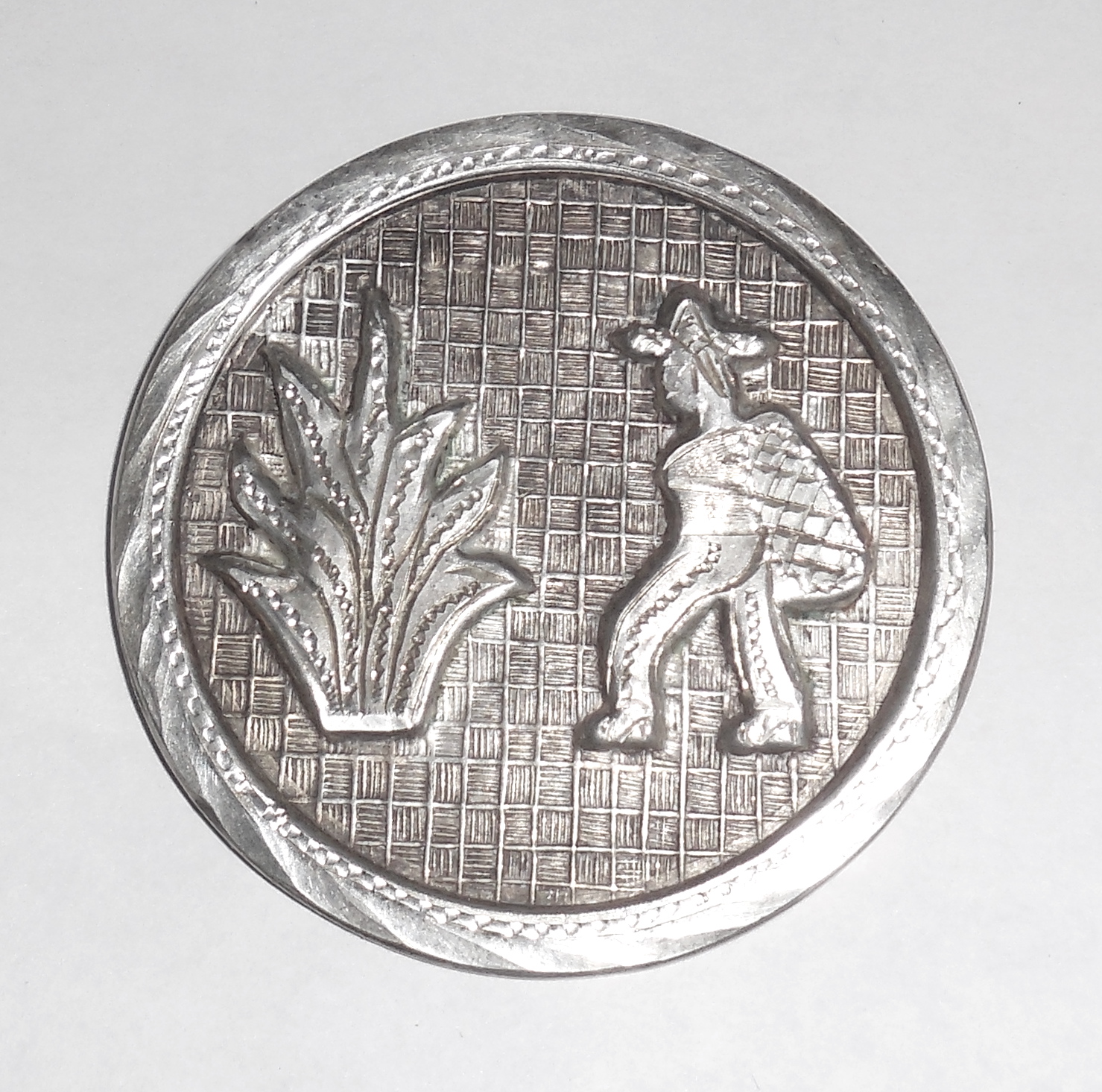
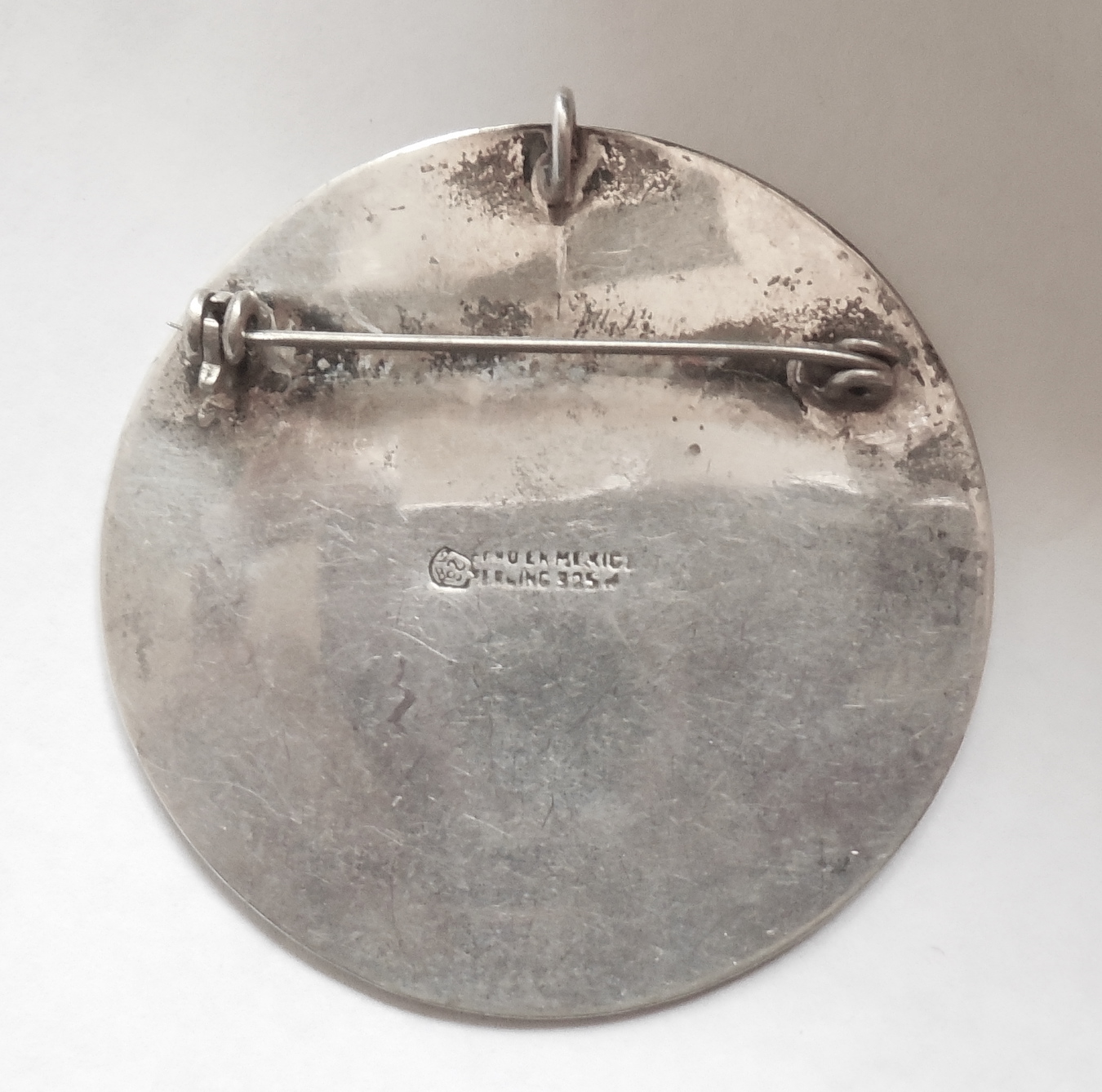
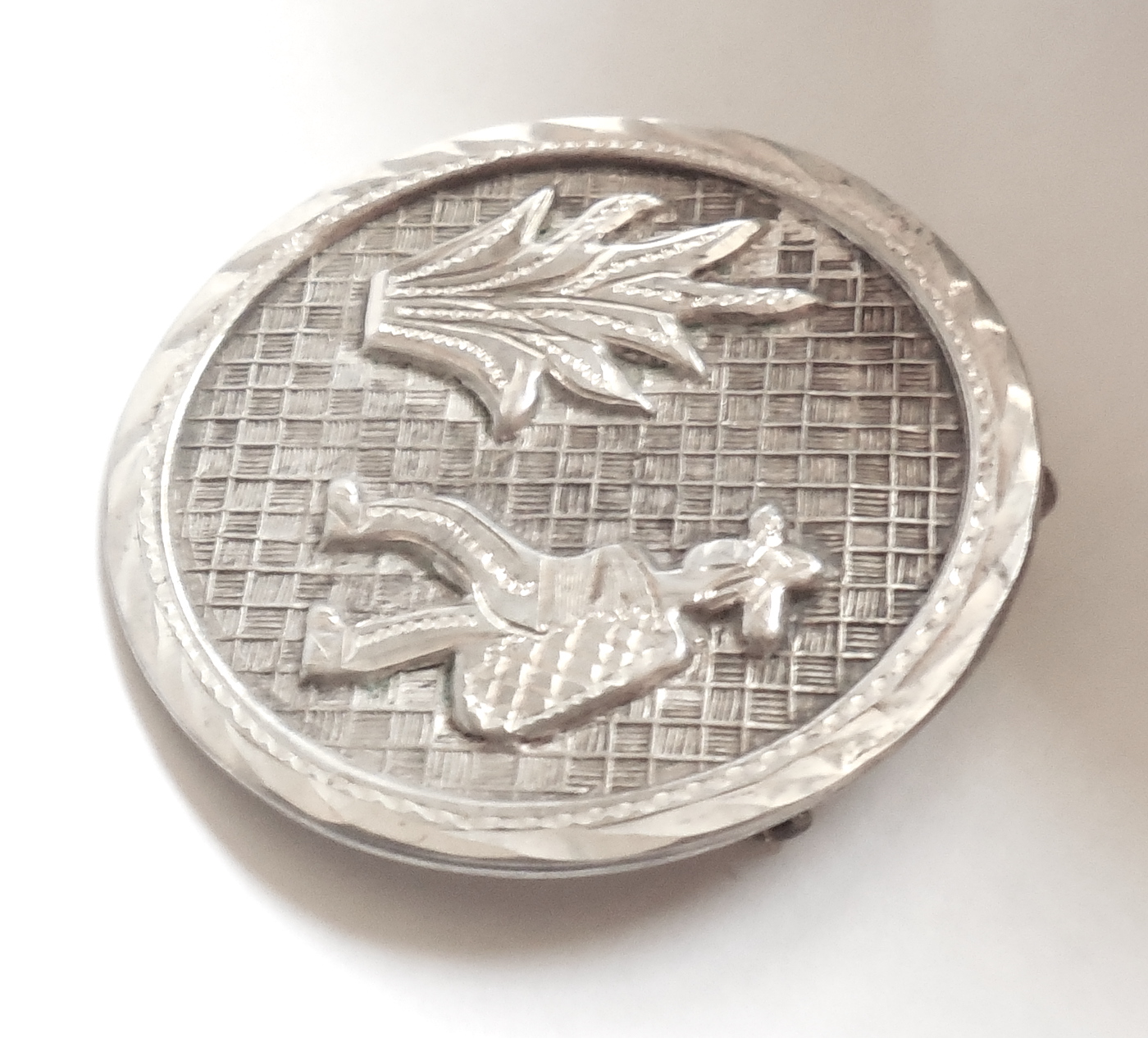
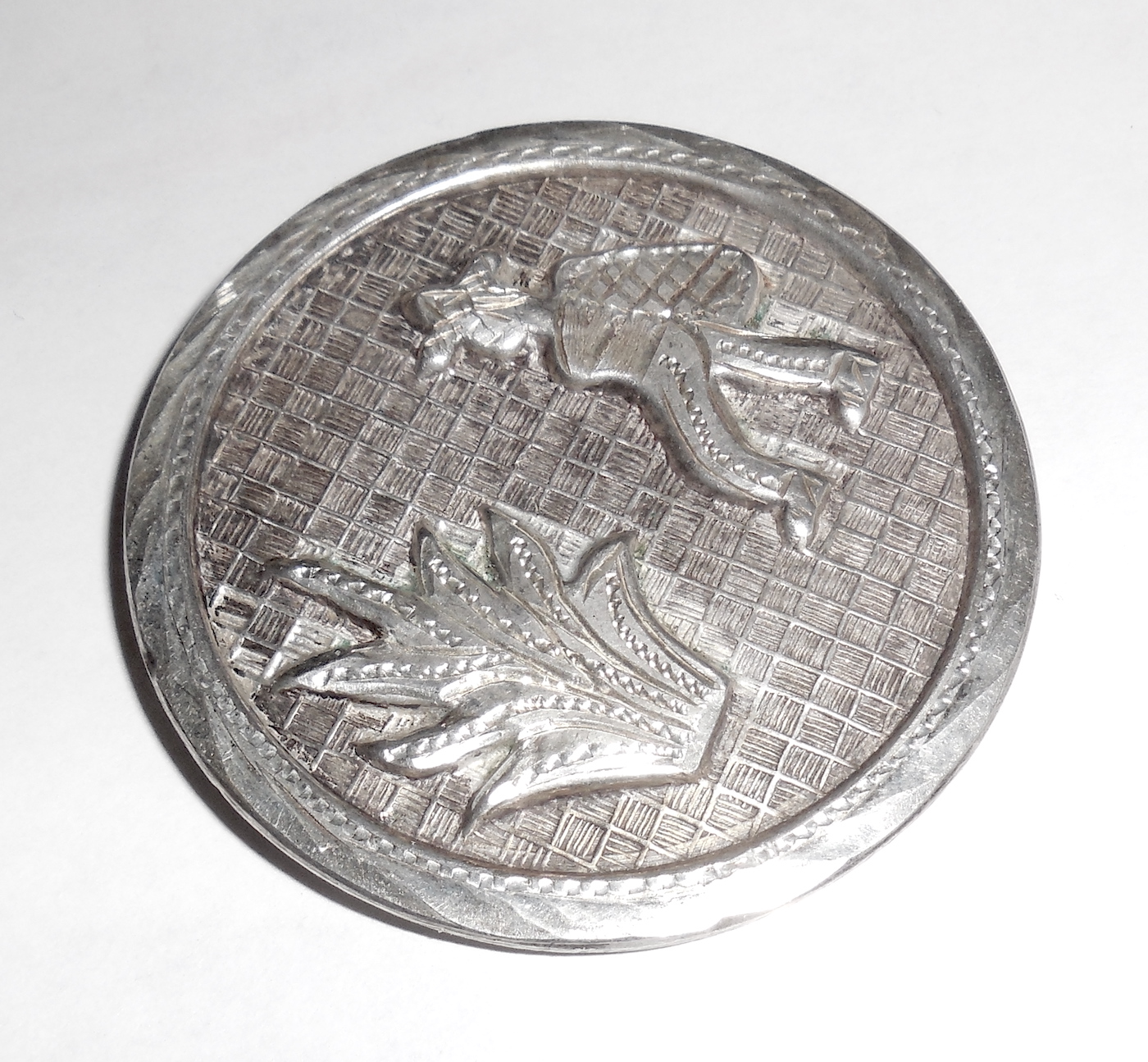
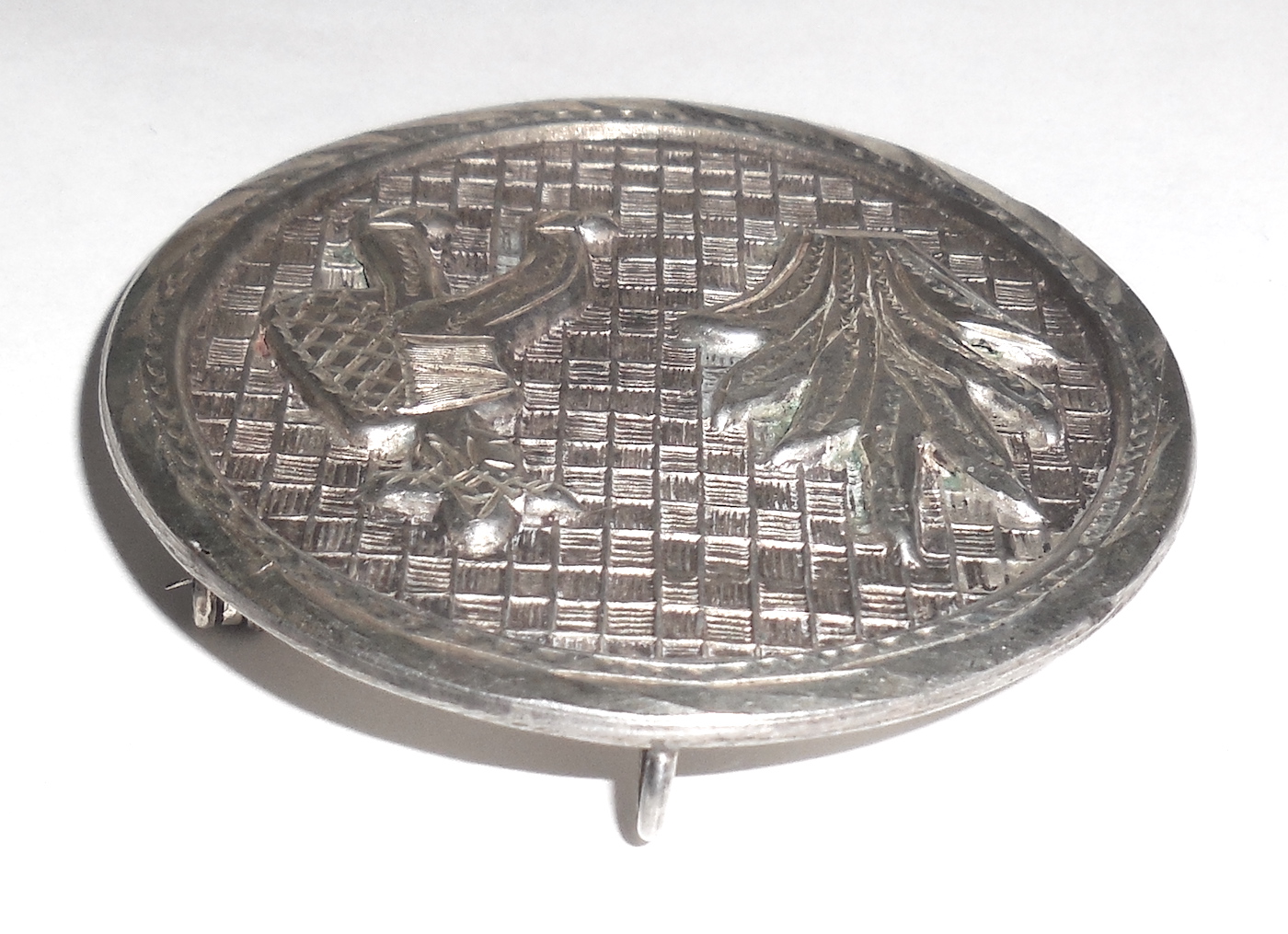
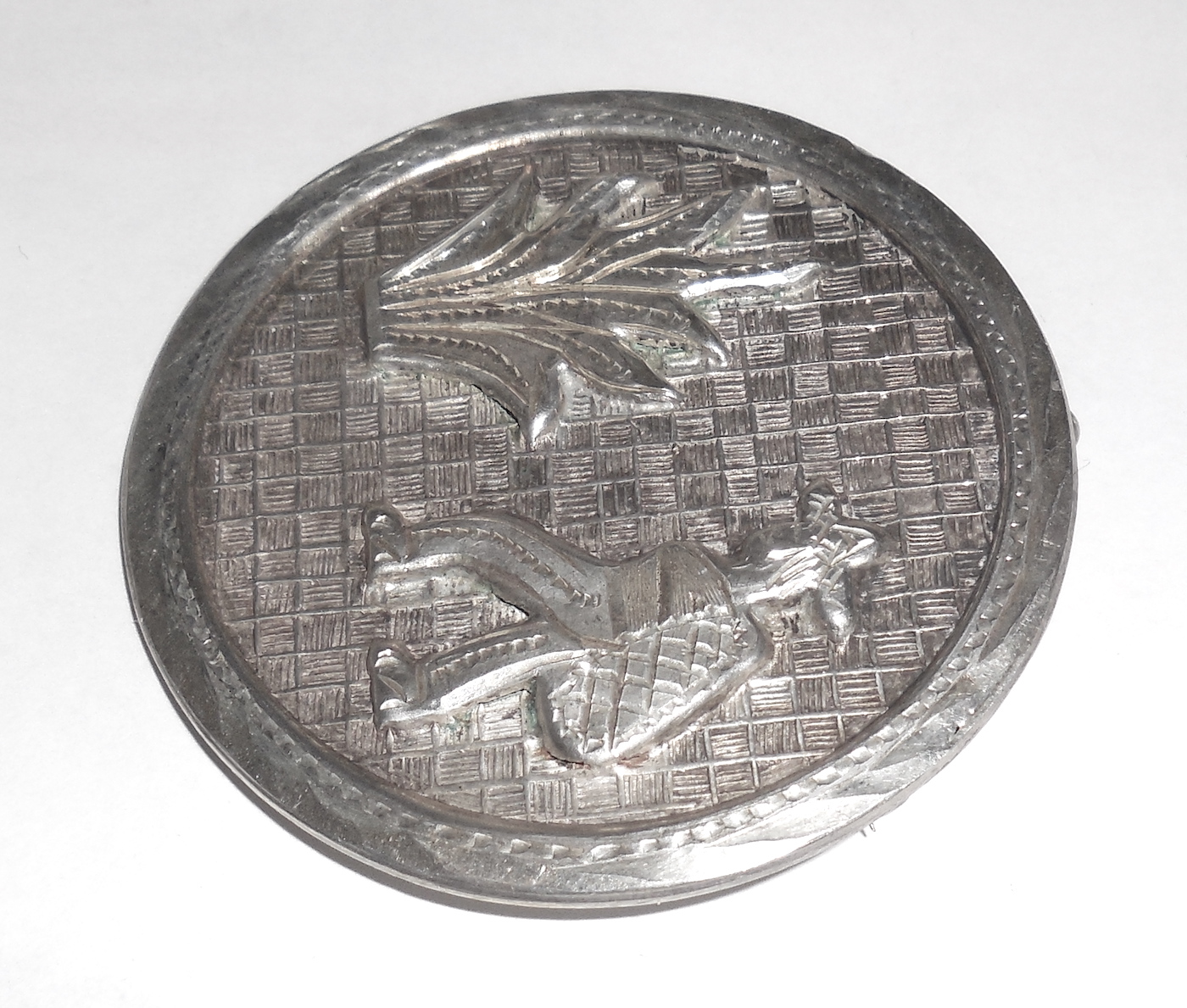
This is a large 2 1/8″ in diameter vintage 1960s mid century Mexican sterling silver dangling pendant pin with pre 1979 left facing eagle hallmark #28 used from 1955 to 1960s, hecho en Mexico, Sterling, 925. Weight is 17.7 grams. Condition is very excellent. No damage or repair. All original. No alterations. Thick and well made. The top has a raised square pattern with an alternating raised linear pattern in the square boxes, very mid century geometric design. Above this background is a full figure man wearing a sombrero and a sombrero carrying is large sack on his back and walking toward a large fancy raised cactus. The gentleman and cactus are very crisp, detailed, highly raised in relief, and very noticeable. Pin lock is secure and hidden hand applied bail is thick and strong. This is a lovely showy figural pendant pin for your vintage Mexican sterling silver mid century jewelry collection.
About Vintage Mexican Silver Jewelry:
Reference: http://www.collectorsweekly.com/fine-jewelry/mexican
Silversmithing has been practiced for centuries in Mexico. In fact, Mexican silversmiths taught the Navajo of the Southwestern United States their trade. But it took an American named William Spratling to see the opportunity to build on this legacy. He did this in 1931, when he established a retail outlet for Mexican jewelry near the silver-mining center of Taxco.
Spratling’s designs borrowed liberally from pre-Columbian motifs found on Mexico’s pyramids and lifted from the 14th-century symbols that fill the Codex Zouche-Nuttal. It was open-source material, if you will. So it shouldn’t be too surprising that as his shop succeeded and imitators sprang up nearby, the designs themselves were appropriated.
Some competitors were actively encouraged. In fact, the Taxco School, as it is known today, was formed largely from former Spratling employees. Examples are the Castillo brothers, Héctor Aguilar, and Antonio Pineda. In addition, Valentin Viadurreta brought a Mexican eye to Art Deco. Naturally, these artisans and their shops became incubators for still more generations of silversmiths.
For those who could not make the trip to Taxco, U.S. stores took the step of importing these popular goods. At one point everyone from fashionable Gump’s in San Francisco to Montgomery Ward in Chicago carried silver jewelry and tableware by Taxco designers.