Description
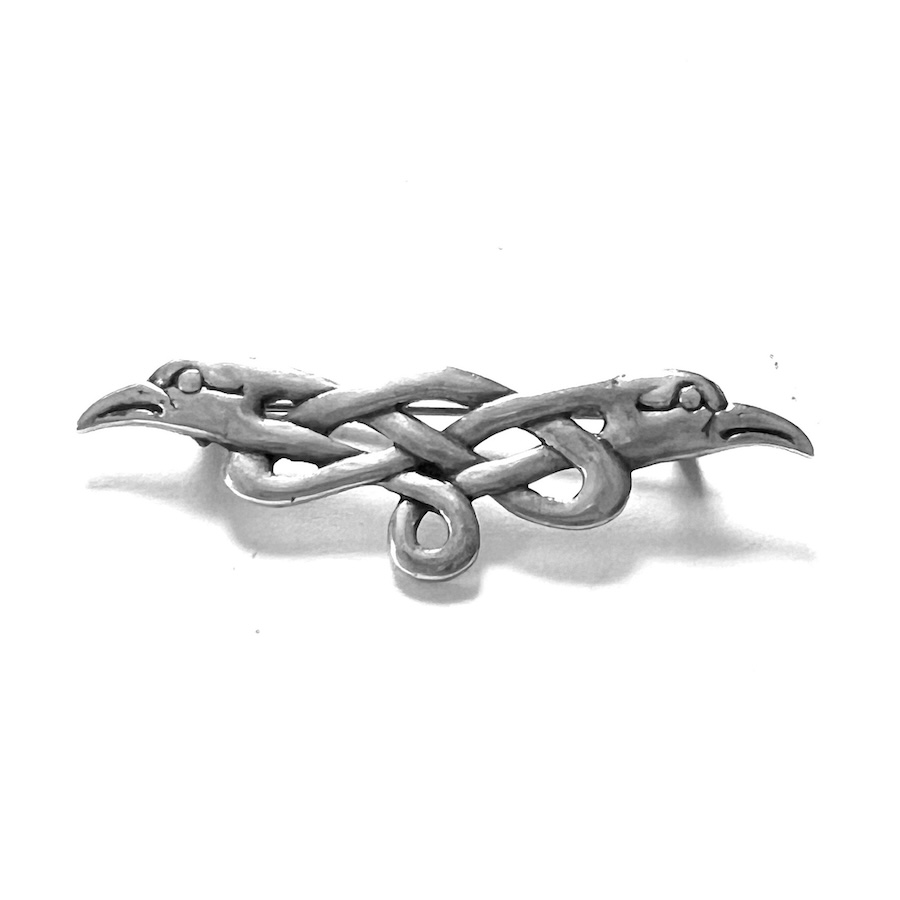
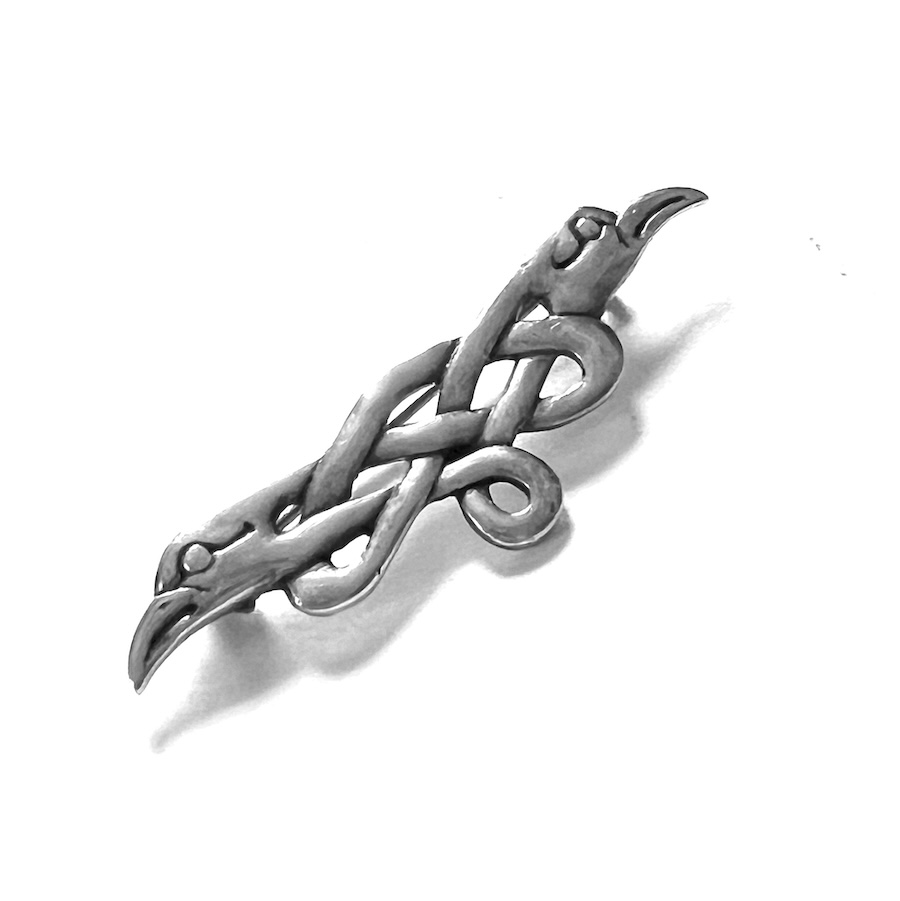
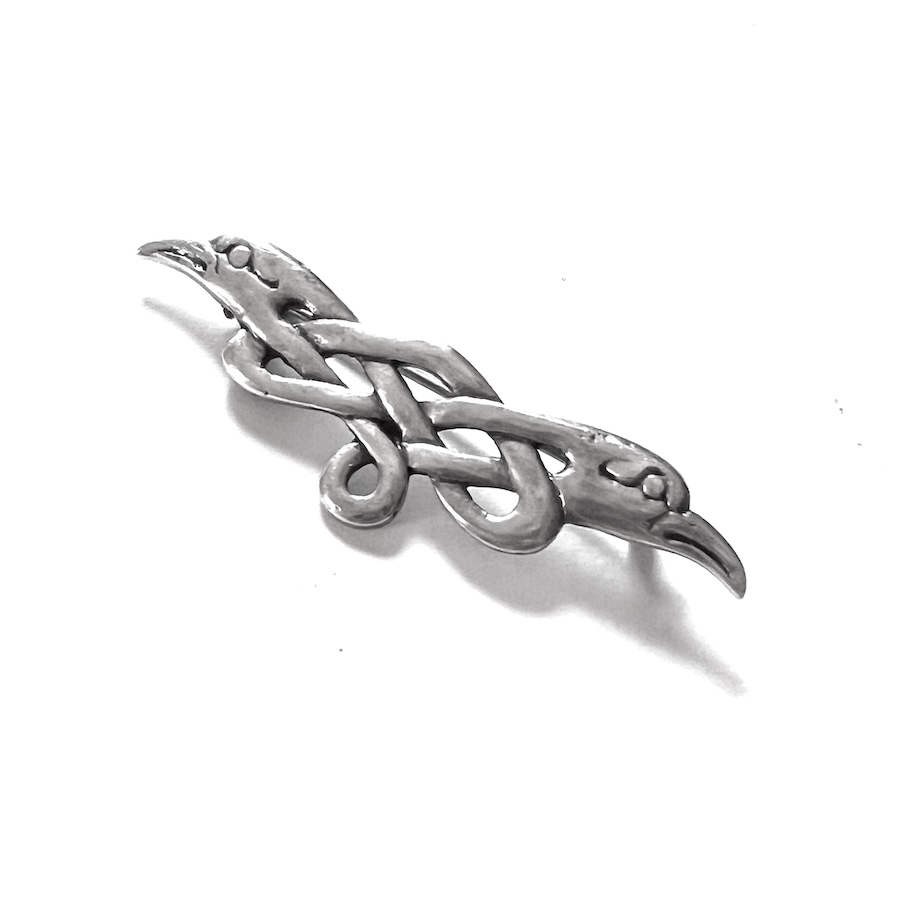
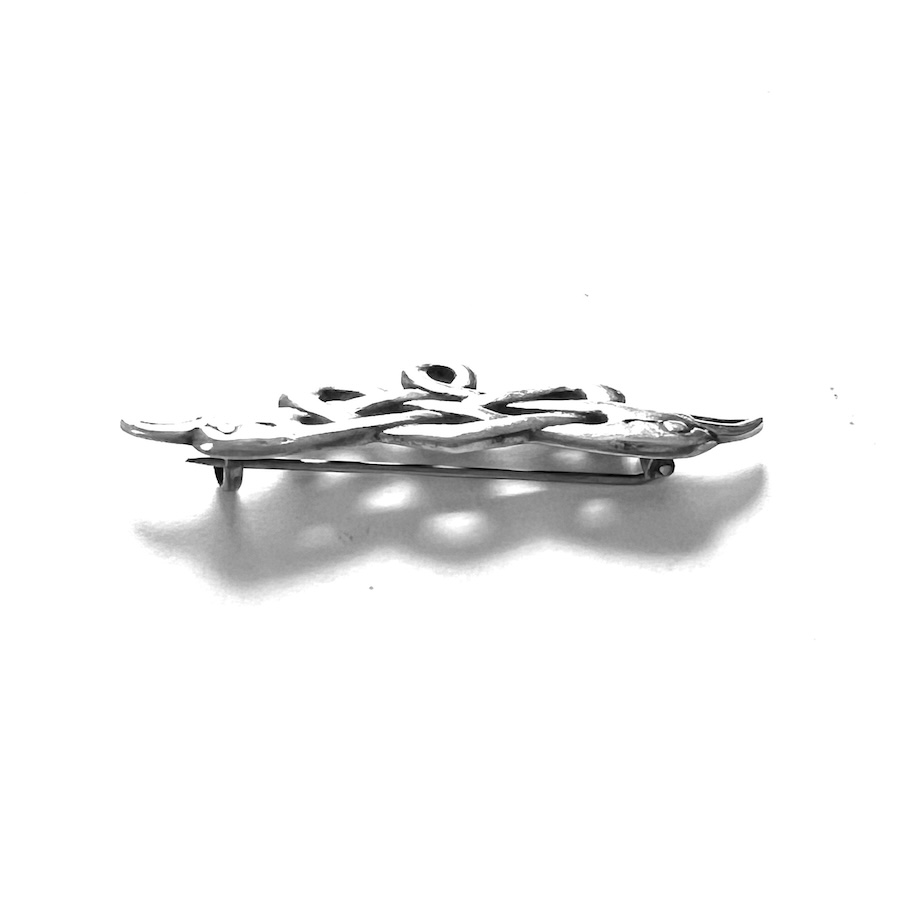
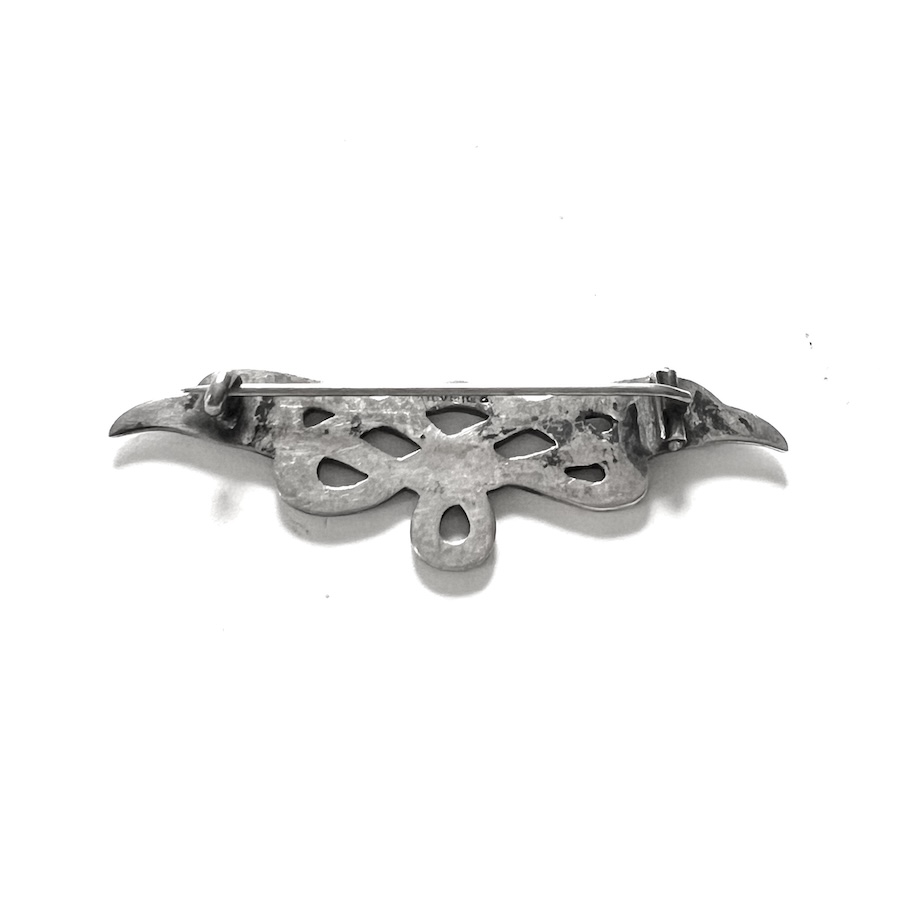
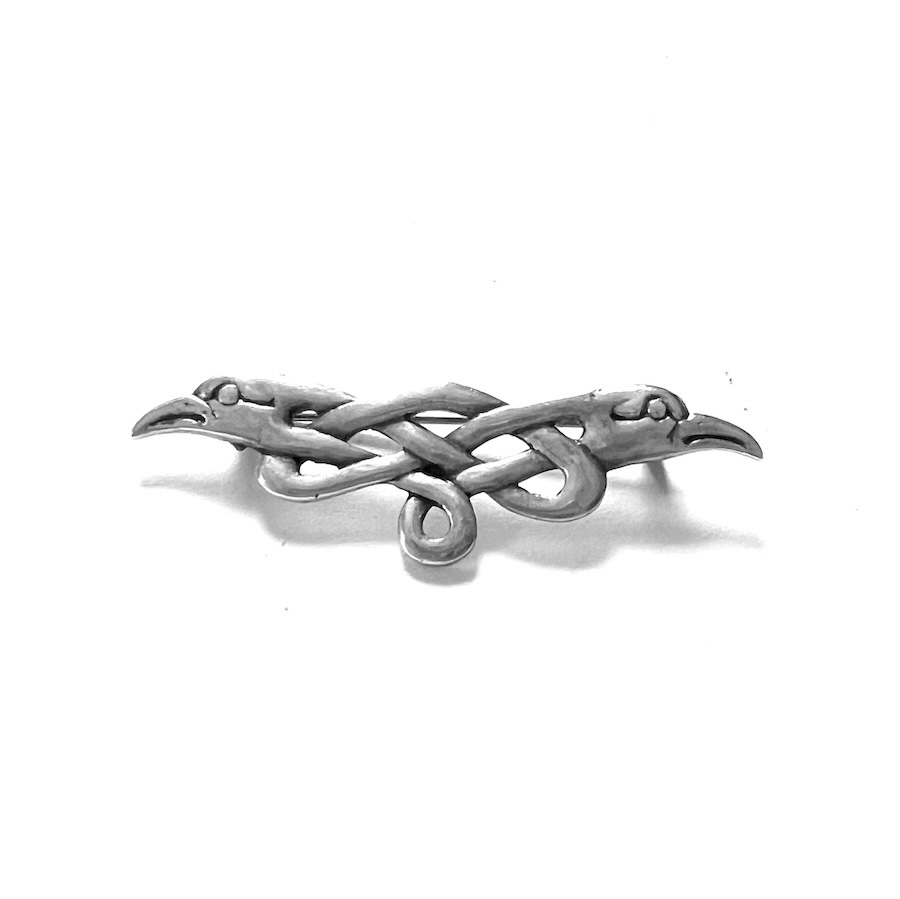
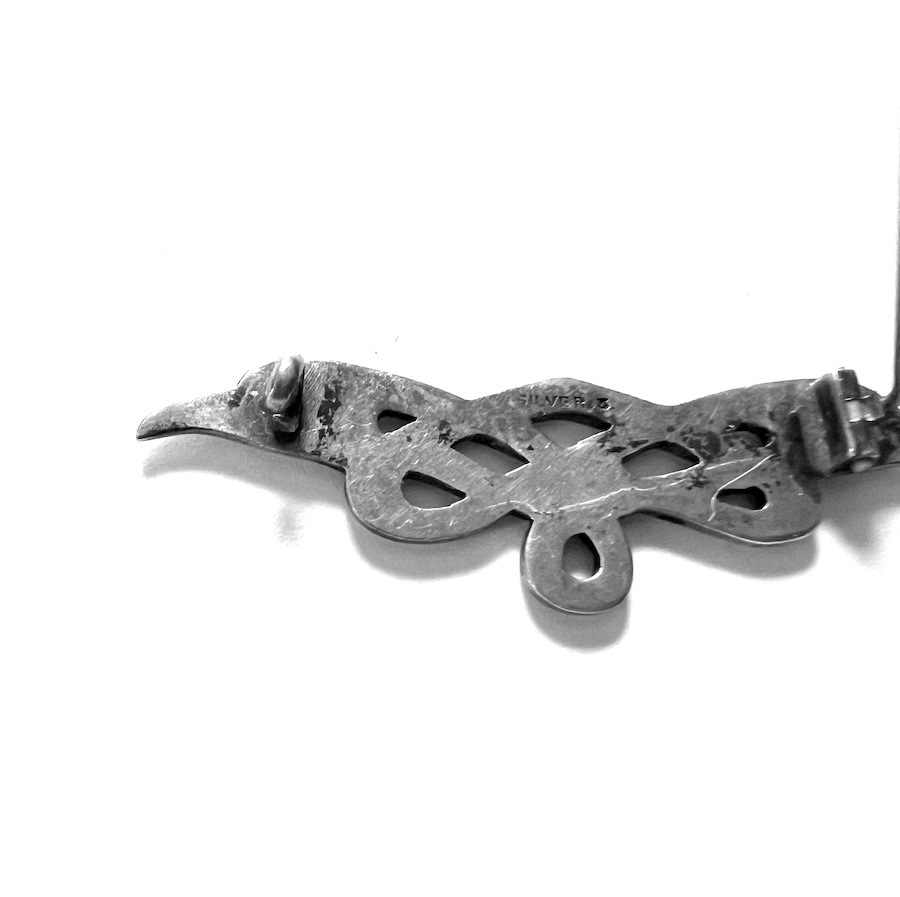
This is an antique Victorian silver Celtic Scottish or Norse long beaked birds pin brooch with intertwined snakle like bodies. It still has its original hinge and Victorian C-clasp intact. The only marking on the back is its original old incised stamp that reads “Silver”. See photo of marking. Size is 2 1/4″ long east to west by 5/8″ wide north to south across the center of the body. Overall condition is excellent, very gently used. No dents or dings, No wear marks. From an estate from many decades ago and has not be freshly polished. No deep scratches. Never damaged or repaired. All original. This is a lovely original long beaked birds zoomorphic knot brooch for your antique Scottish, Celtic and Norse jewelry collection. It is thick, solid and well made and has a nice loop in the bottom center of the which can be used for a dangle on a lapel.
AI Authenticity:
Victorian-era Celtic Revival zoomorphic bar brooch. Here is a breakdown of its style, symbolism, and origins:Design & Symbolism The Motif: The pin features two stylized, long-beaked birds facing outward in opposite directions, with their necks and bodies elaborately interlaced into an “S” or infinity-style Celtic knot. Historical Source: This specific zoomorphic (animal-interlace) style is directly adapted from early medieval Insular art. Very similar intertwined bird designs are famously found in the illuminated margins of 8th-century manuscripts like the Book of Kells and the Lindisfarne Gospels. Meaning: In Celtic art, such birds (often interpreted as herons, cranes, or peacocks) traditionally symbolized the soul, divine wisdom, and the connection between the earthly world and the afterlife. Era and ContextCeltic Revival Movement: During the mid-to-late 19th century, there was a massive cultural resurgence in Ireland and Scotland celebrating ancient Celtic heritage. Jewelers began replicating medieval metalwork found in archaeological digs (like the Tara Brooch discovered in 1850). Dating Indicators: The use of a simple “C-clasp” on the back is highly consistent with Victorian production (roughly 1850–1900), before safety catches were patented.
Victorian Celtic animal pins—often called zoomorphic brooches—are 19th-century “Celtic Revival” jewelry pieces featuring stylized, interlocking animal motifs like stags, hounds, birds, and dragons. Popularized in the mid-to-late 1800s after archaeological discoveries like the ancient Tara Brooch, these pins combined traditional Irish and Scottish knot work with Victorian materials like sterling silver, agate, and enamel. Key Design MotifsCeltic Hounds & Dogs: Symbolizing loyalty and protection, these animals are usually stretched out, with their long limbs and tails intertwined into complex knot work patterns.Highland Stags & Elks: Representing the wilderness, stags are heavily featured in Scottish Victorian style, often used as decorative kilt pins or cloak fasteners.Birds & Waterfowl: Heavily inspired by early Christian-Celtic manuscripts (like the Book of Kells), depicting peacocks, eagles, or swans with their wings and feathers forming repeating loops.Dragons & Serpents: Mythological creatures with elongated, snake-like bodies that loop seamlessly through tight geometric braids. Common Styles & Formats Penannular & Pseudo-Penannular: An open-ring design with a long central pin. While early Celts used them out of necessity, Victorians wore highly detailed, closed versions purely for fashion. Pebble Jewelry: Pins featuring native Scottish hardstones (like jasper, bloodstone, and banded agate) inlaid right into the silver animal frames.Kilt Pins: Long, functional bar pins featuring animal heads at the top, popularized by Queen Victoria’s trips to Balmoral Castle.