Description
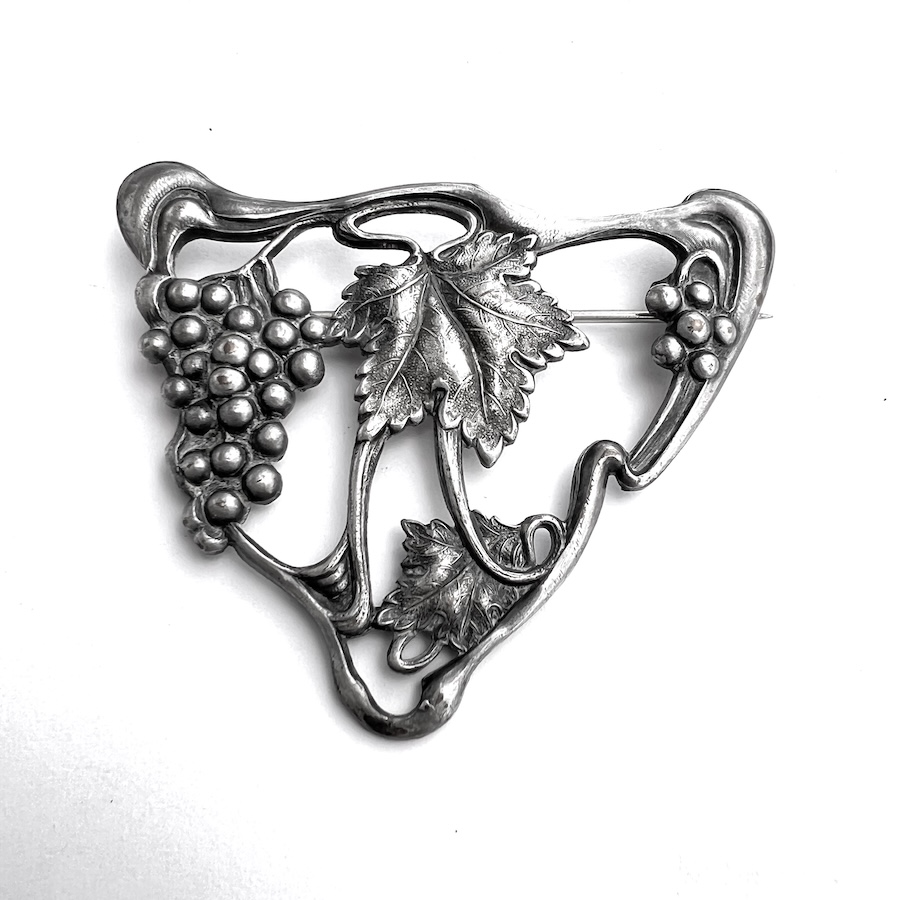
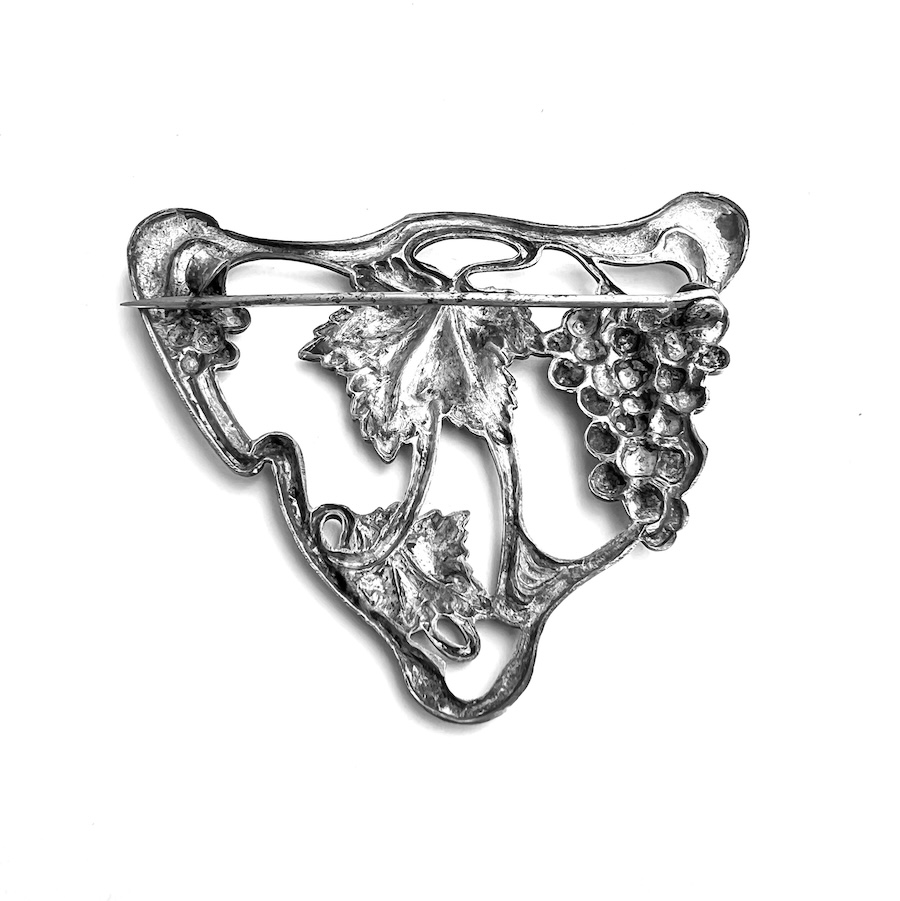
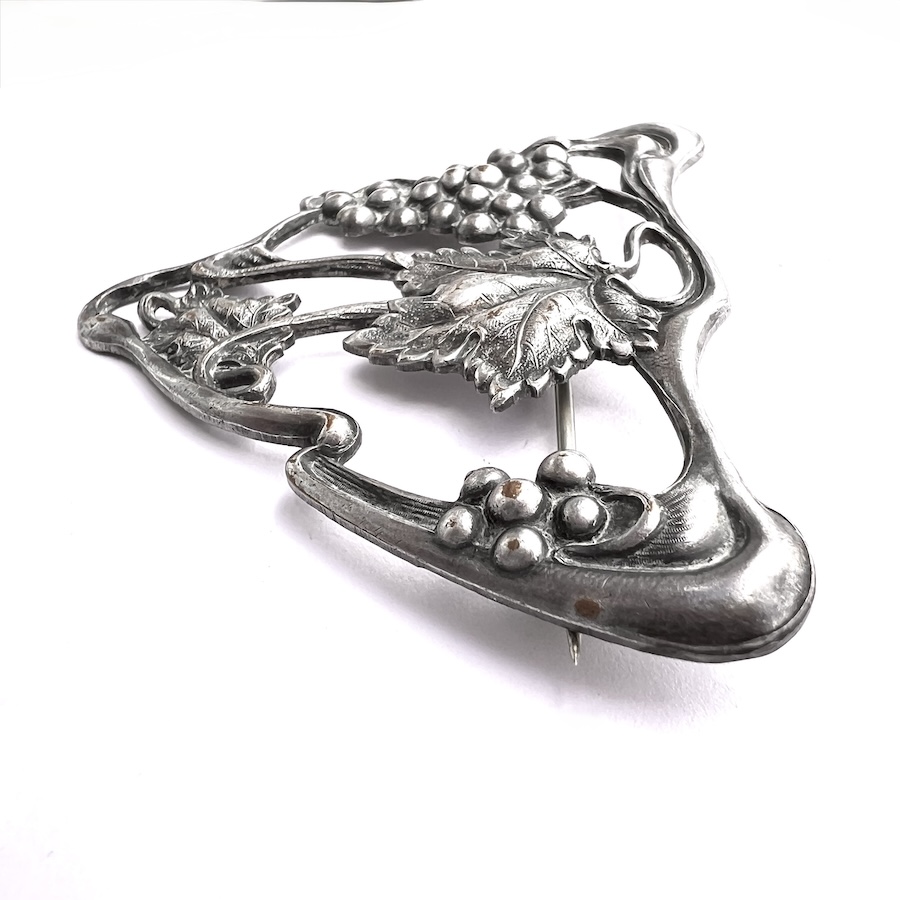
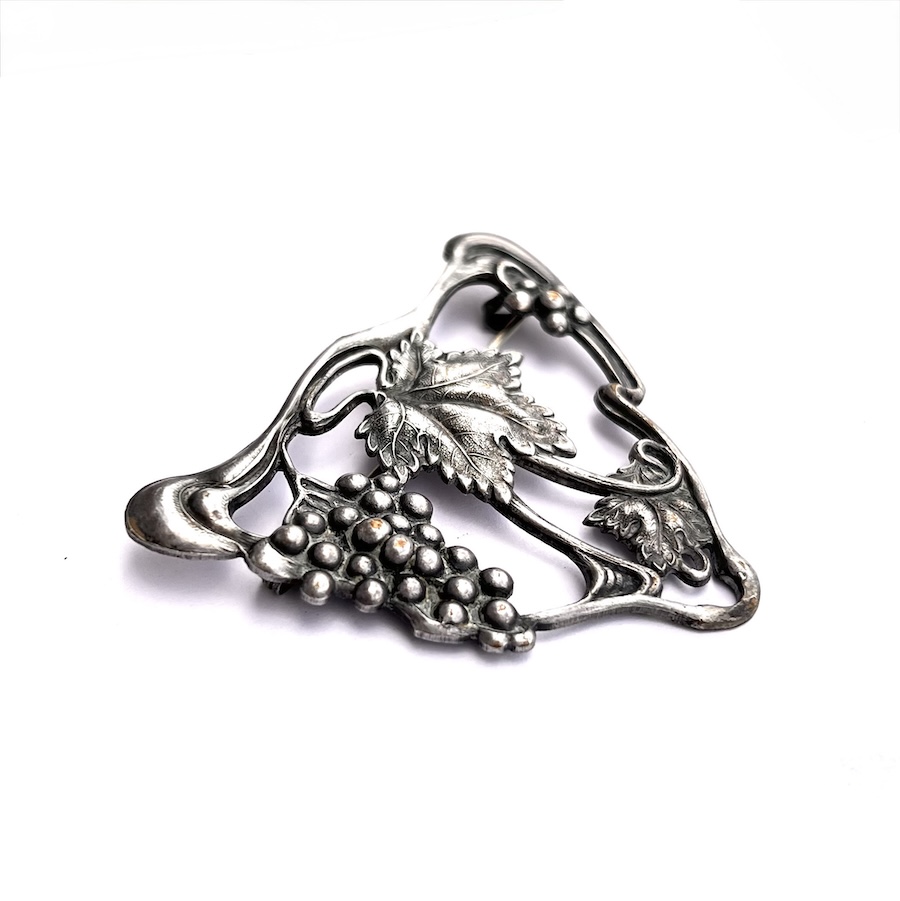
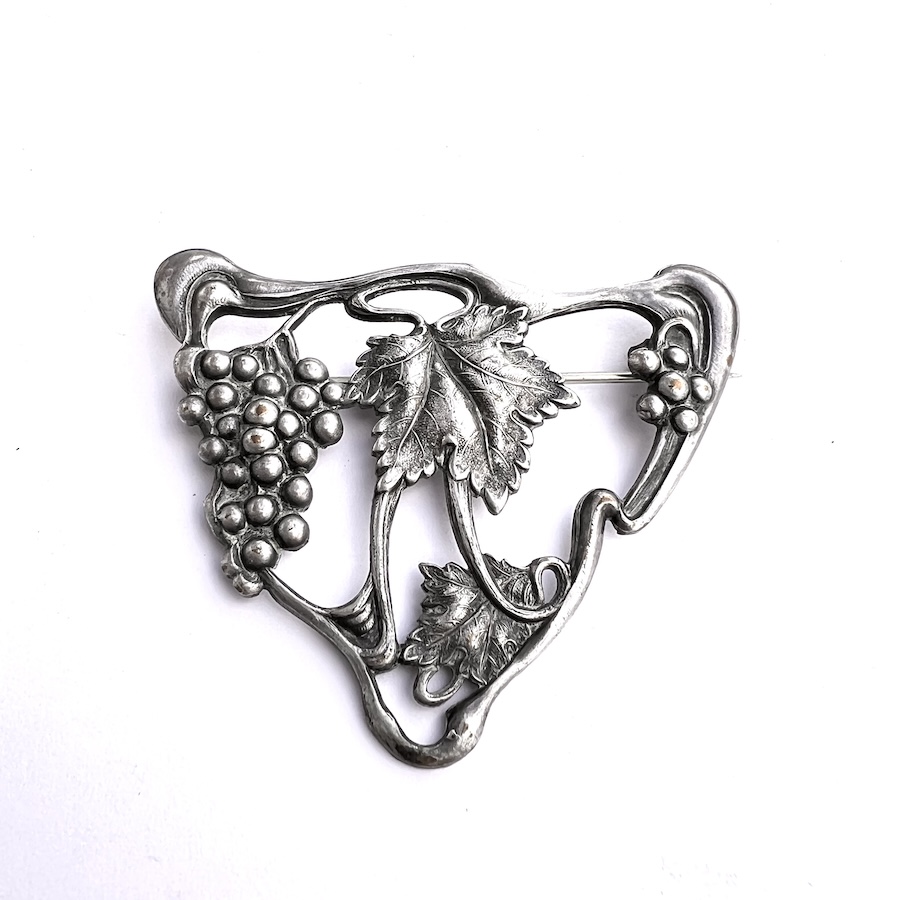
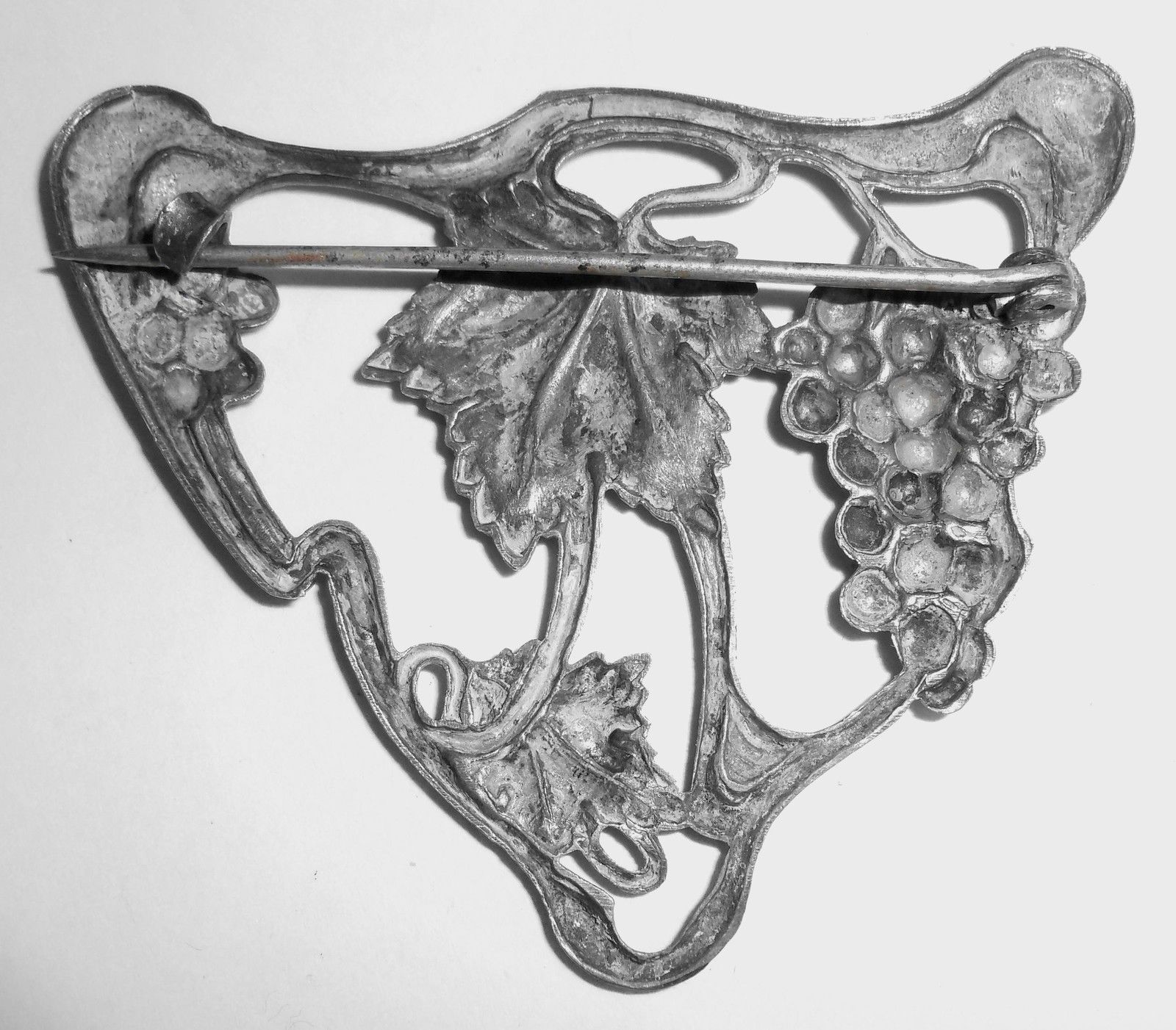
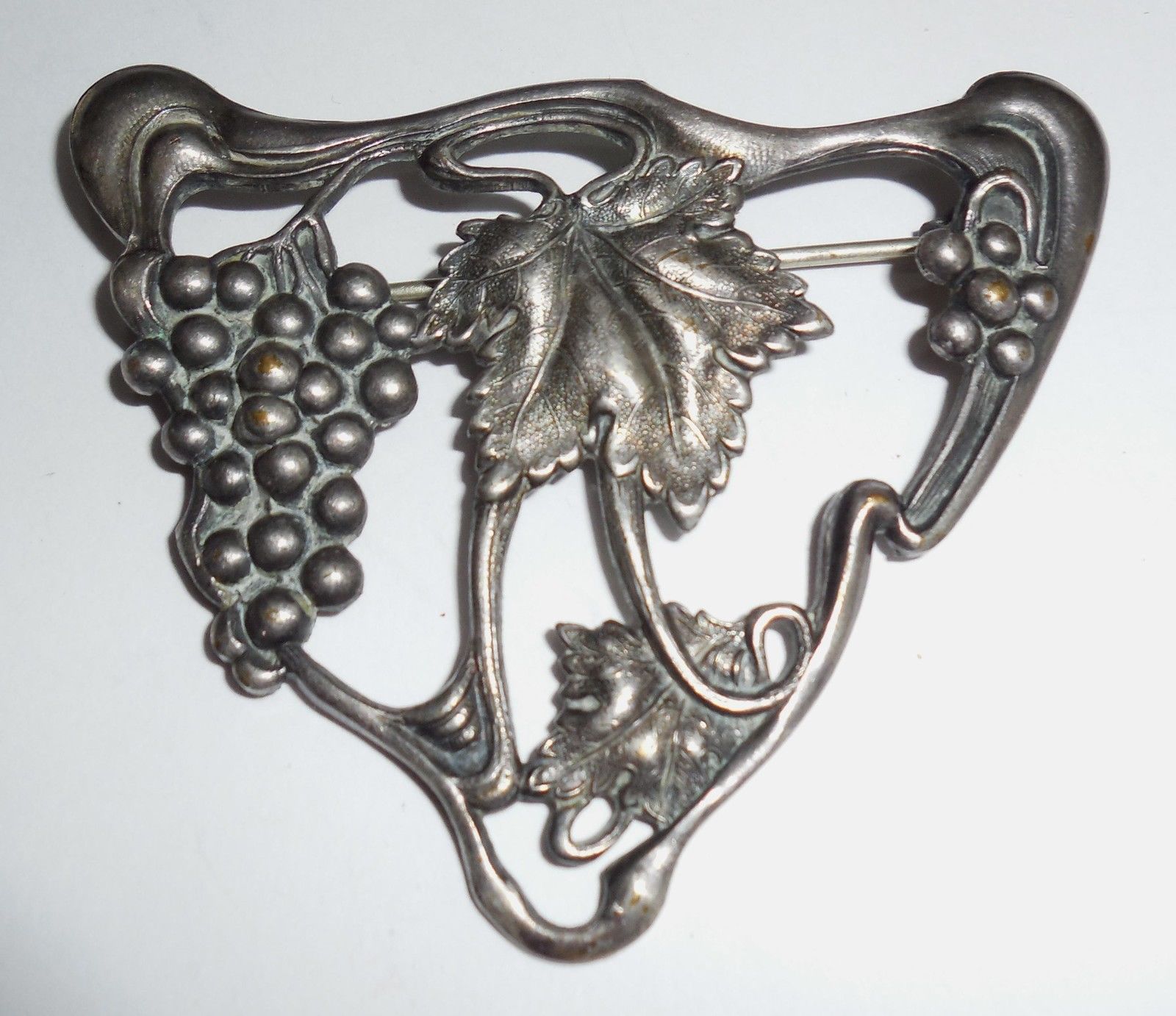
This is a lovely large antique Art Nouveau Jungendstil period sash pin or chatelaine pin conversion with bunches of grapes, a whiplash perimeter for which Jungendstil jewelry is well known, and what appears to be oak leaves whipped around the center. Likely made of hardened steel gunmetal which was readily used during this period in order to accommodate the detailing required for the intricate design work of this period. It is not sterling and there are no remnants of silver plating on the front. The back also looks like hardened steel. It came from an estate from many decades ago and has not been touched. The back still has its original antique Victorian Art Nouveau thick C Clasp intact. There are no cracks or splits or tears or breaks. The gunmetal itself has gray and silver color with deep undertones. Overall condition is excellent. No damage or repair. All original. Size measures 2 3/4″ wide east to west across the top by 2 1/2″ north to south on each side going down the diagonal. This is a lovely original example of original antique Jungendstil jewelry for any antique jewelry collection.
Jugendstil jewelry (c. 1890–1910) is the German/Austrian manifestation of the Art Nouveau movement, emphasizing, organic, flowing lines known as “whiplash” curves, nature-inspired motifs, and artistic, handcrafted design over massive luxury. It was a artistic rebellion against industrialization, featuring enamel, pastel stones, and symbolic female forms.
- Motifs: Nature-inspired themes including flora (irises, orchids), fauna (insects, dragonflies), and stylized, flowing female forms.
- Design: Asymmetrical, curvilinear lines (often called “whiplash” lines).
- Materials: Prioritized artistic expression, often using enamel (particularly plique-à-jour), horn, semi-precious stones (opals, moonstones), and baroque pearls.
- Technique: High-quality craftsmanship with a focus on delicate, intricate metalwork rather than high-value gems.
- Time Period: The peak of the movement was roughly 1890-1910.
- Origin: The style was a reaction against 19th-century industrialization and academic art, coinciding with the broader European Art Nouveau movement (known as Stile Liberty in Italy, Modernisme in Spain).
- Influence: It was influenced by the British Arts and Crafts movement and Japanese artistic styles.
Additionally, bunches of grapes and vine leaves were prominently used as a motif in Jugendstil (German/Austrian Art Nouveau) jewelry, reflecting the movement’s focus on organic, stylized natural forms.
- Design Characteristics: Jugendstil grape jewelry frequently featured artistic, flowing representations of grapevines, leaves, and grape clusters, often rendered in silver.
- Materials and Style: Pieces often incorporated seed pearls to represent individual grapes, paired with green paste stones or enamel for leaves. These designs often emphasized the “Dionysian” theme of nature, abundance, and pleasure.
- Context: While grapes were a popular motif in the broader Victorian Archaeological Revival style earlier (c. 1860s-1880s), they were reinterpreted in the early 20th century through the curving, organic, and often asymmetrical lines of Jugendstil and Art Nouveau.
- Production: Similar motifs appeared in both high-end jewelry and, as shown in the provided results, in decorative arts (e.g., silver tureen handles and glass by designers like Koloman Moser), reflecting a holistic approach to design in the era.
- During the Jugendstil (German Art Nouveau) jewelry movement, which flourished from roughly 1895 to 1910, a very hard, silver-colored, non-precious metal frequently used for intricate designs was steel, often specifically cut steel or hardened steel
-
Gunmetal was used in antique Jugendstil (Art Nouveau) jewelry, particularly between 1890 and 1910, as a moody, dark backdrop to highlight colorful enamels and semi-precious stones.Art Nouveau designers, including those in the German-speaking Jugendstil movement, rejected the traditional focus on the intrinsic value of materials, favoring artistic expression and unusual materials over pure gold or silver.Usage and Characteristics in Jugendstil Jewelry:
- Aesthetics: Gunmetal was popular for its sleek, dark, blue-black aesthetic, which created a dramatic contrast with vibrant, colorful enamel work.
- Techniques: It was often paired with techniques such as plique-à-jour or basse-taille enameling.
- Context: It was frequently used in jewelry pieces that featured naturalistic motifs like insects, flowers, and sinuous lines.
- Other Materials: Similar to gunmetal, other dark or unconventional materials like Berlin iron, steel, and horn were also common in the period.
While high-end designers sometimes used these darker, non-precious materials for artistic impact, it is important to distinguish this from the wider, later use of gunmetal in cheaper costume jewelry. -
Jugendstil (Art Nouveau) gunmetal jewelry was rarely uniform in color and often featured a deliberate mix of silver, gray, and dark tones. While gunmetal is typically a dark grey or black finish, period pieces often combined this dark plating with bright silver, gold, or copper components to highlight the design’s intricate details.Key characteristics of gunmetal jewelry from this era include:
- Mixed Metal Tones: Jugendstil designs frequently used gunmetal in combination with contrasting materials. It was common to see dark, oxidized gunmetal exteriors paired with bright, polished silver or even rose gold accents to enhance the curvaceous, nature-inspired motifs.
- Antiqued Patina: The “gunmetal” finish on authentic antique pieces often has a multi-tonal, aged look—varying between light grey, dark charcoal, and sometimes iridescent metallic shades.
- Plating Techniques: Gunmetal jewelry was frequently produced by applying a plating (composed of copper, tin, and zinc) over a brass base, which could result in variation, particularly if the plating was worn.
- Contrast in Texture: Makers would often purposely leave certain areas of a piece brighter (silver) while others were deeply blackened, creating a dramatic, 3-dimensional contrast.
“Gunmetal” in Jugendstil is best described as a dark grey, moody backdrop rather than a strictly uniform, monochromatic color.