Description
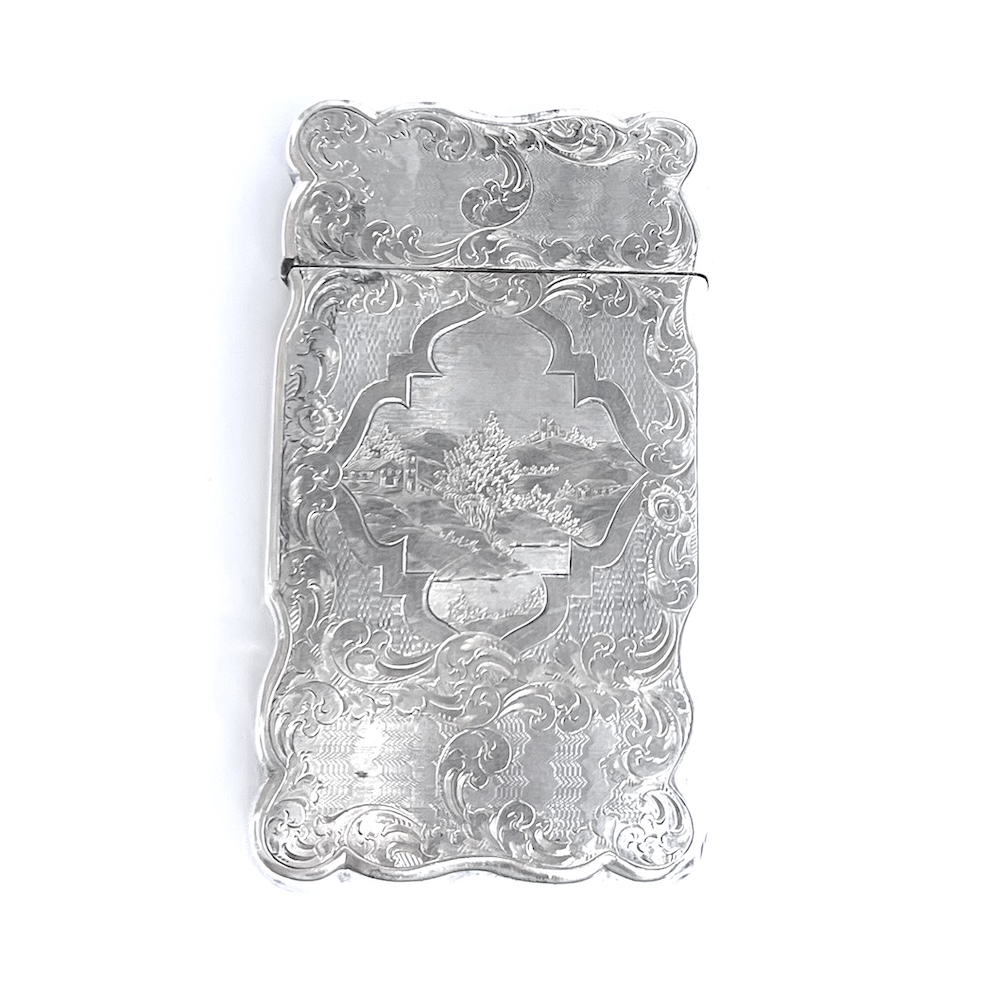
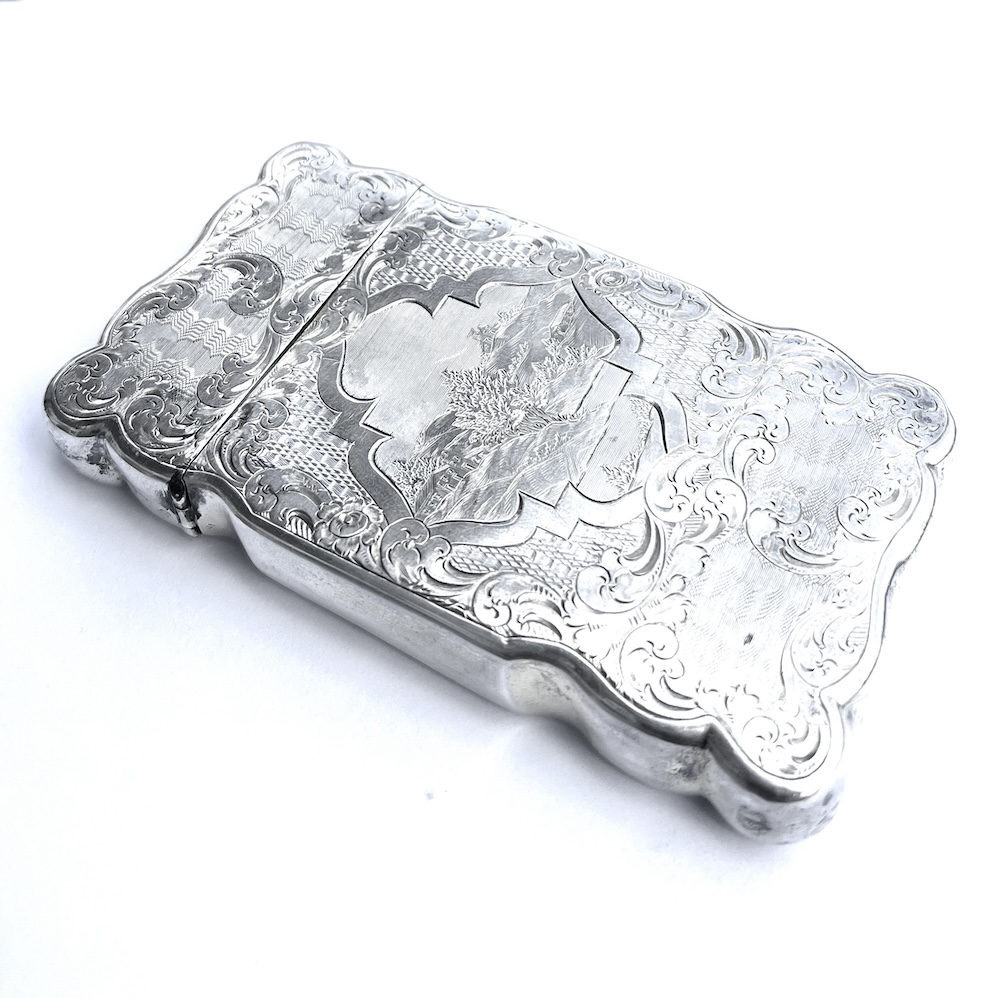
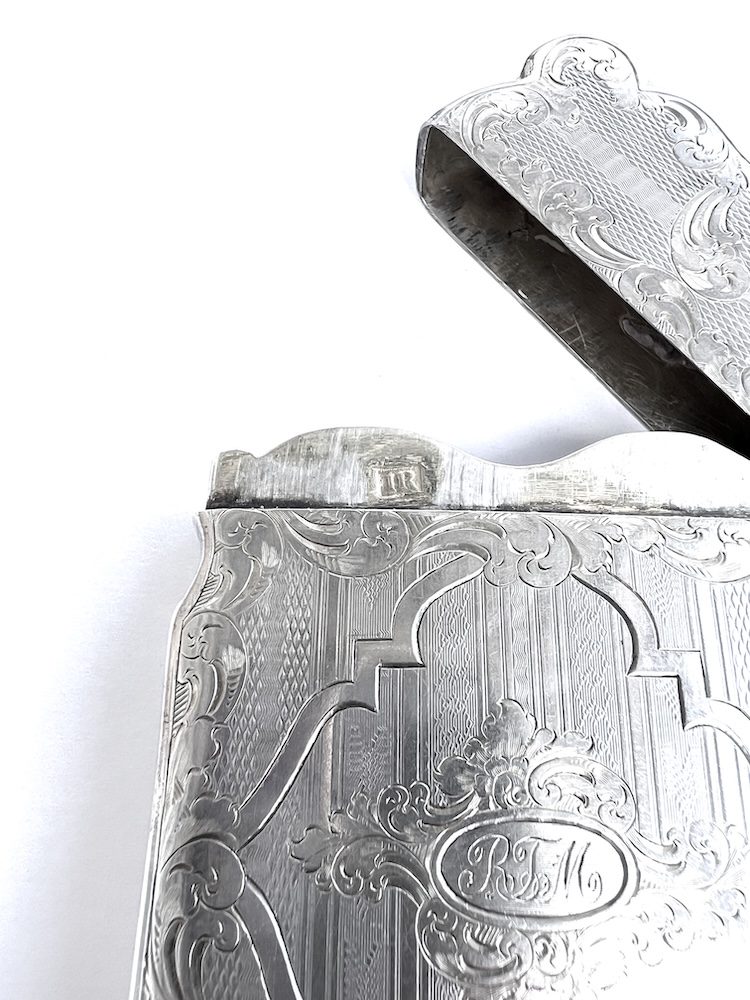
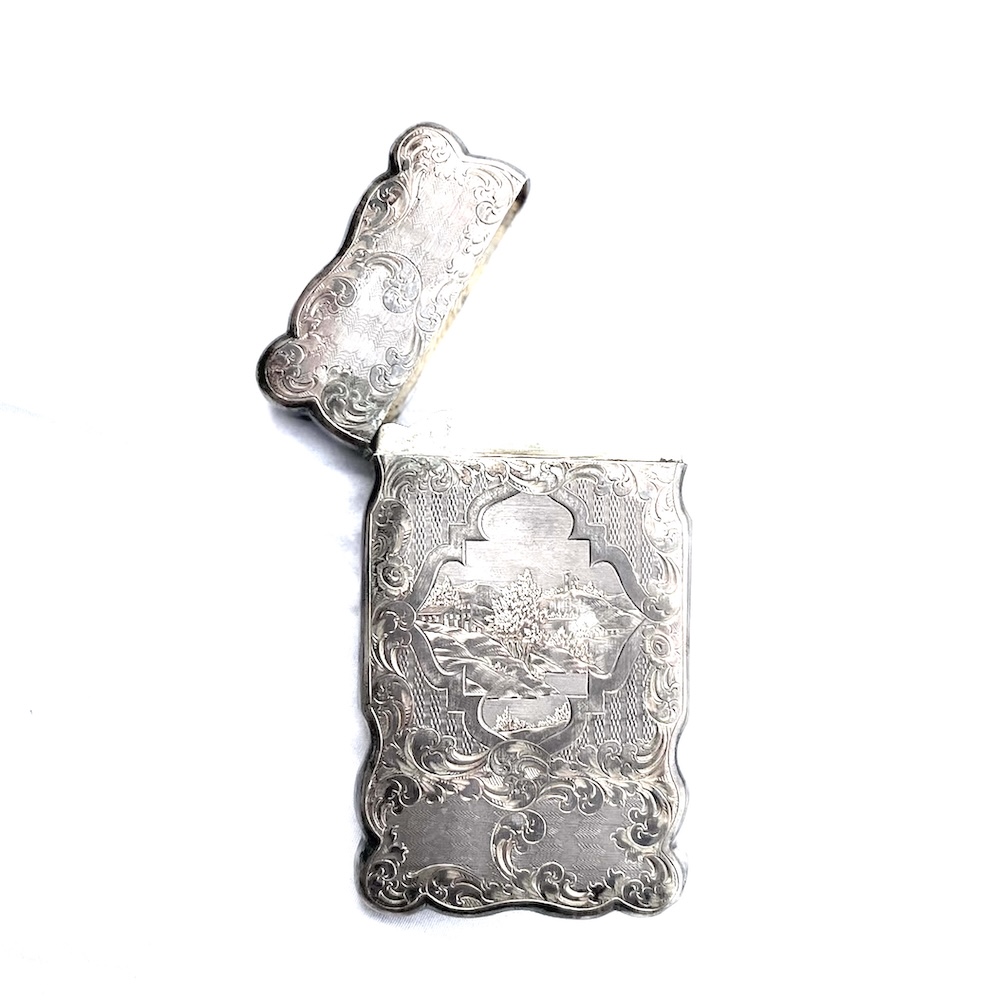
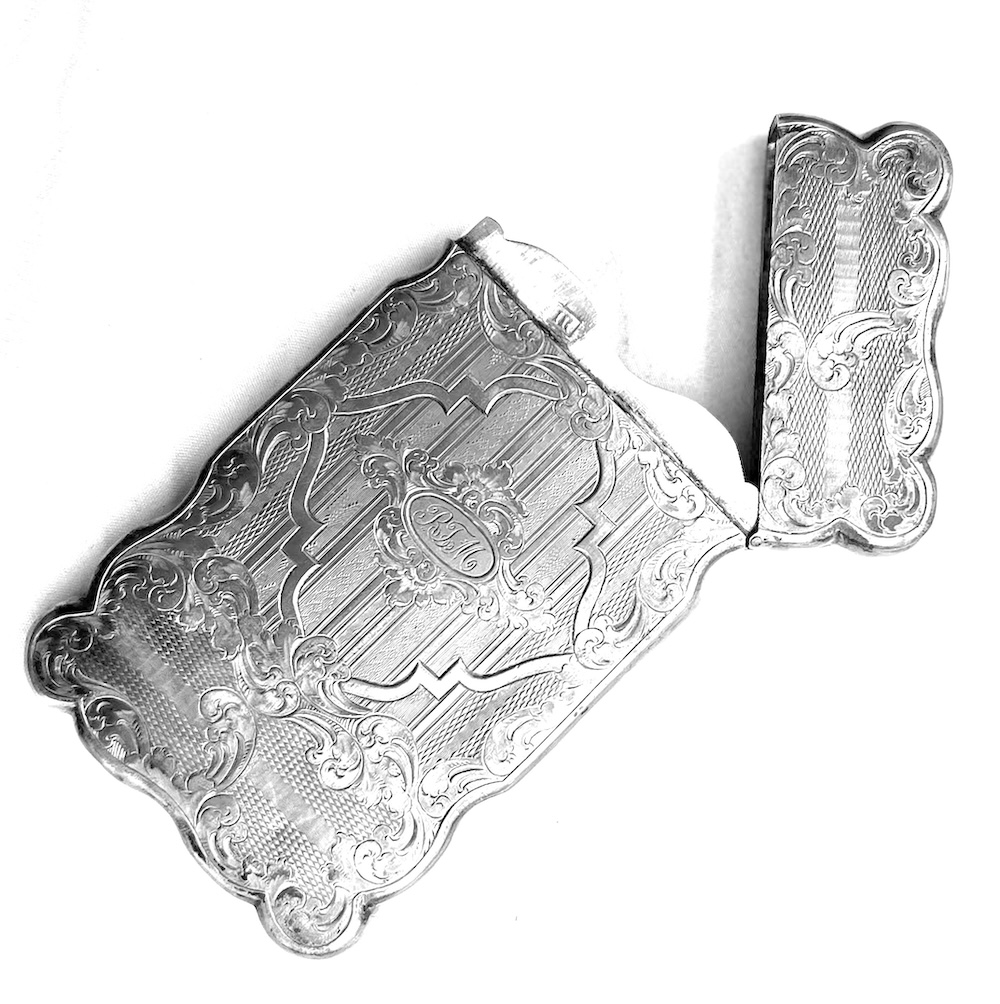
Having a beautiful hand etched English country side front and handmade by Smithsonian listed silversmith Joseph Richardson during the Early American early/mid 1700s English Colonial era in America this is a stunning antique calling card or visitors card card case. These cases were an accessory that was often commissioned to be made by well-known silversmiths of the day and carried by wealthy individuals in America and Europe from the 1700s through the 1800s Victorian era. This one is early American and as per the Smithsonian book of Early American Silversmiths the IR in a rectangle maker mark seen in photo is known to be made in Philadelphia between 1720s and 1770s by Joseph Richardson.
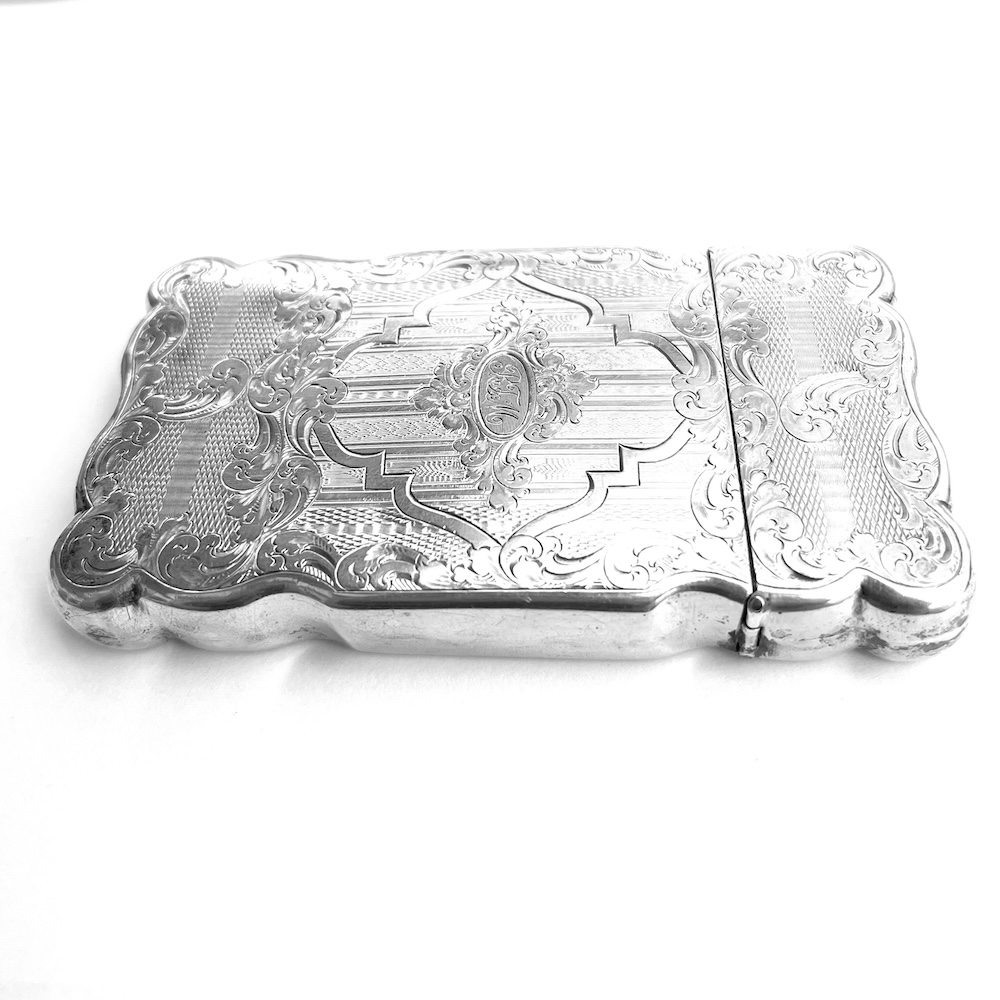
Made of solid sterling silver, jeweler tested and guaranteed. The inside has a noticeable yellow gold wash. Size is 4 1/2″ north to south on outer edge by 2 1/2″ east to west across top outer edge by 1/2″ deep. Weight is 122.5 grams.
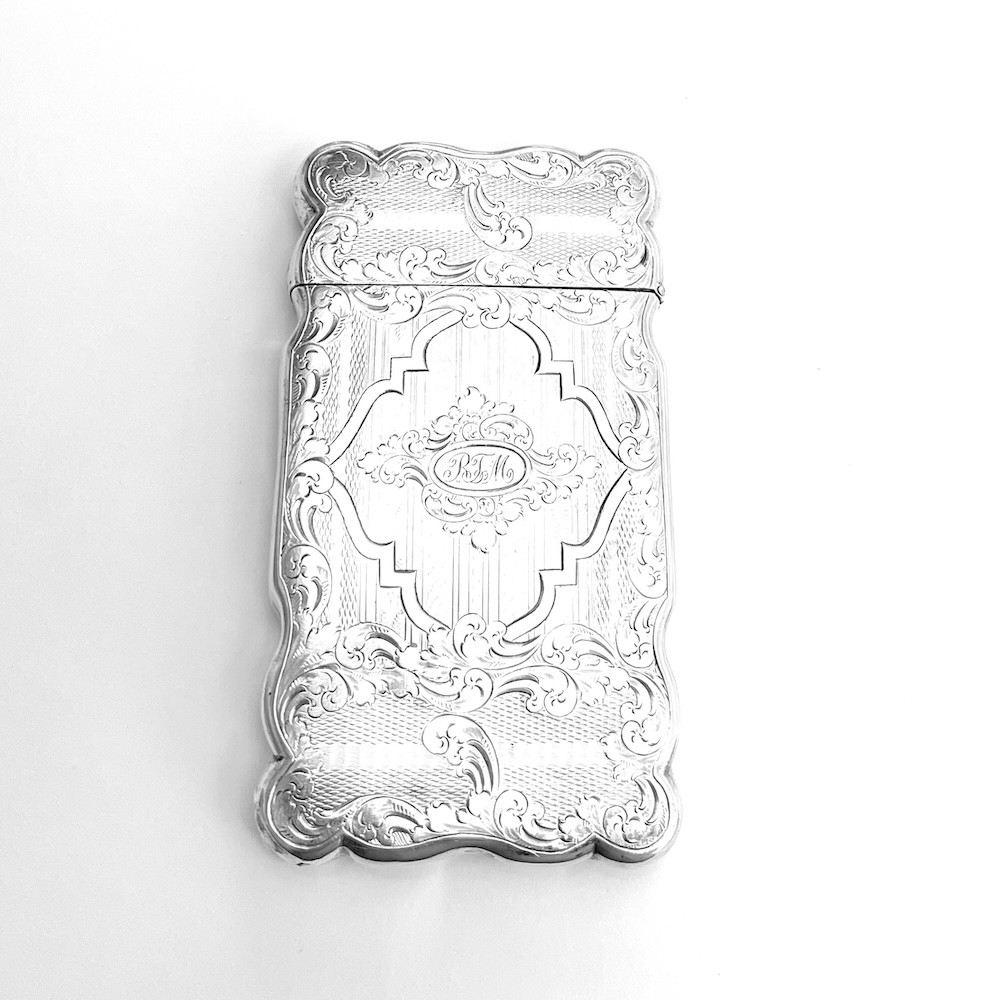
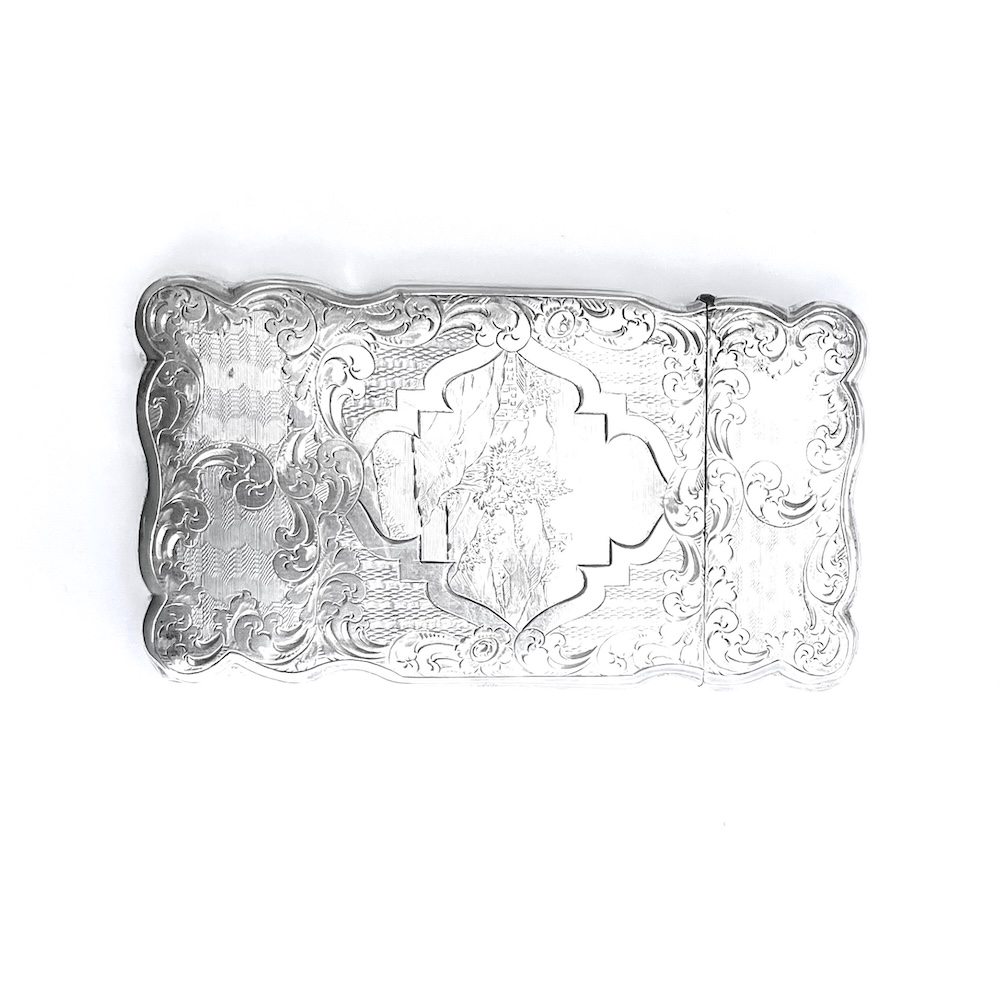
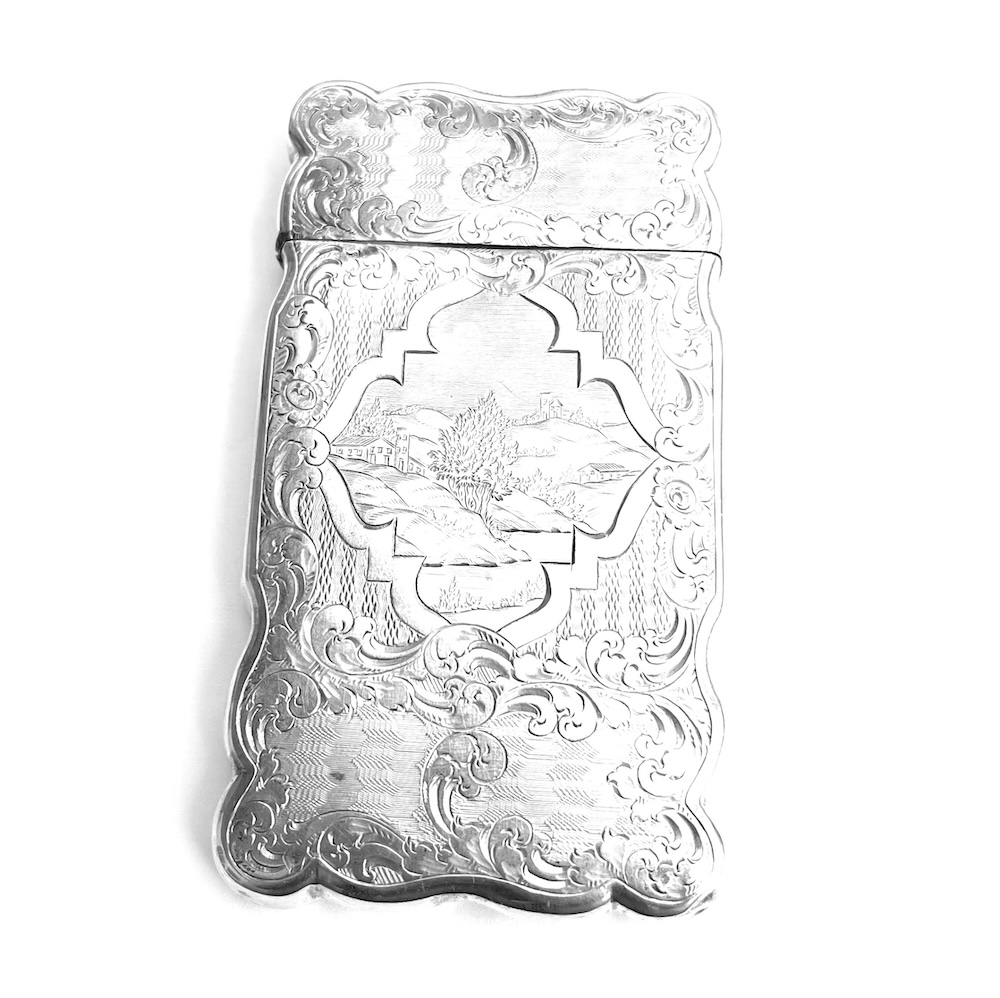
It is very well made by hand and the front has a beautifully hand etched countryside with buildings, houses, barn, forestry, hills, deeply etched scroll work throughout, scalloped edges and more. The back has a fancy script monogram in the center cartouche for whom the case was to be presented in the 1700s. The back is also fully etched by hand and decorated with fancy scroll work, zig zag and straight linear patterning. The entire case is gorgeous.
It is from an estate where is was very well maintained all these years. The outer edge of 1 corner has finger dents which are not visible on front or back view. See photos. Other than this it is excellent overall condition. No dings, deep scratches, tears, splits or wearing down. All of the hand etched work is still deep and strong, completely intact. Not worn down. The top closes but is a little loose on the hinge. Could be tightened by an antique jeweler or silver restorer but not necessary.
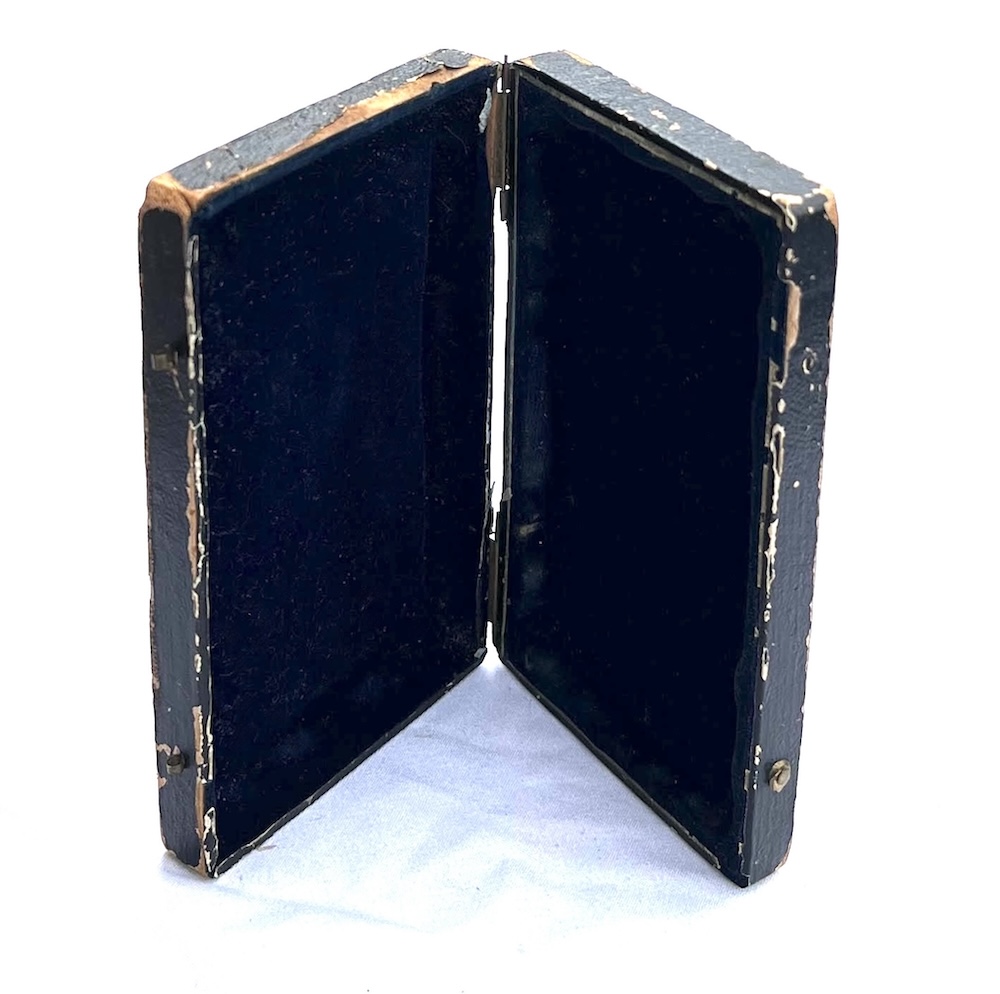
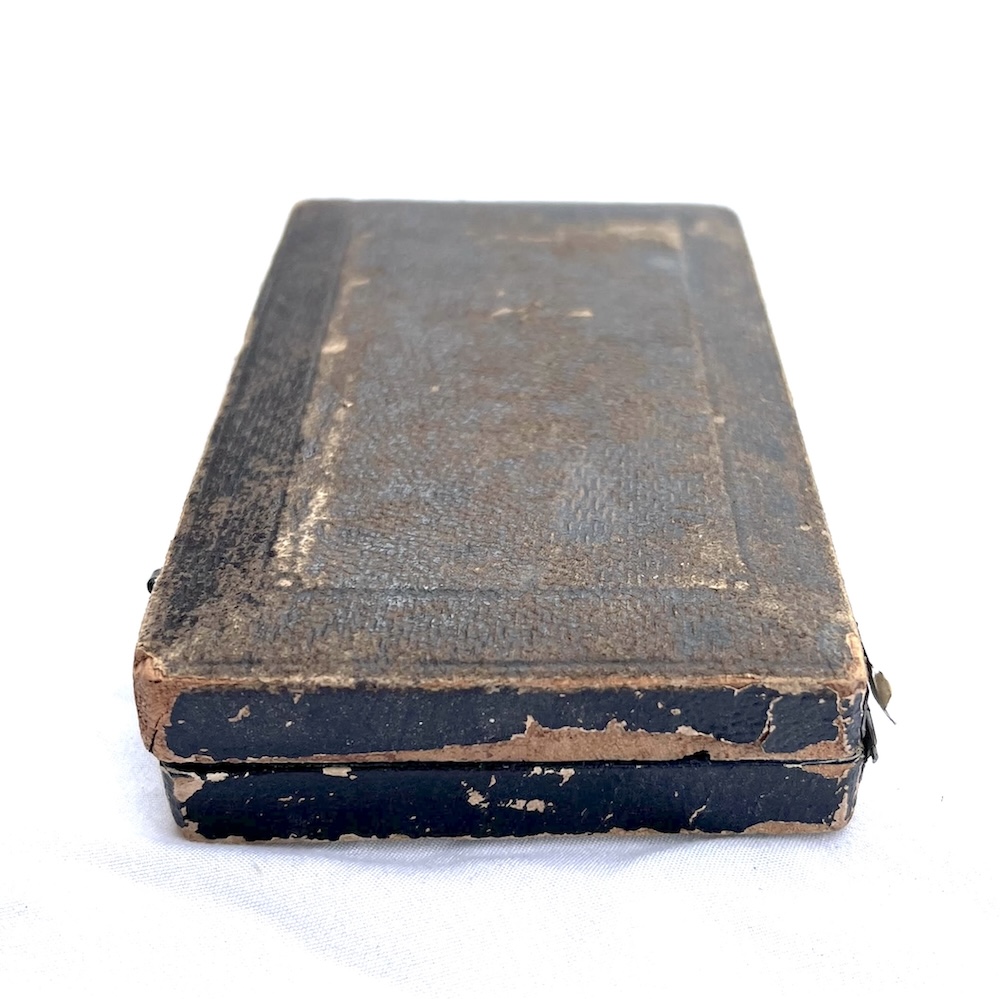
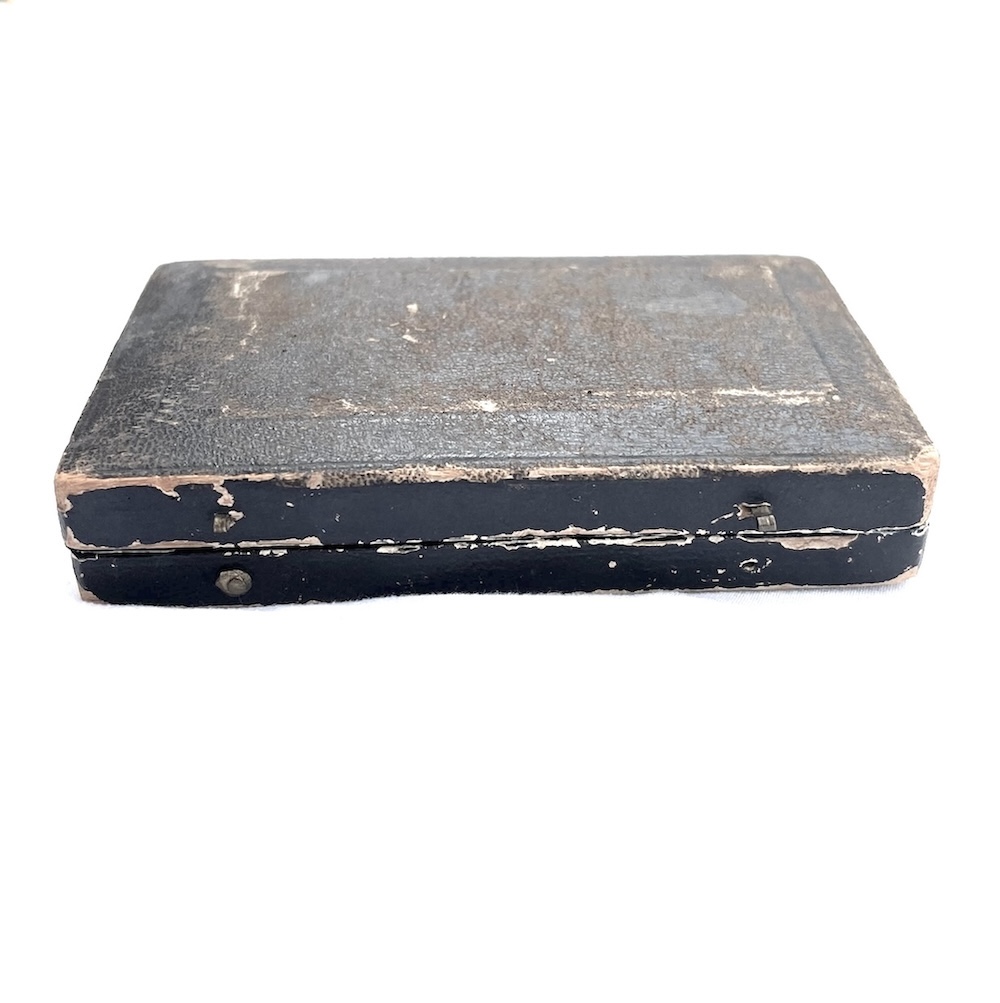
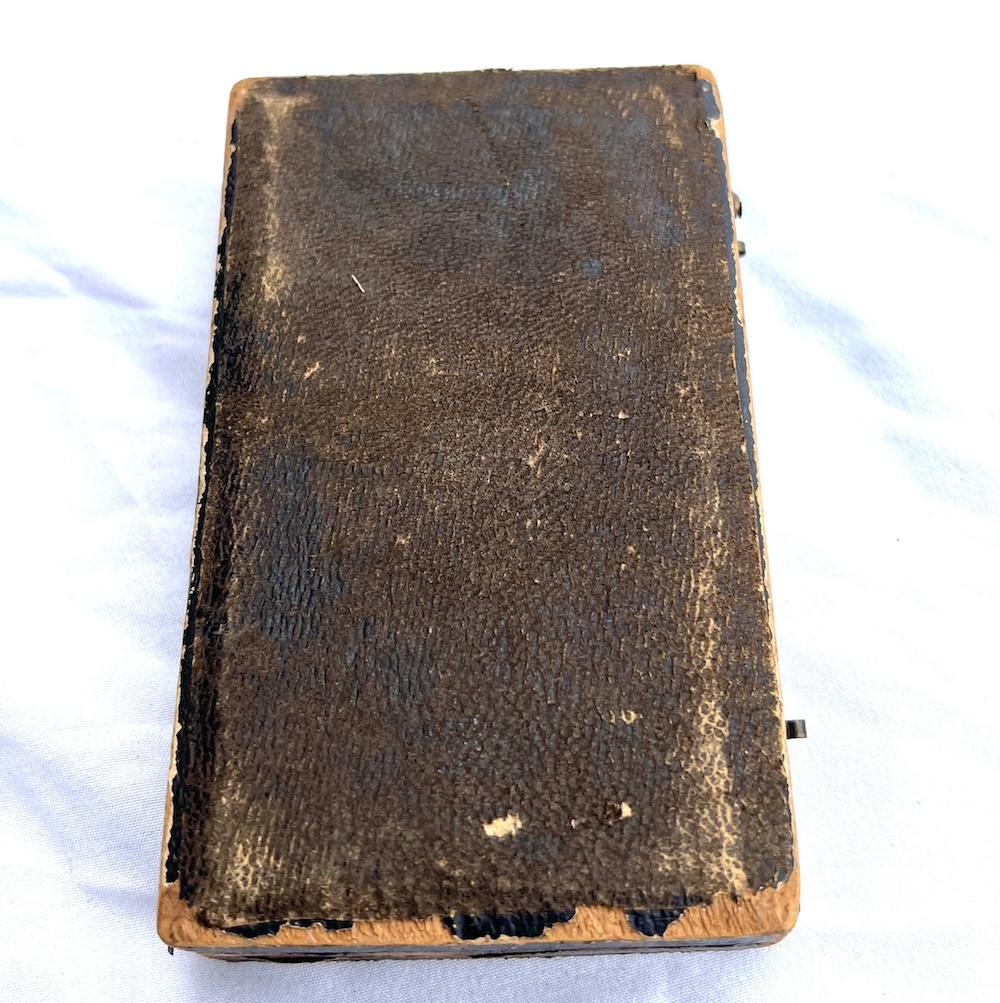
Still in its original black paper and board blue velvet case this is a rare and beautiful card case for your antique accessories collection or vanity display.
REF GOOGLE:
In the mid-1700s, the sterling silver standard, meaning 92.5% pure silver, was commonly recognized and served as a benchmark for quality in the American colonies, as per NY Metropolitan Museum of Art, NY, NY. However, the term “sterling” itself might not have appeared on American-made silver during the Colonial period, possibly due to restrictions from the Crown. Instead of the term “sterling,” silversmiths often used their individual maker’s mark as a guarantee of quality and purity. It was generally understood that this standard for silver content in the colonies was aligned with the English sterling standard,
Reference:
Go to Smithsonian Libraries and Archives
A list of early American silversmiths and their marks.
Please see page 98 of Smithsonian early American Silversmiths for this card case’shallmark and maker mark.
See google reference for “mid 1700s calling cards”
***In the mid-1700s, calling card cases, also known as visiting card cases, were fashionable accessories, particularly among the upper classes in France and spreading throughout Europe. They were used to hold and present small, printed visiting cards, often decorated with images, that were used for social calls and exchanges.
Key Features of Mid-1700s Calling Card Cases:
Materials:
Early cases were often made of gold, silver, or enamel, sometimes with ivory panels or beadwork. Later, they incorporated materials like mother-of-pearl, tortoiseshell, and even ivory.
Function:
The primary purpose was to hold calling cards, which were used to announce one’s visit to a home. The cases were designed to be elegant and reflect the owner’s social status.
Design:
Cases often featured hinged lids and a variety of opening mechanisms. Some were plain, while others were elaborately decorated with engraving, chasing, or scenes.
Social Significance:
The use of calling cards and the possession of a card case were important social customs, indicating one’s place in society. Different corners of the card were folded to convey specific social messages