Description
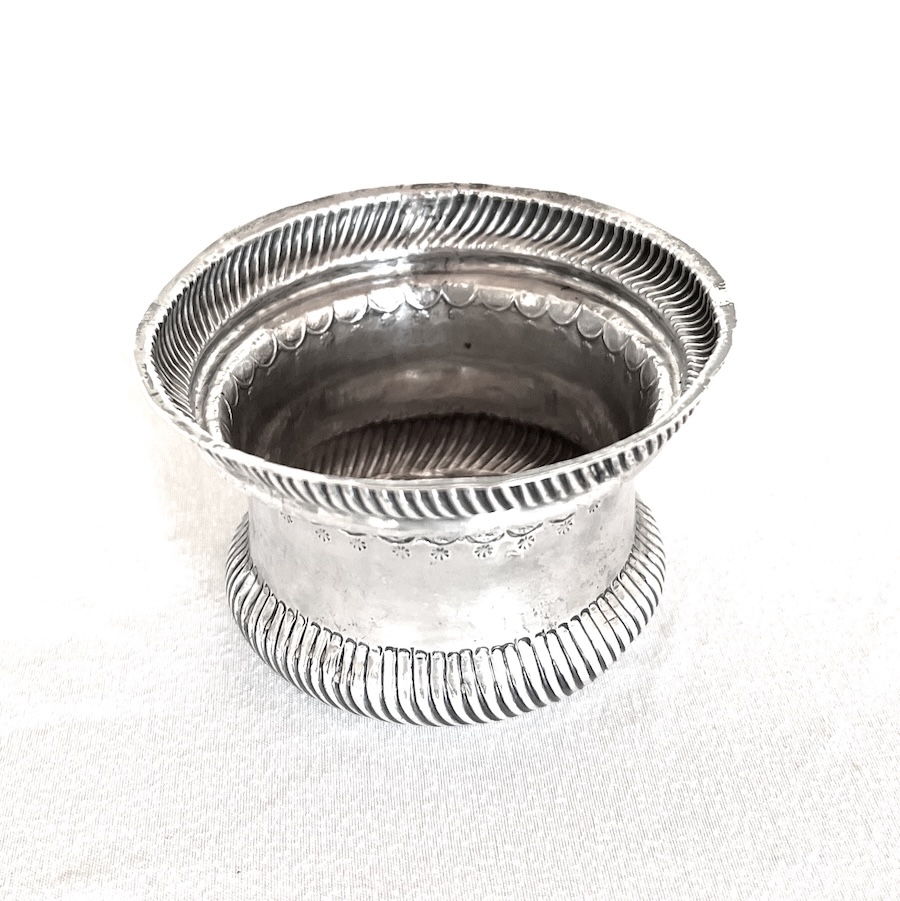
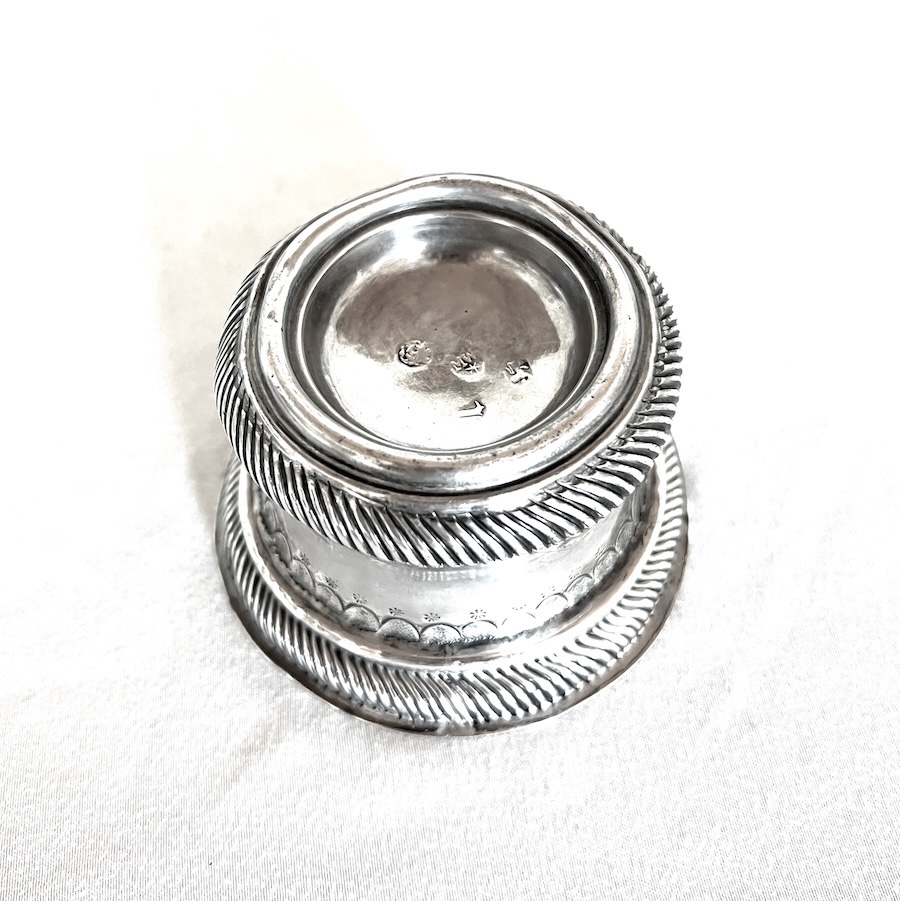
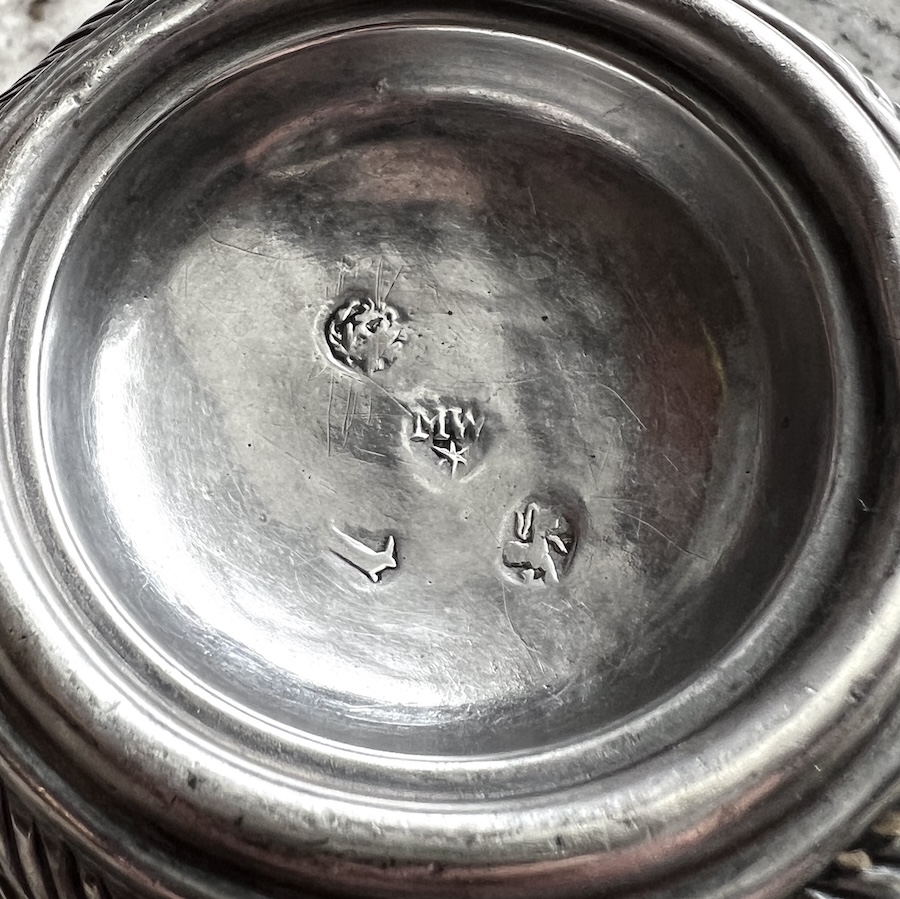
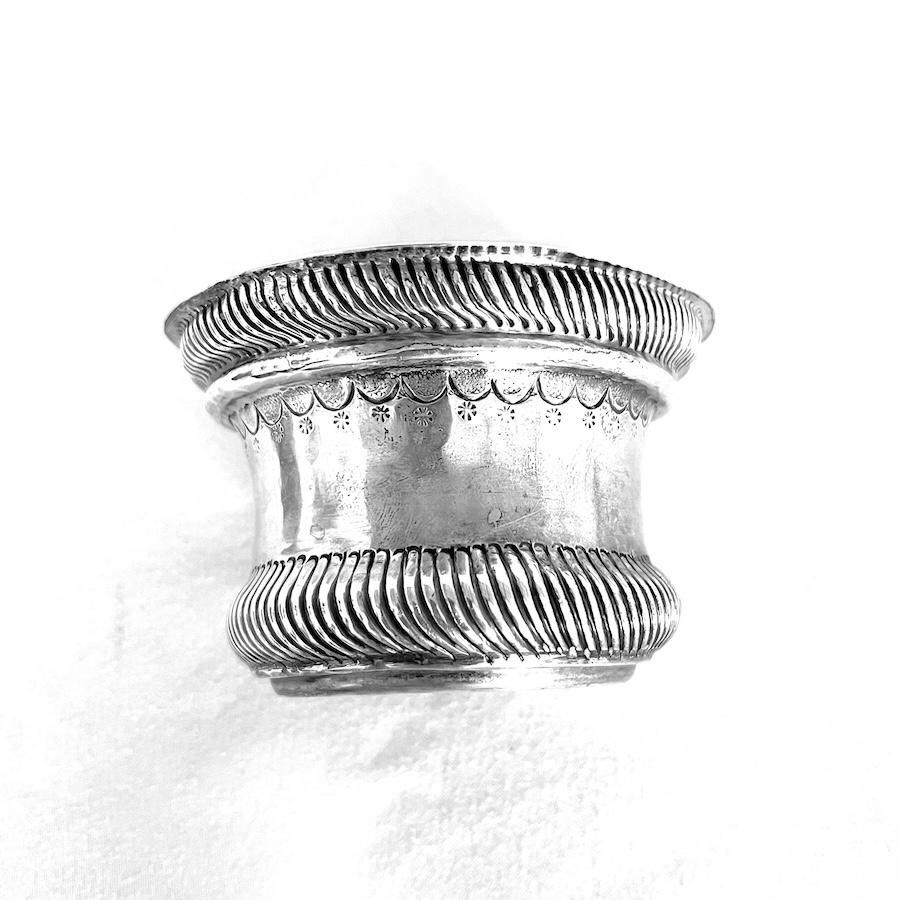
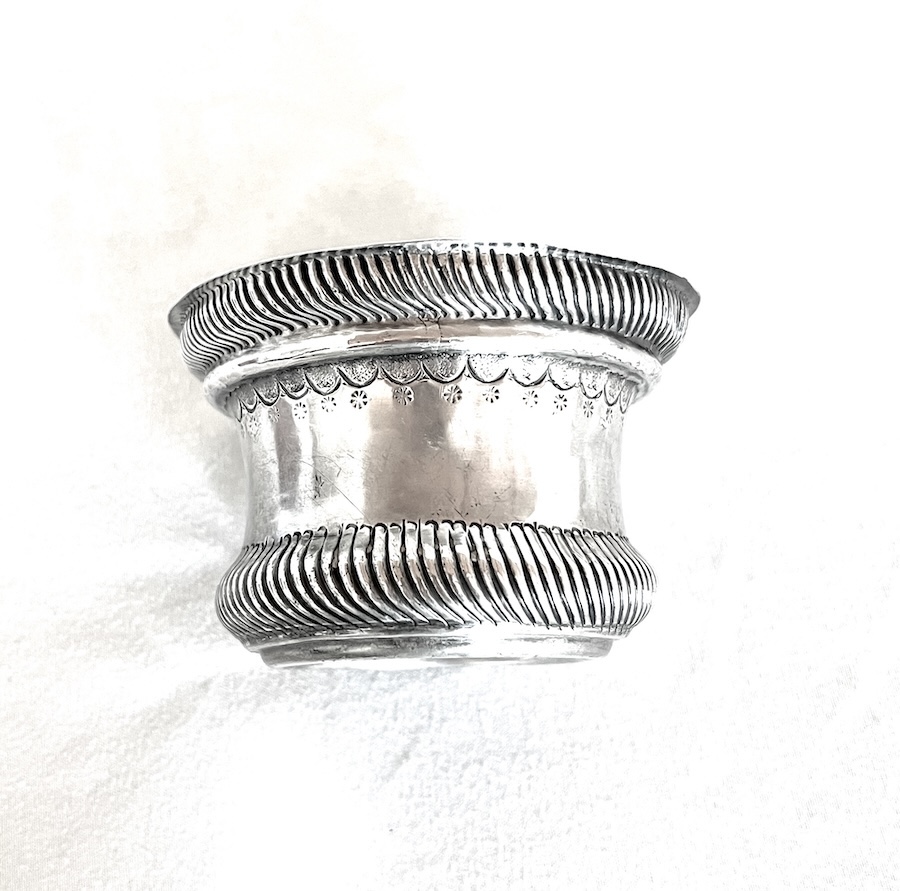
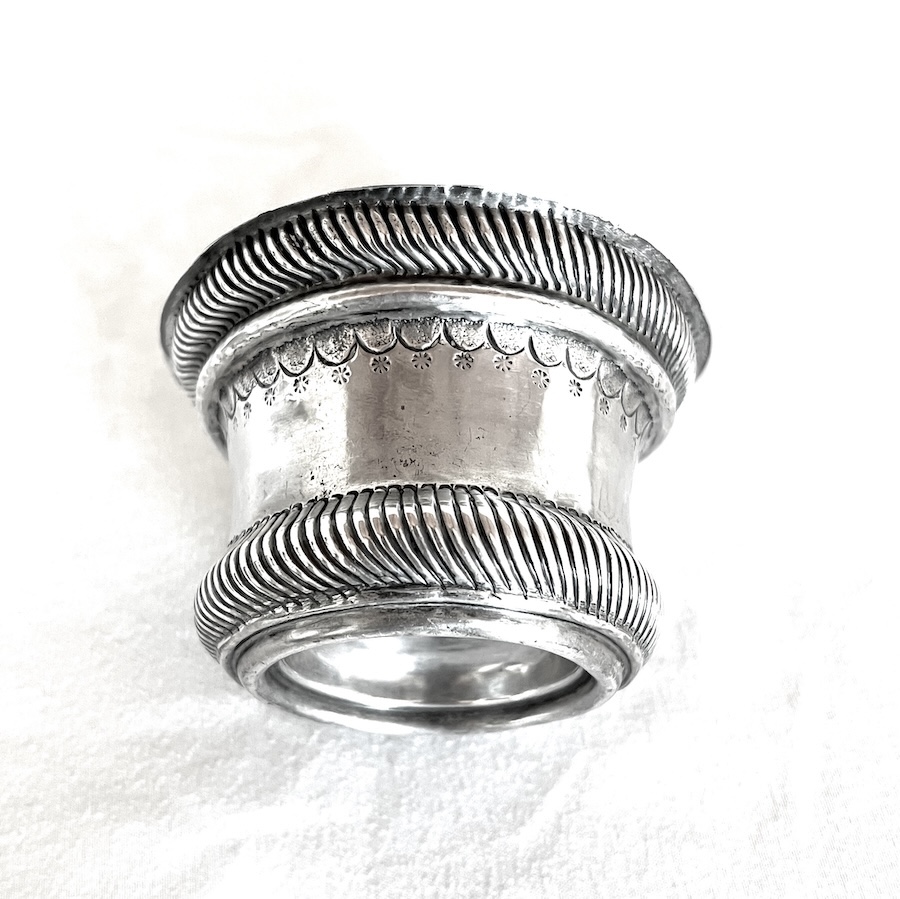
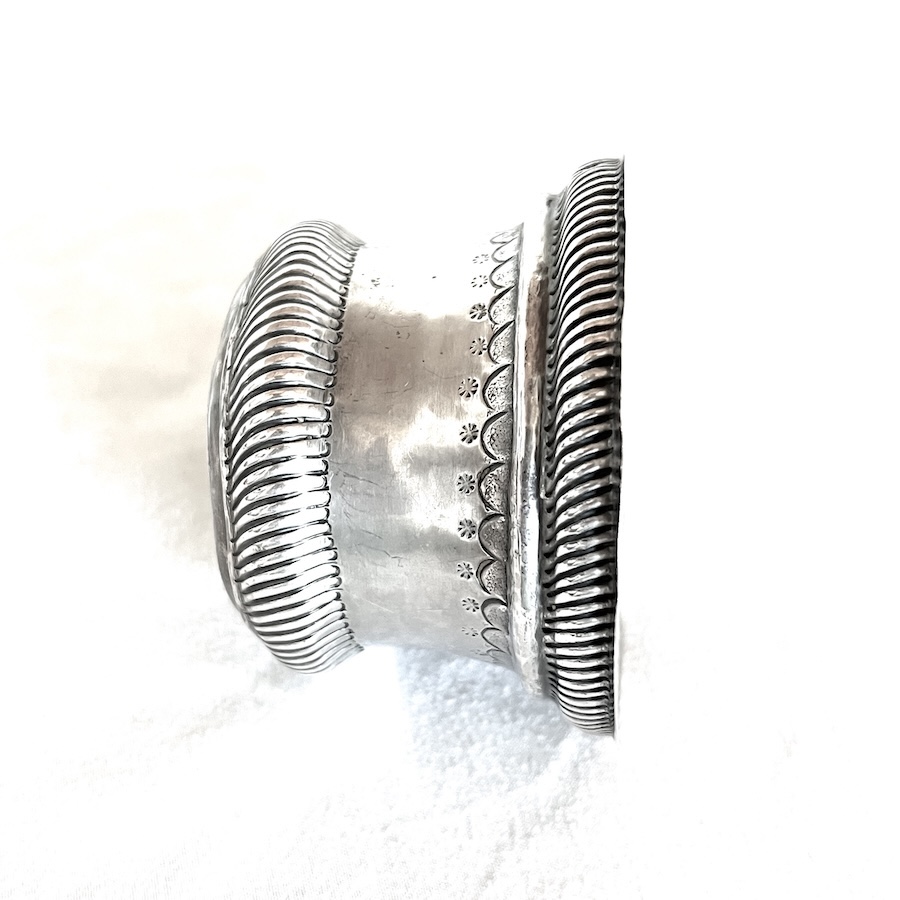
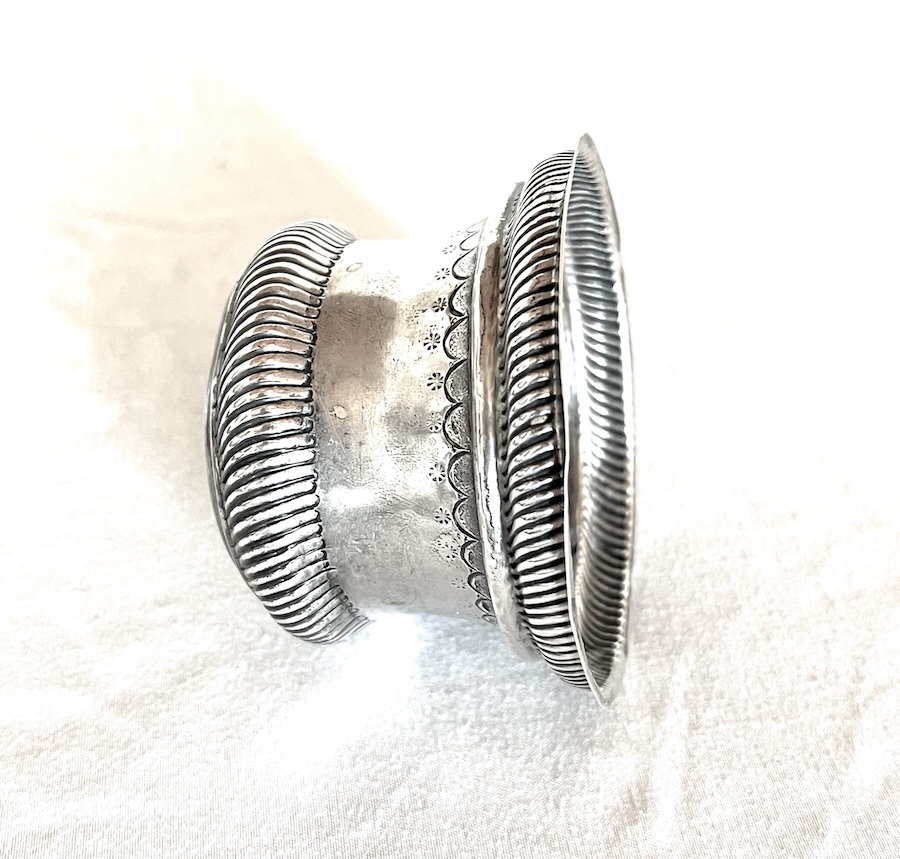
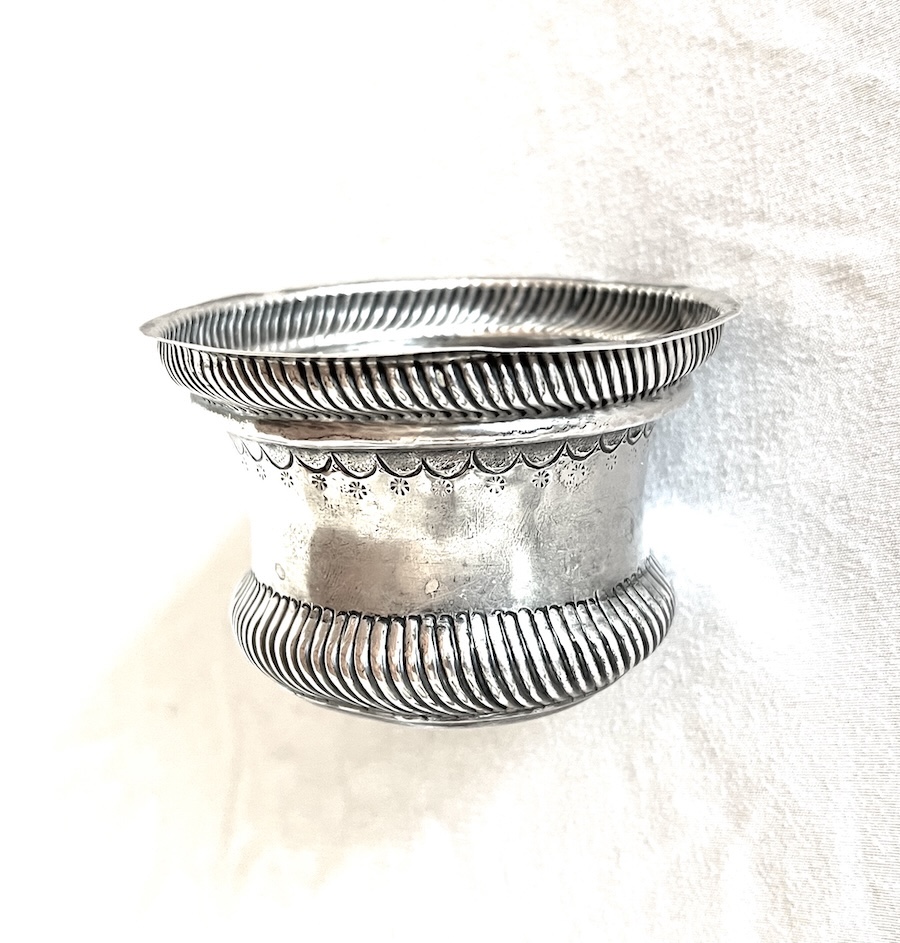
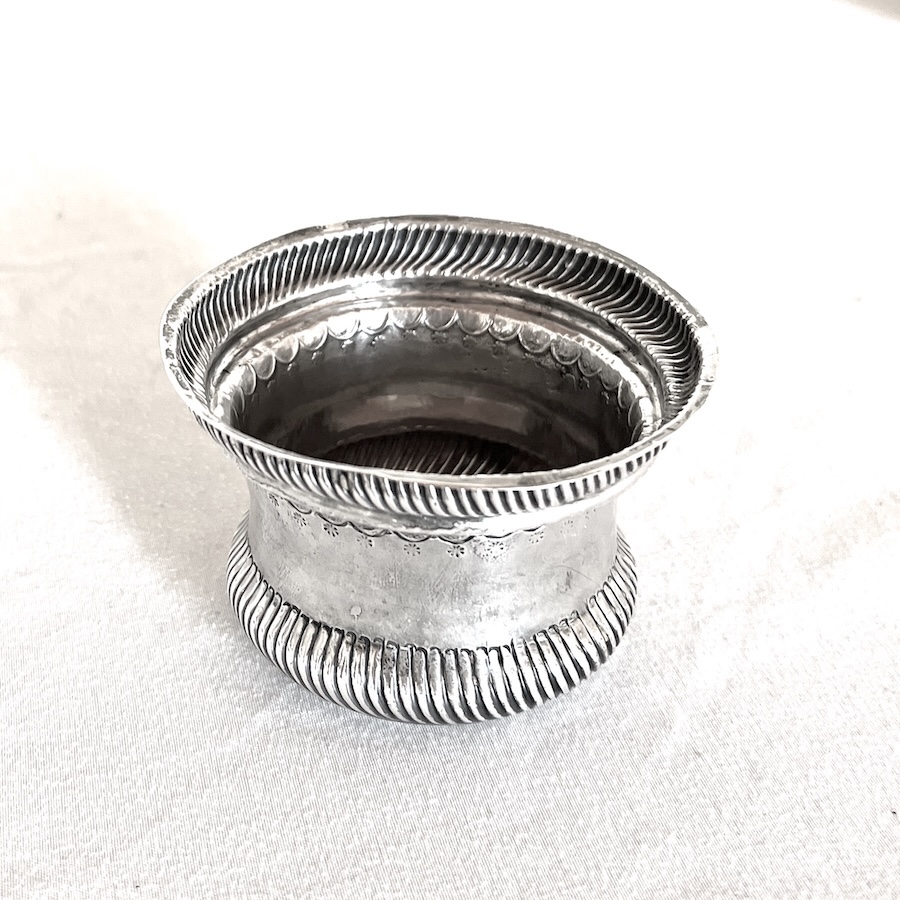
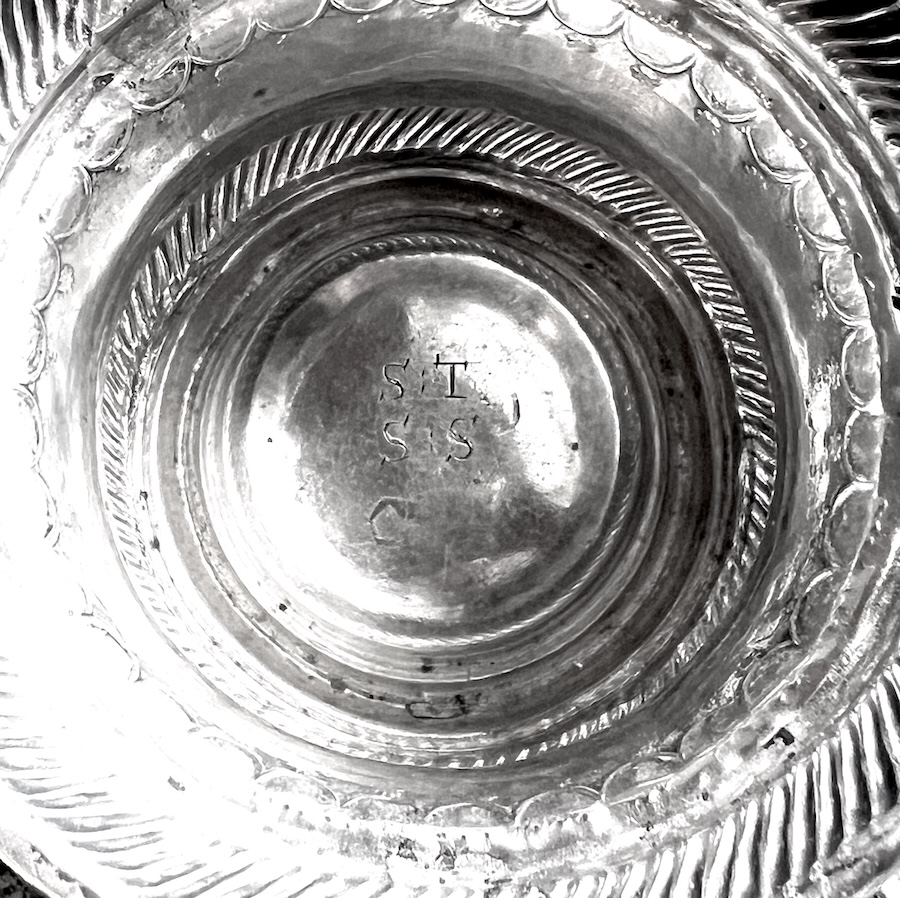
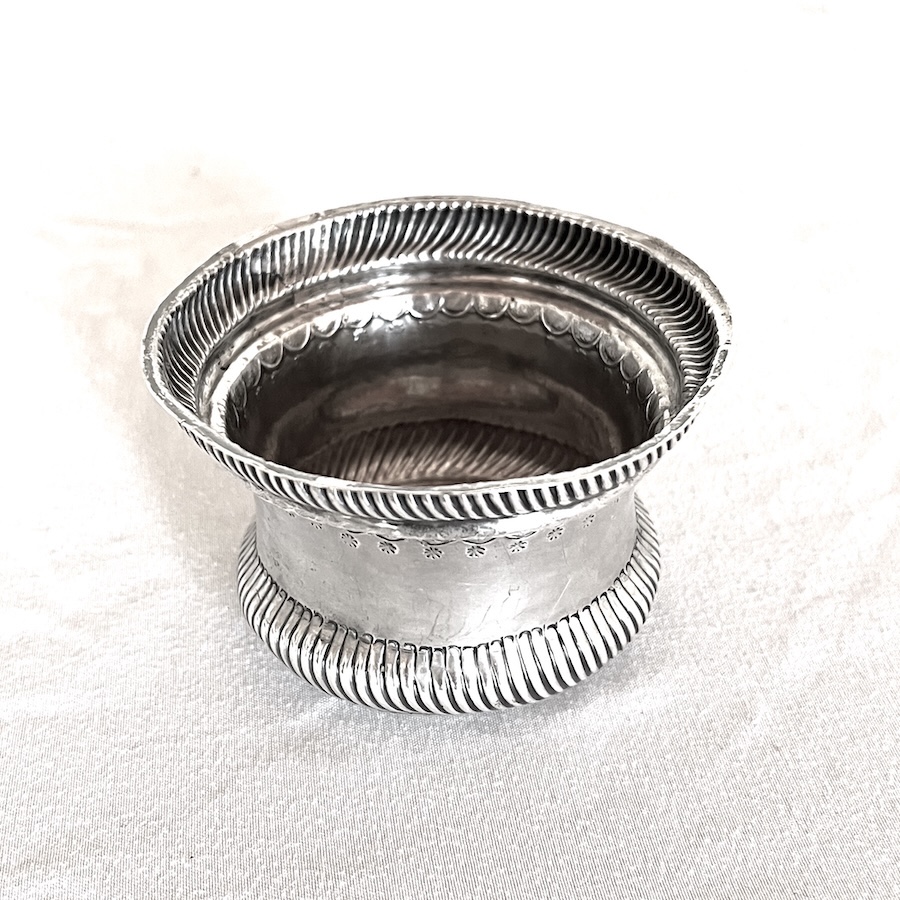
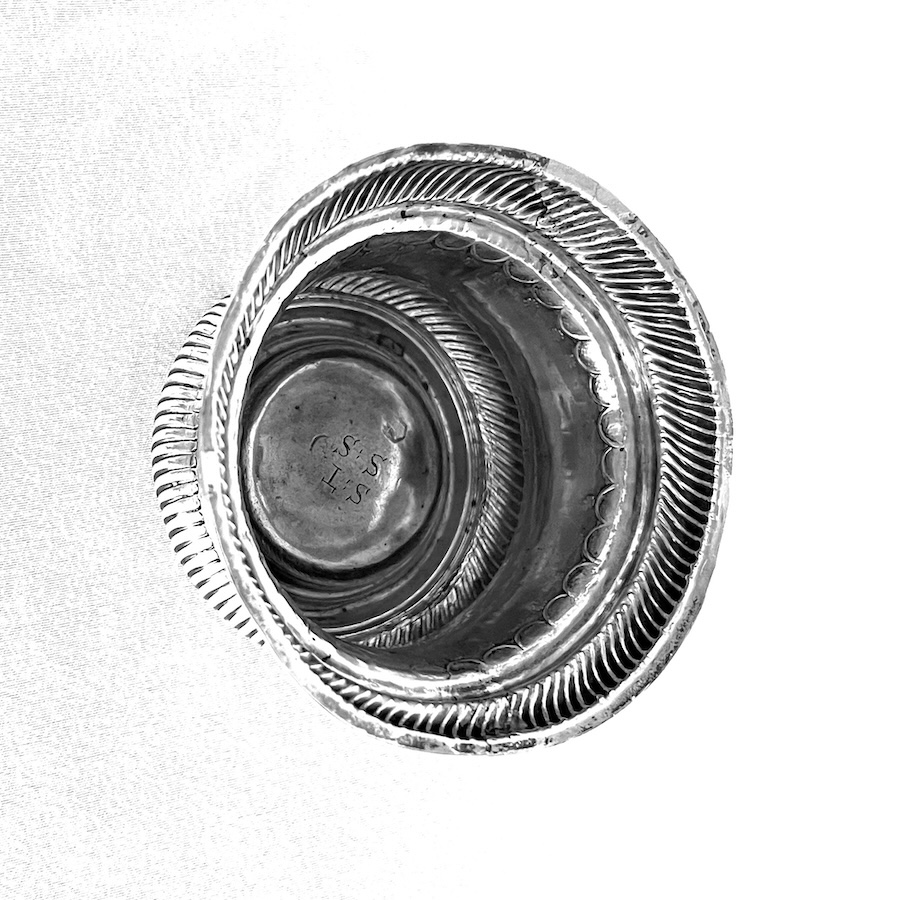
Made in 1791 by Matthew West this is a lovely George III Irish sterling silver large waisted cylindrical trencher salt, master salt cellar. Matthew West was a well known and highly accomplished silversmith in Dublin in the 1700s. Size measures 2 1/4″ tall from top edge straight down to the table by 3 1/2″ wide across the top mouth opening in diameter. The top left hallmark in the photo provided identifies it as solid sterling silver. It is also tested and Guaranteed solid sterling silver. The “MW” over a small star or mullet is the maker mark registered with the Dublin assay office for Matthew West from 1765 until his death. The stylized, lowercase script letter “t” stamp on the bottom left corner corresponds to the Dublin Assay Office calendar year of 1791. You can see this is an early trench from the Georgian period and originally hand crafted by a master silversmith. Size is large and heavy gauge intended to sit in the center of the formal dining table where upon each person would be given an individual salt in order to take salt from the master salt cellar. As per AI: “Large, ornate “standing salts” historically sat in the middle of a communal table as a sign of wealth, whereas trencher salts were designed for individual use and date back to the 17th century.” The inside bottom of the cellar is hand engraved with the initials of the person/family for whom it was originally made or for whom it was to be presented as a gift. This particular master salt is quite large and showy. This silversmith was very adept at decorating the salt with large fancy gadroon work around the top and extending out of the bottom around the entire circumference. Additionally, it has hand chased scallops going around the top underneath the rim which sits directly below the gadrooned top. Weight is 57.4 grams. Its condition is very good given its 235 year old age. No cracks or tears or repair or deep scratches. The top and bottom rims are no longer symmetrically round. Other than this it is in excellent, very gently used condition. It still sits flat on the table without any wobble. The bottom rim sits perfectly on the table even though it is off round. This item was purchased from an estate many decades ago and is a most unusual and early large master salt by a very prominent 1700s silversmith for your antique sterling silver collection.
AI Authenticity Information:
The hallmarks on your piece identify it as antique Irish sterling silver made in Dublin, Ireland, dating from the late 18th century (George III period).
Here is the step-by-step breakdown of each stamped mark visible on the bottom of the piece:
1. Maker’s Mark: “MW” over a Star
Identification: This is the sponsor’s or maker’s mark of Matthew West.
Details: Matthew West was a highly prominent and accomplished silversmith who registered his mark with the Dublin Assay Office and operated between 1765 and his death. This specific punch—featuring the letters “MW” over a small star or mullet—was used during his primary working career in the late 18th century.
Bonhams Skinner
2. Standard Mark: The Crowned Harp (Top-Left)
Identification: Certified as sterling silver purity (.925 fine silver).
Details: This mark shows a harp topped with a crown. It has been the official purity standard stamp used specifically for Irish silver since 1637.
Silver Makers Marks
3. Town/Duty Assay Mark: Hibernia (Bottom-Right)
Identification: Certified by the Dublin Assay Office.
Details: This stamp depicts the seated figure of Hibernia (the classical personification of Ireland) holding a branch. Originally introduced in 1730 to prove that the mandatory silver duty tax had been paid, it serves as the town mark for pieces assayed in Dublin.
4. Date Letter: The Script Letter (Bottom-Left)
Identification: Represents the exact year the silver was tested.
Details: Based on the stylized script and the surrounding punches, this represents a specific calendar year from Dublin’s late 18th-century date cycles (typically the 1780s or 1790s).
Antique Silver And Silver Plate
Dublin Date Letters – Silver Makers Marks
Dublin Hallmarks. The Dublin Assay Office was established in 1637 to assay and hallmark all gold and silver produced in Ireland.
Bonhams Skinner
It measures 2 1/4″ tall by 3 1/2″ across the top opening diameter.
The full image identifies this piece as a spectacular George III Irish sterling silver trencher salt cellar (also known as a master salt pot).
Wikipedia
Object Details & Dating
Object Type: A waisted, cylindrical trencher salt. It features beautiful gadrooned/rope-twist borders and an exquisite band of stamped decorative punching around the lower rim and under the flared rim.
Wikipedia
The Exact Year: The stylized, lowercase script letter “t” on the bottom left corner corresponds to the Dublin Assay Office calendar year of 1791.
Silver Makers Marks
Your dimensions (2 1/4″ tall by 3 1/2″ wide) are standard for a heavy-gauge Georgian open master salt. Historically, this would have sat directly on the dining table at a place setting to hold salt for guests.