Description
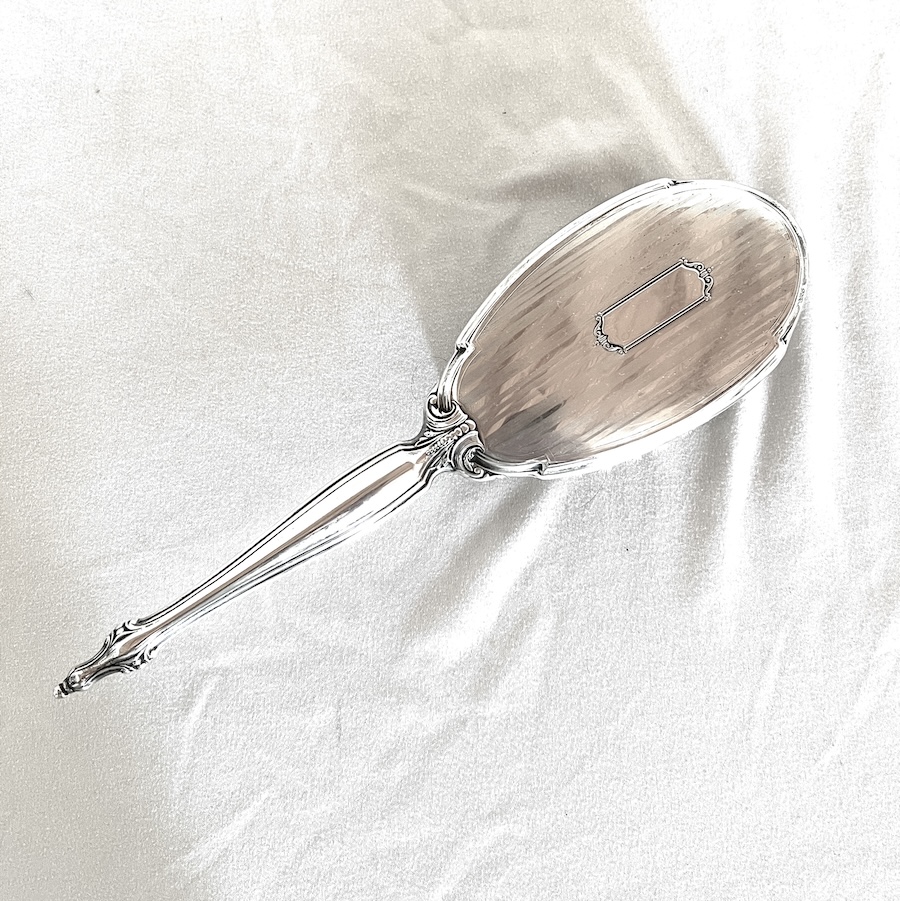
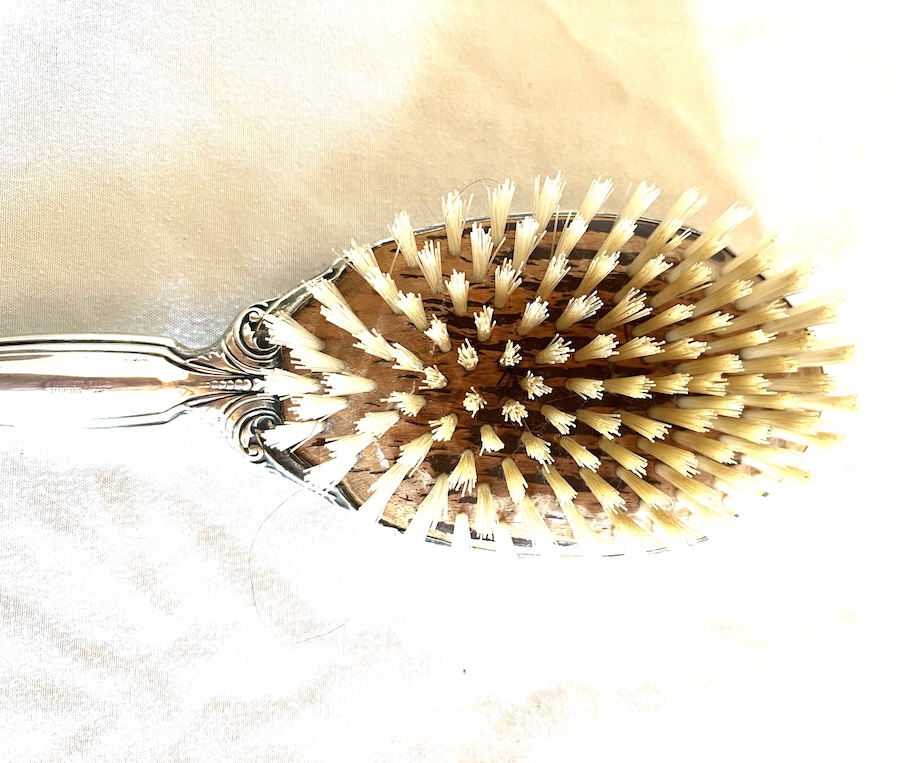
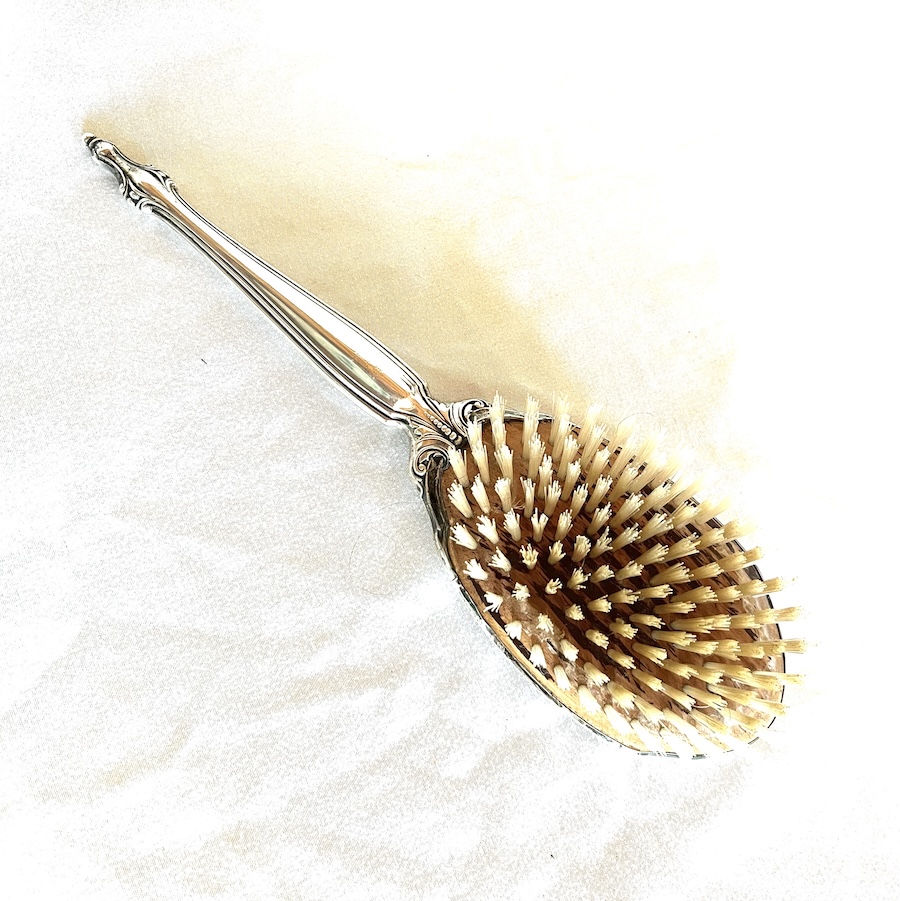
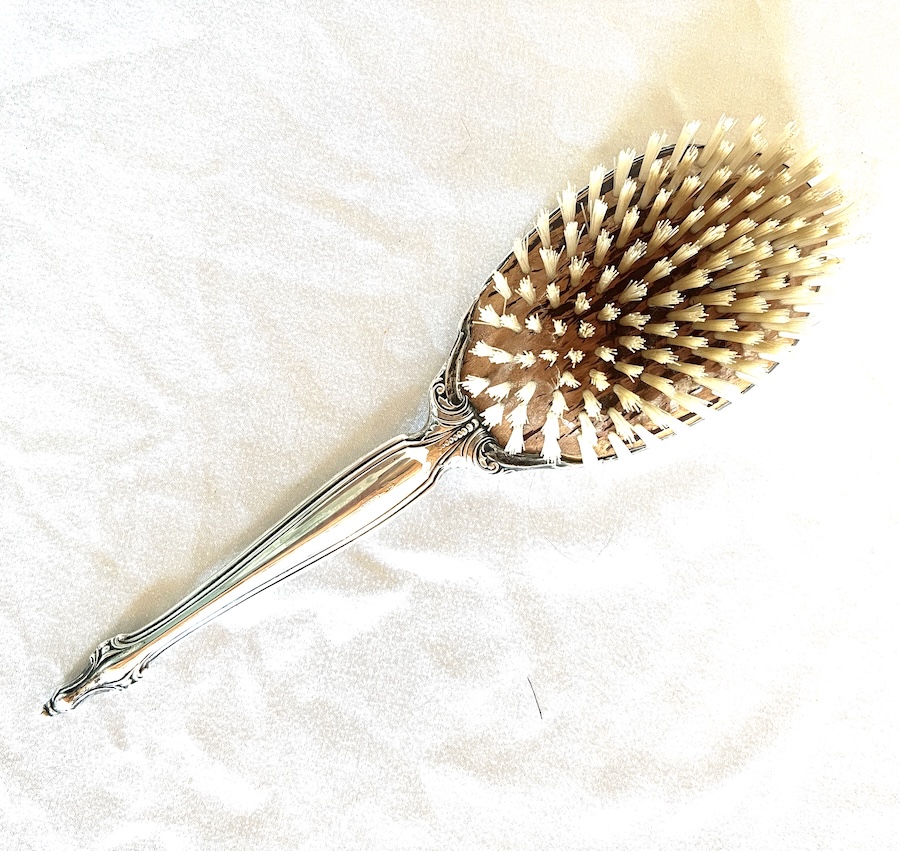
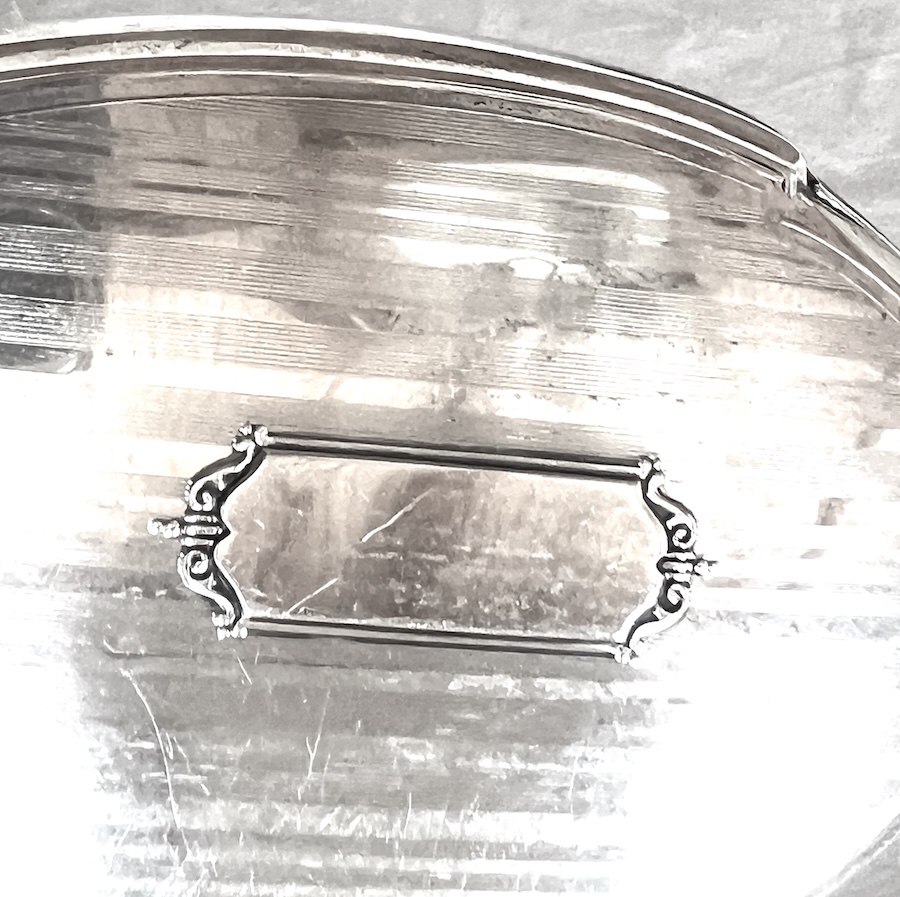
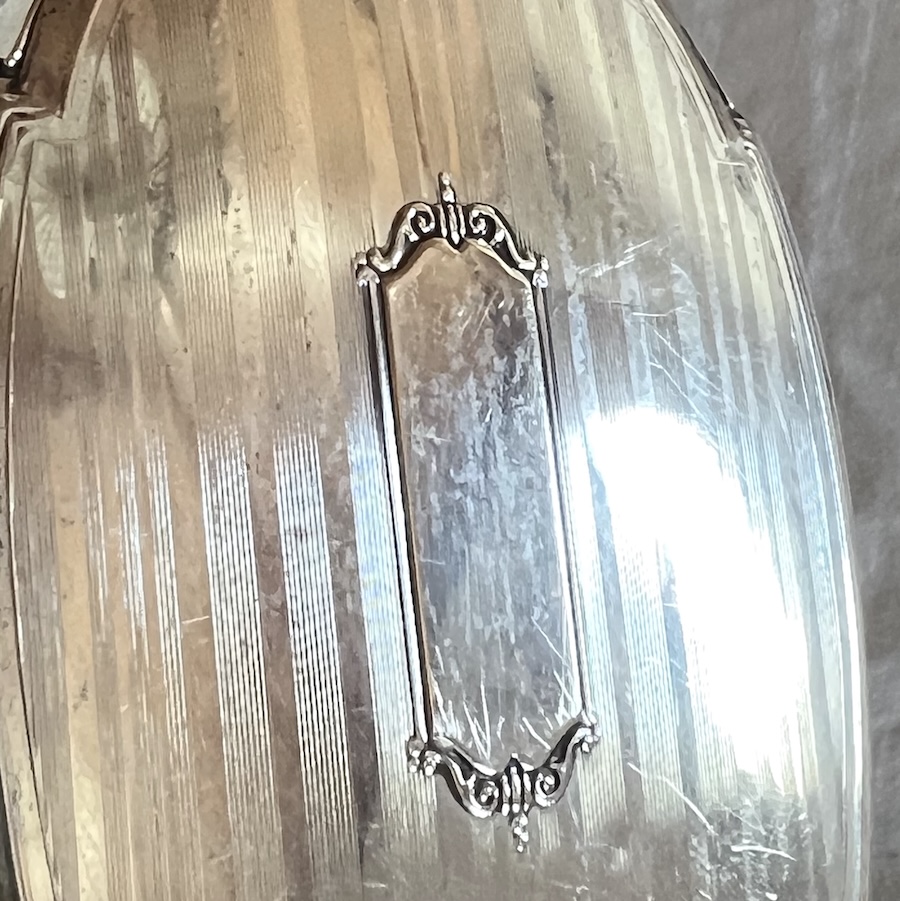
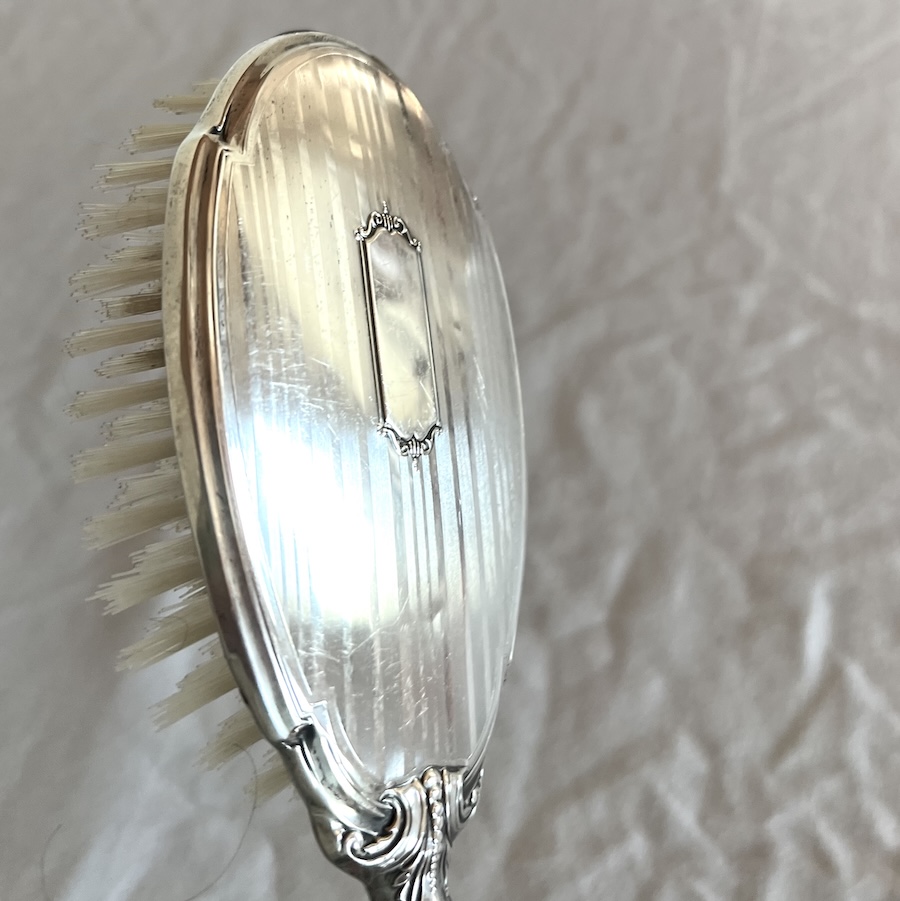
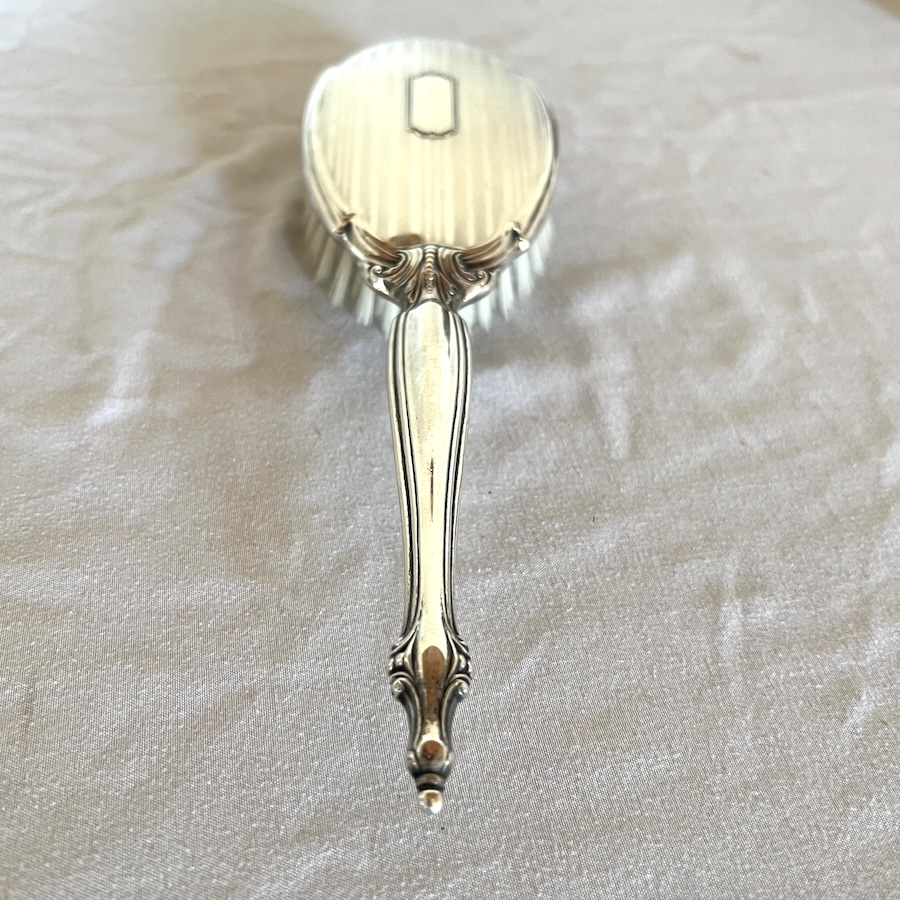
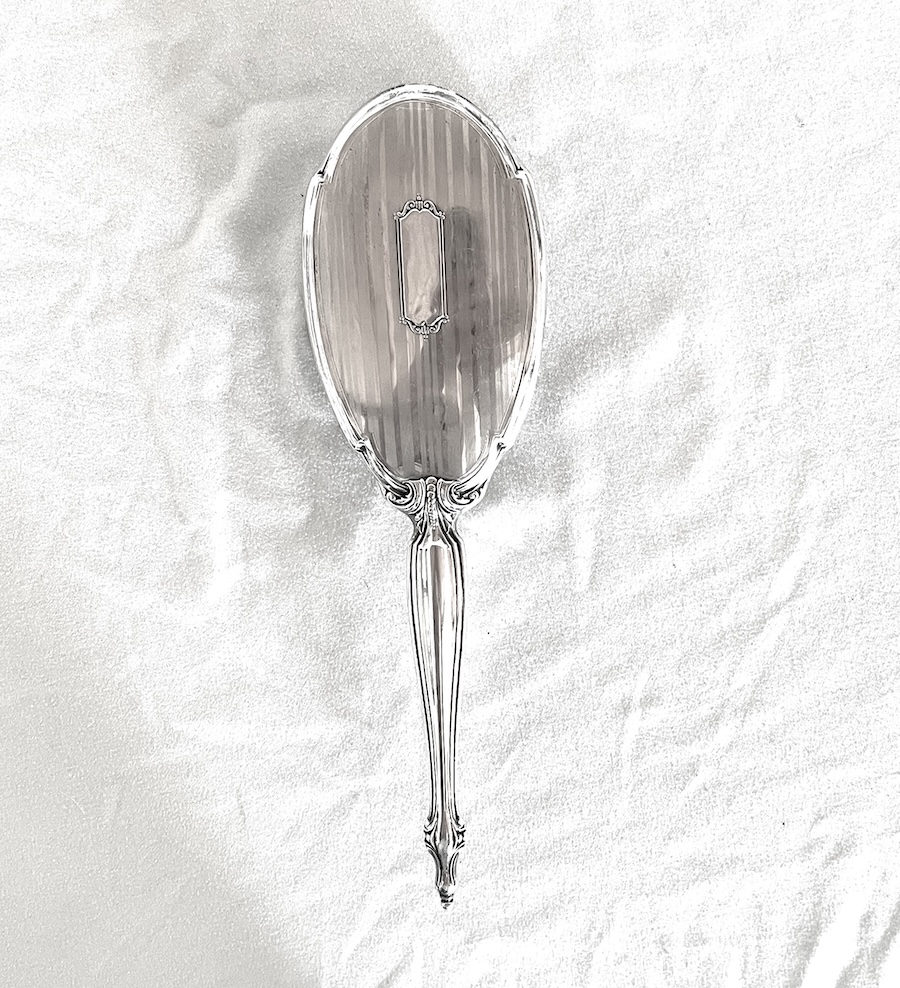
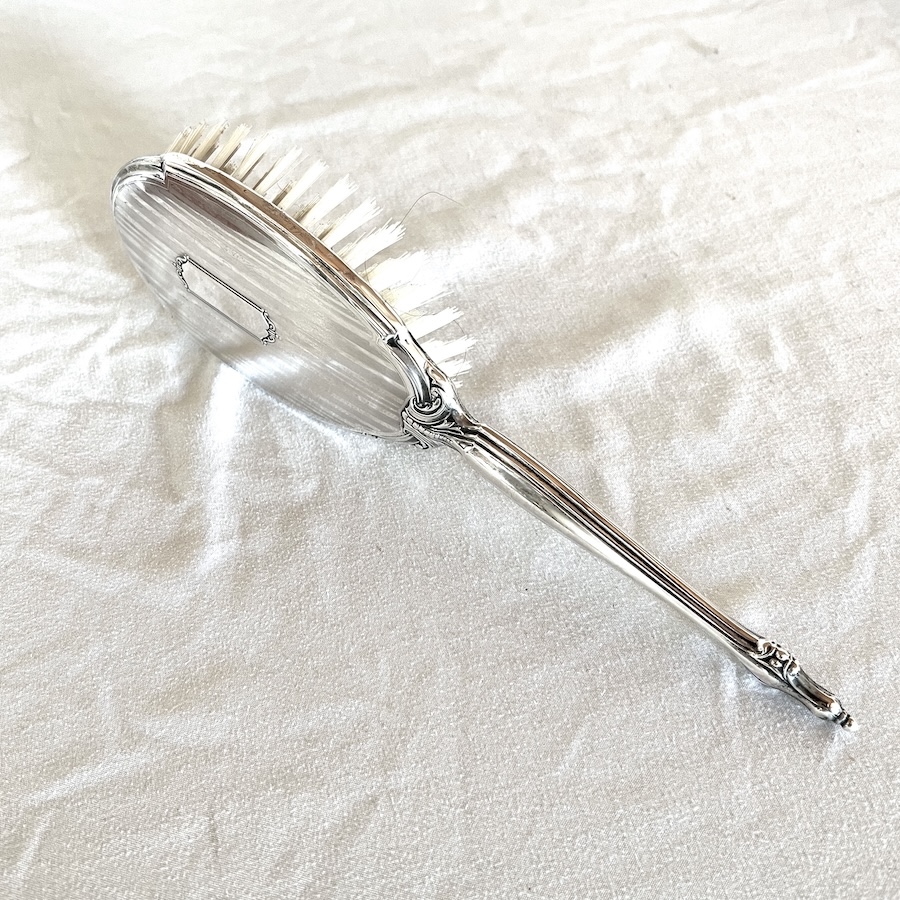
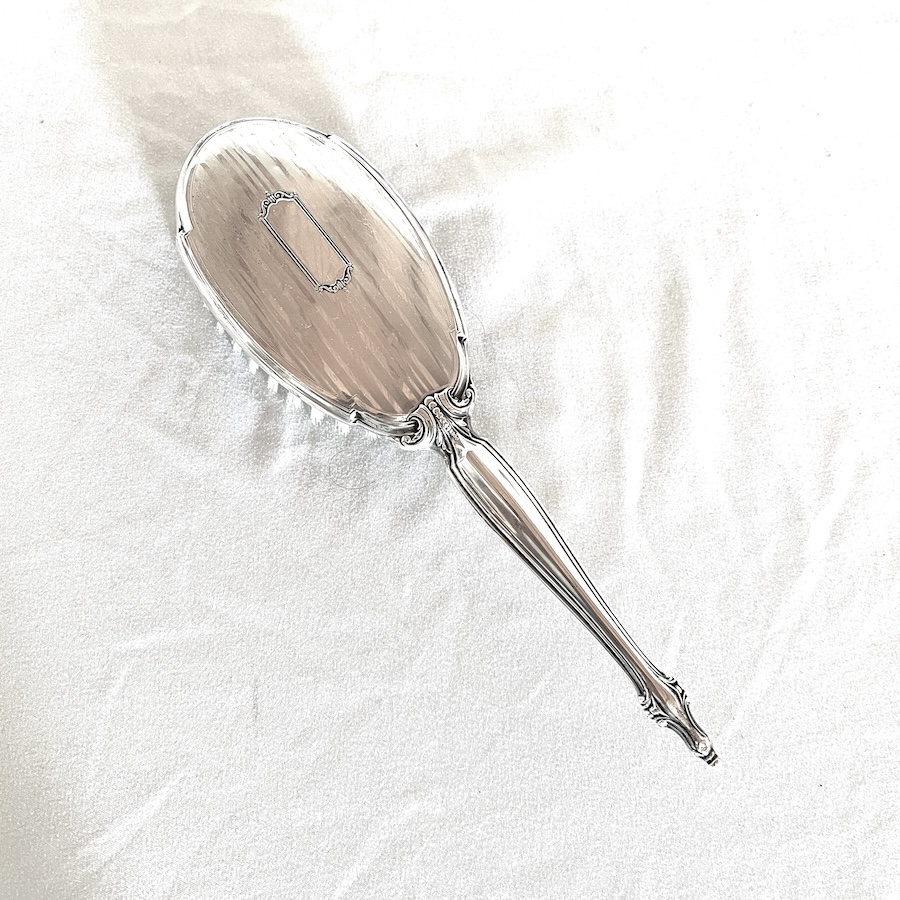
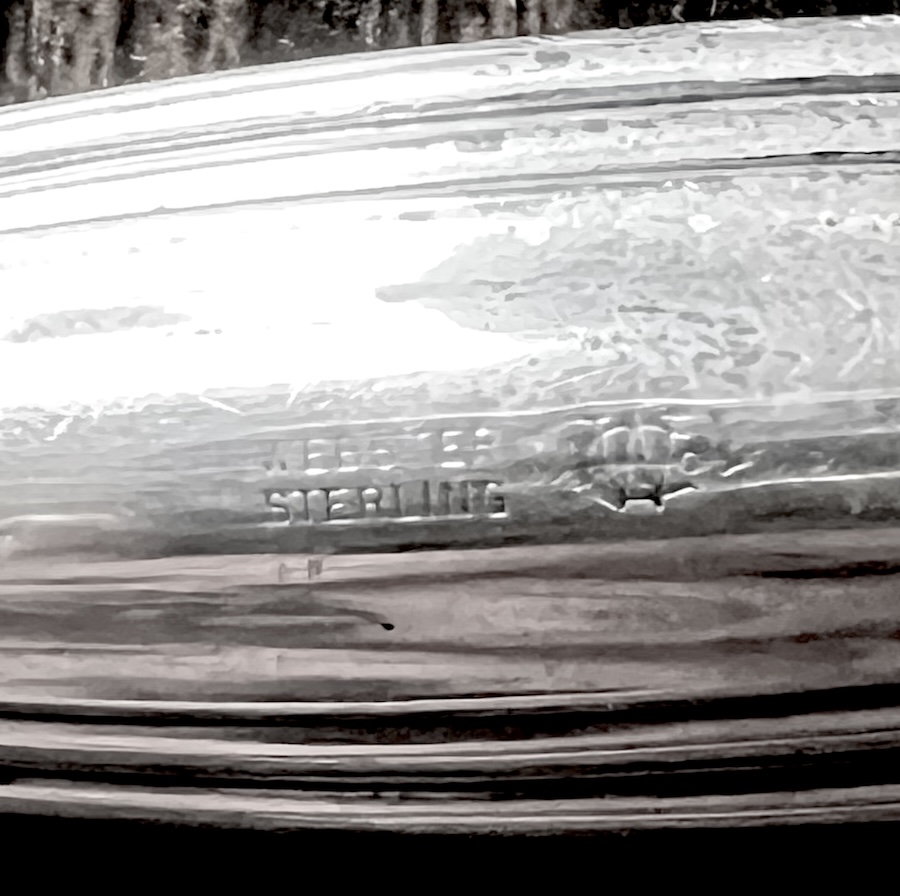
Never monogrammed and in excellent condition having no damage or repair this is a lovely vintage 1920s to 1930s Art Deco sterling silver hair or vanity table brush made by Webster Co. It has a beautiful elongated handle that tapers down to a point like Halley’s Comet design. It is marked full word sterling in old block letters and also has the 1920s-30s logo hallmark for the Webster Company. Size is 10 1/8″ long from top of brush to bottom of handle piont. Width across the center of the body is 3″ across and tapers down to 1/8″ at the bottom of the handle. A small bit of the plaster weight dislodged over the years. and there is 1 very tiny pinpoint size ding. Other than this, it is in excellent overall condition. The original blonde wood insert holding the original stiff bristles is completely intact. All of the bristles are present. No dents or tears or deep scratches. No damage or repair. All original. It came from an estate many decades ago where it was well kept over the years. All of the sterling silver is still bright and shiny ***Much Better than the photos. This is a lovely, showy Art Deco era hair brush, clothing brush, cleaning brush or your vanity table display. The Halley’s Comet design is highly noticeable.
AI Confirmation of age and maker:
The Webster Company produced this specific “pinstripe” engine-turned dresser pattern primarily during the 1920s and 1930s.
Stamp DetailsThe Text: The words WEBSTER and STERLING are clearly stamped in a block font.The Pictogram: To the right is the official Webster Company logo, featuring a prominent capital letter “W” with an arrow running horizontally straight through the center of the letter.The Composition: The STERLING mark guarantees that the piece is composed of 92.5% pure silver.Production DateWhile the design of the brush dates to the 1920s–1930s, this specific hallmark variant helps confirm it. The Webster Company used this exact combined layout—stamping the full name “WEBSTER” alongside their classic arrow-through-W logo—primarily on their mid-to-late production pieces from the 1920s through the 1940s. Earlier late-Victorian and Art Nouveau pieces from the turn of the century often relied solely on the arrow-through-W pictogram without the full name typed out.