Description
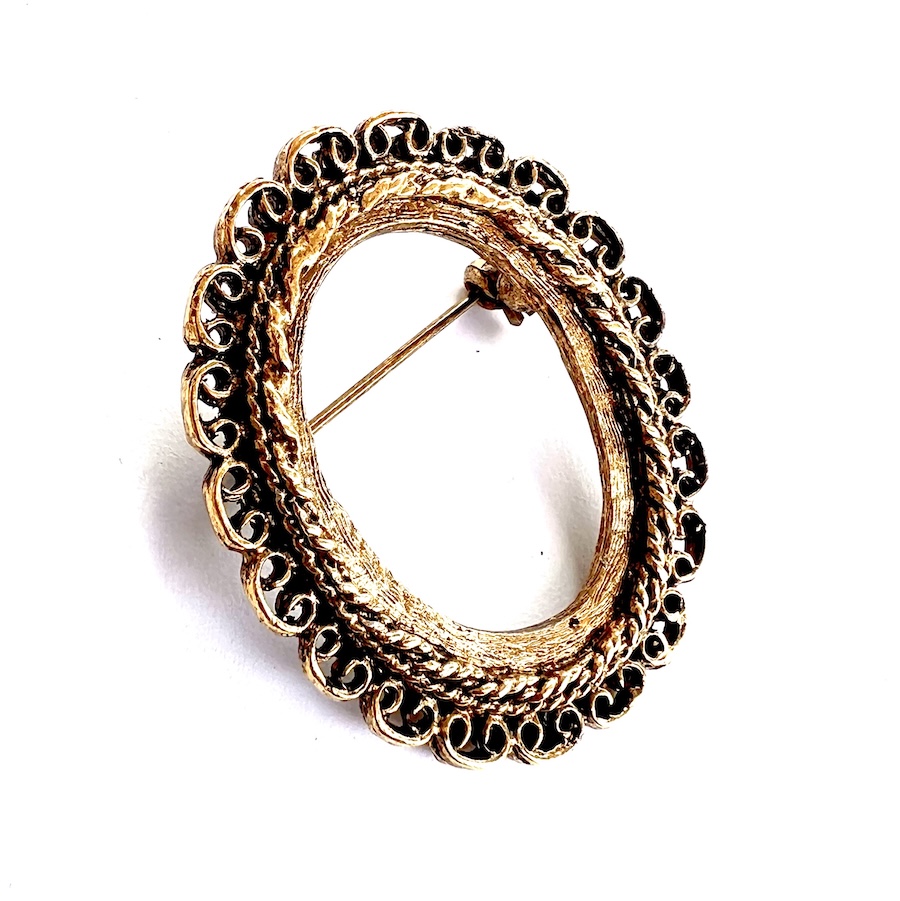
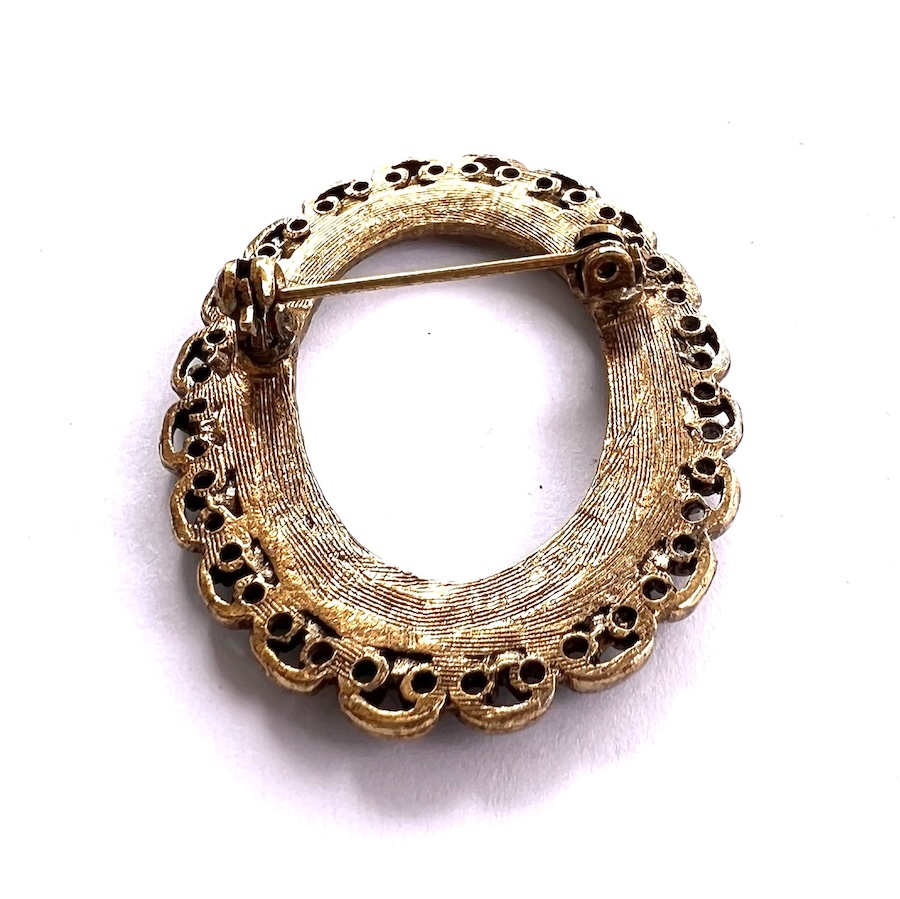
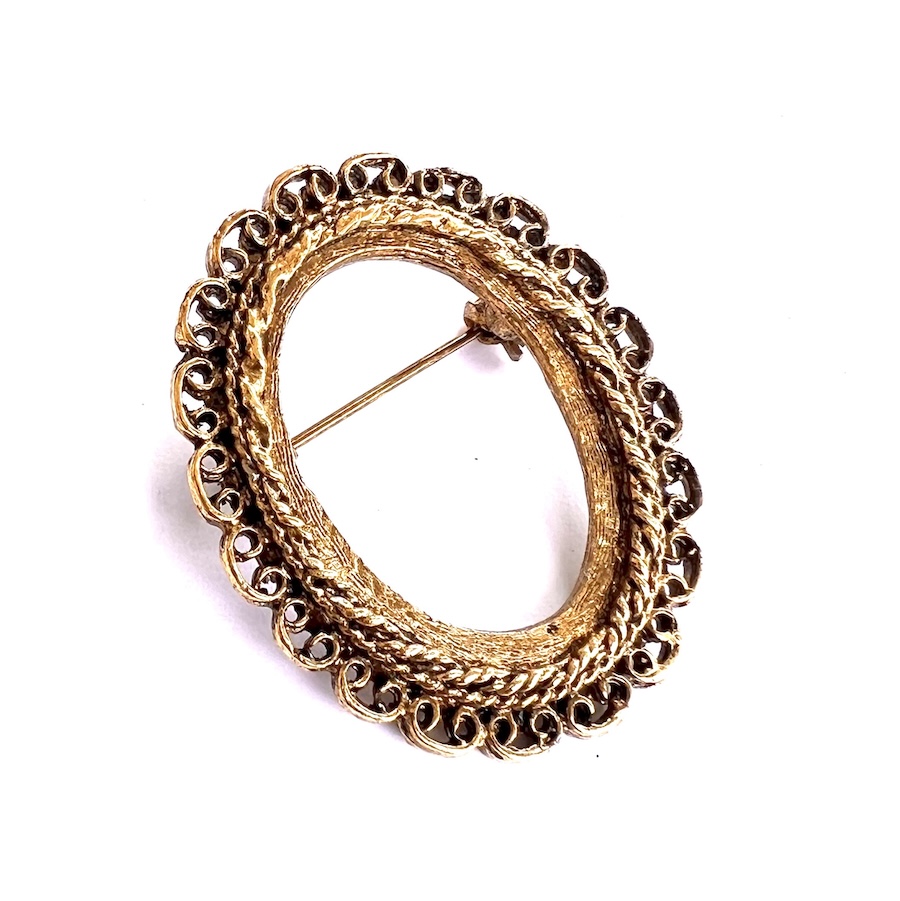
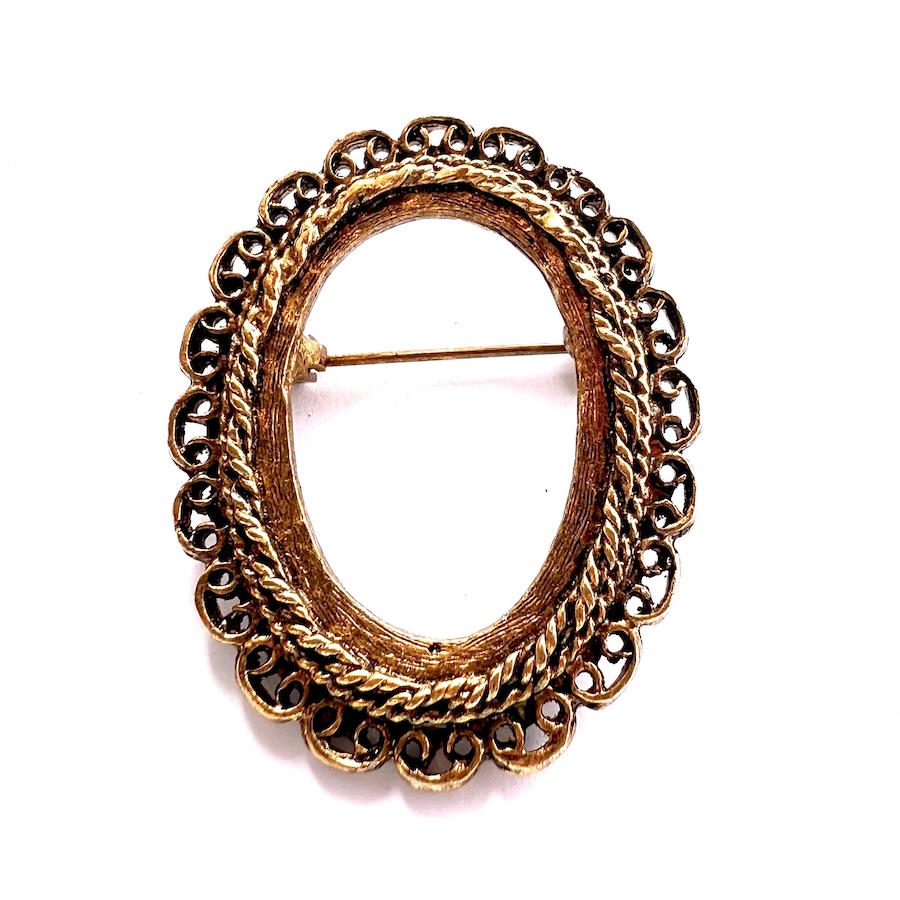
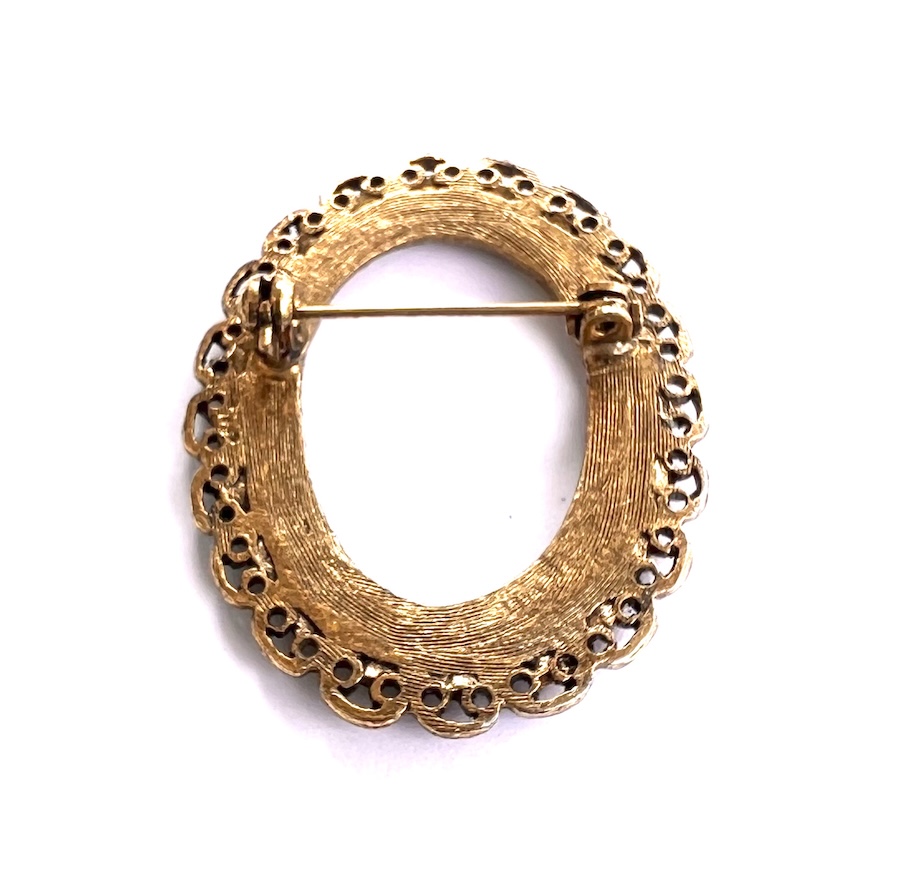
Gorgeous old store stock from the 1970s in super clean, unused original condition this is a vintage Victorian Revival portrait, painted tile, cameo, photo, frame. It has a lovely Victorian style antique gold finish like you commonly find on Goldette jewelry of the same era. Size is 1 9/16″ tall North to South tall by 1 1/4″ wide across East to West. It is thick, chunky and very noticeable with the fancyn twisted gold wrap around the bezel and the fancy filigree open work border around the perimeter. The locking clasp is strong and secure. All of the gold finish is intact and perfect. A lovely 1970s vintage Victorian Revival pin for you to mount your favorite photo, cameo or hand painted tile etc…It also looks good as a lapel pin. There is no crystal.
About 1970s Victorian Revival Silver Plate Jewelry
Google AI:
1970s gold-plated Victorian revival cameo portrait photo pin frames are considered desirable, primarily as collectible costume jewelry that offers the aesthetic of the 19th-century Victorian era at a more accessible price point. These items are popular for their romantic, “cottagecore,” or nostalgic style, often featuring detailed, ornate gold tone/plate frames that mirror authentic antique pieces.
Desirability and Market Context:
Victorian Revival Movement: The 1970s saw a resurgence in popularity for Victorian-style fashion, driving the production of these “revival” pieces.
Collectibility: They are highly sought after by collectors of vintage costume jewelry, especially those withintricate filigree or ornate framing.
Styling: These pins are frequently used to add a touch of antique elegance to modern wardrobes, suitable for pinning on jackets, scarves, or hats.
Key Features and Value Factors:
Frame Details: Highly ornate, openwork, or filigree gold frames are more desirable.
Cameo Material: While true Victorian cameos were often hand-carved shell, 1970s revival pieces typically use resin, plastic, or glass, which still have value if well-preserved.
Condition: Excellent condition with minimal plating loss is preferred. A “natural patina” on the frame is often welcomed as it enhances the antique feel.