Description
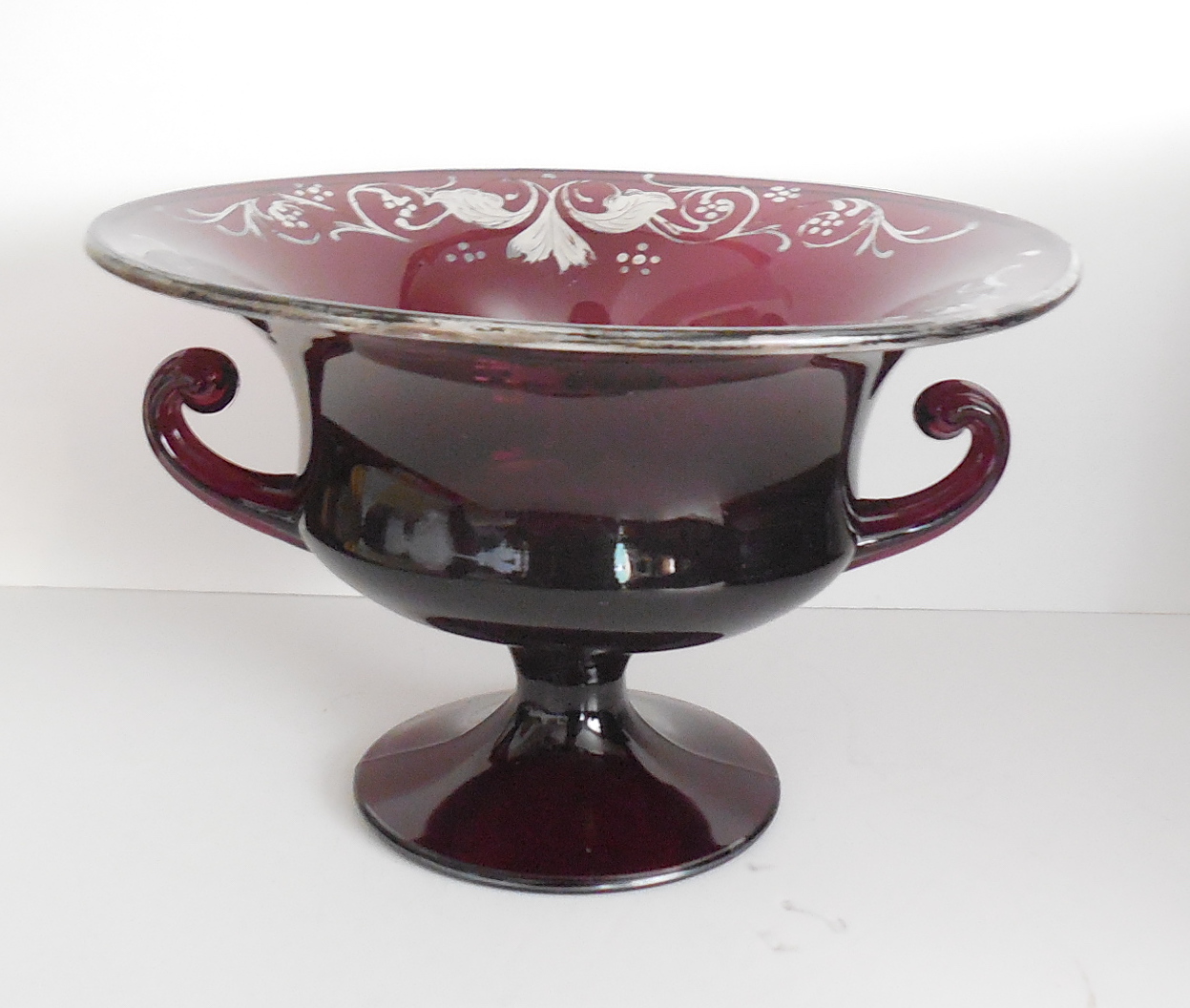
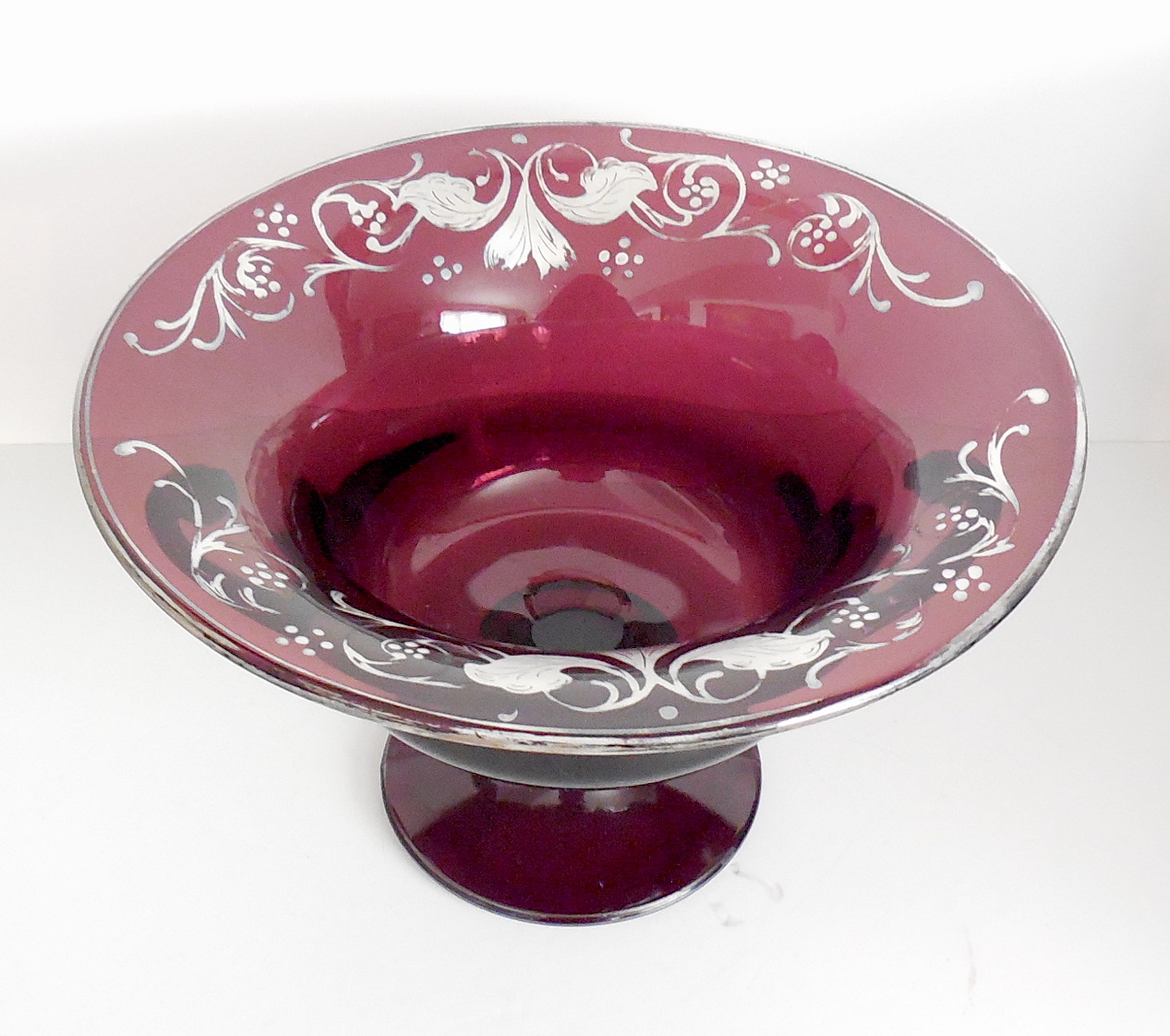
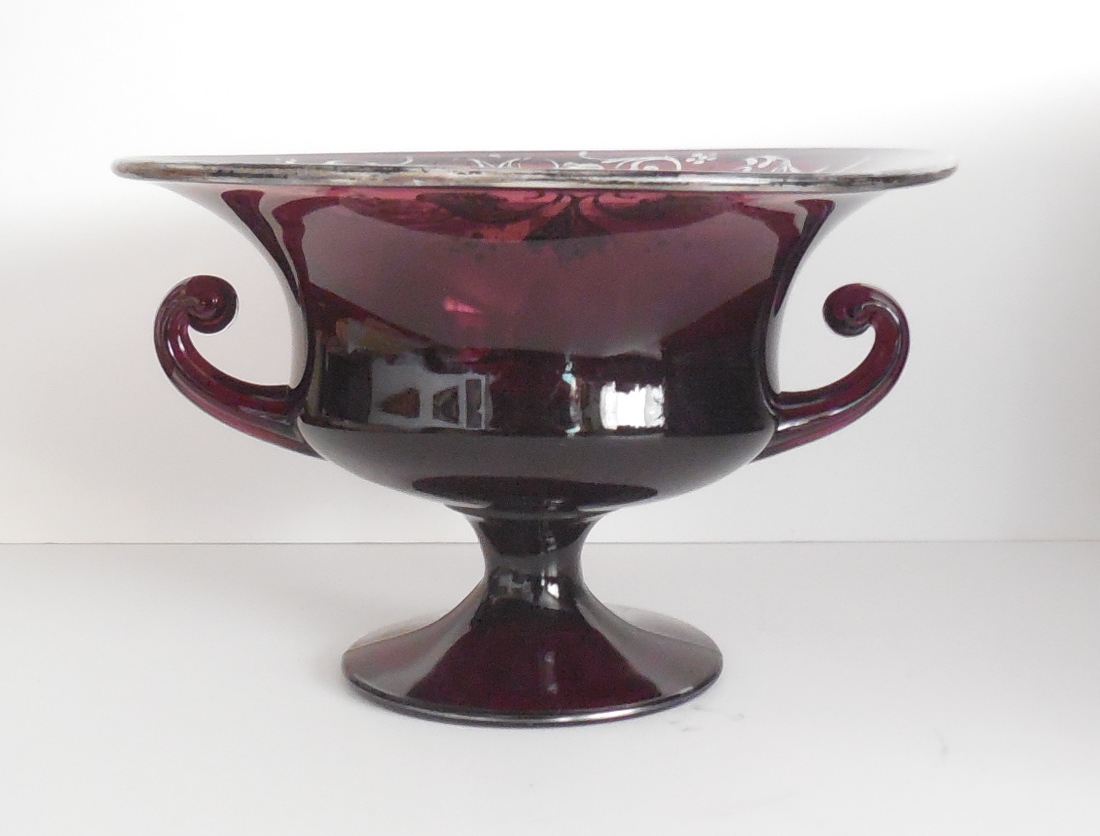
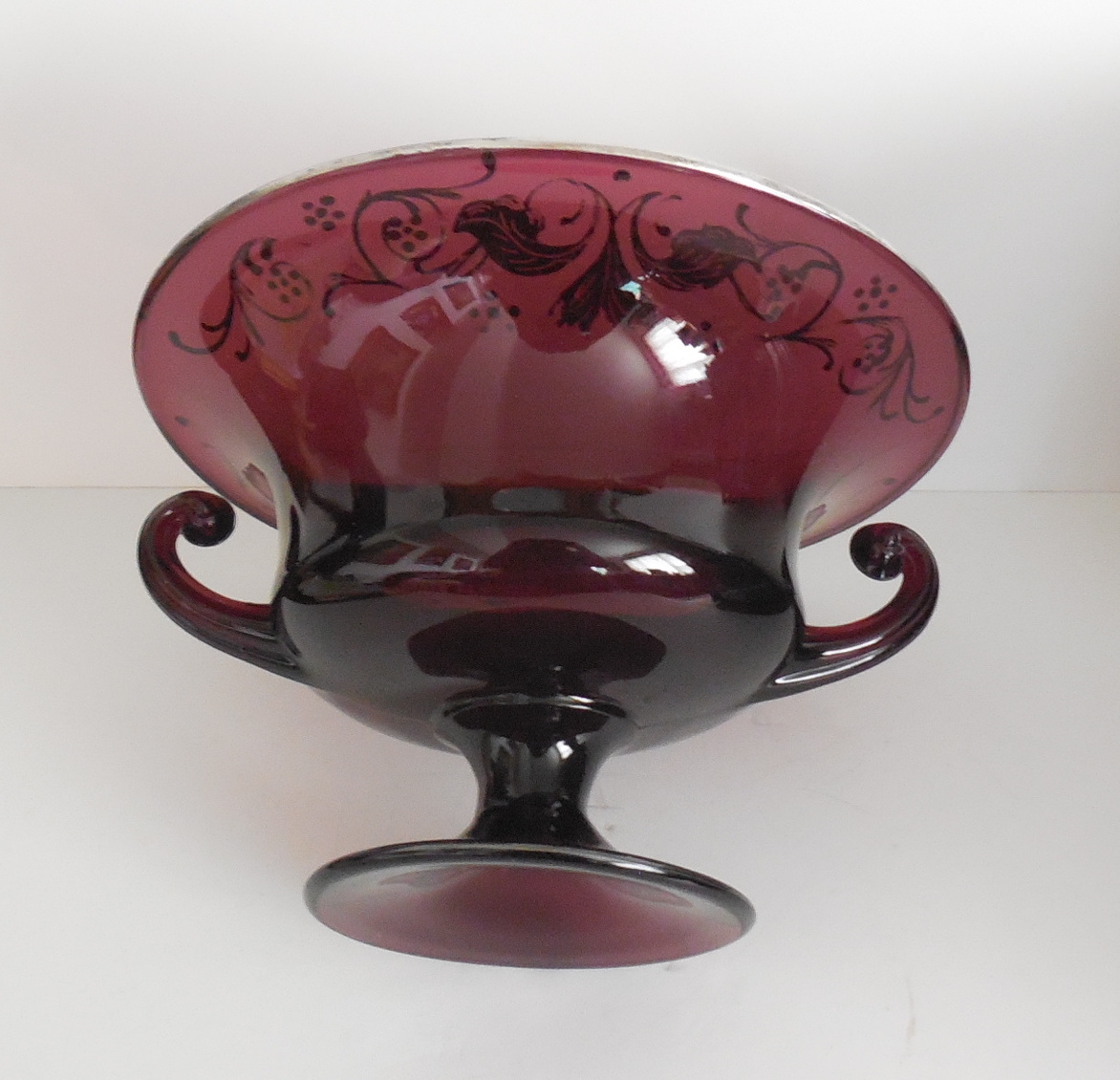
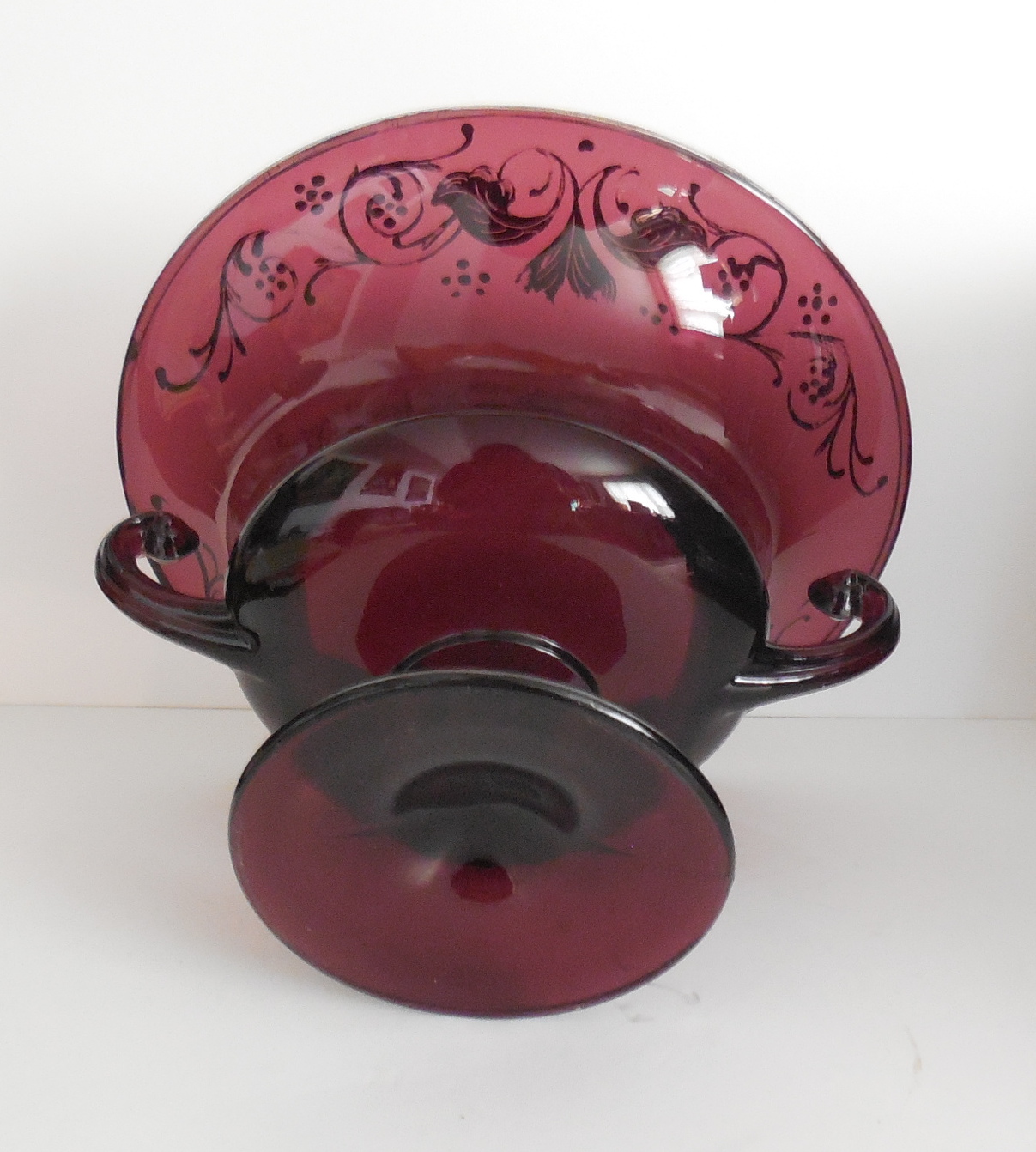
Antique Sterling Silver Overlay Amethyst Glass Fruit/Flower Centerpiece Bowl
Age: Early 1900s
Overlay: Sterling Silver
Material: Early amethyst glass, semi transparent plum color with a hint of cranberry
Size: 6 1/4″ north to south by 10″ across the top east to west by 4 3/4″ across the base
Condition: Original, Excellent, Some normal age wear to the silver. No damage or repair. No cracks, chips, flakes, nicks, hairlines or any other damage. No sickness or wear marks to the glass.
A lovely centerpiece for your formal dining table.
About Antique Amethyst Glass with Silver Overlay
Google AI and Chat GPT AI:
Plum-colored or deep amethyst glass pedestal centerpiece bowls with silver overlay (often with a cranberry or ruby cast when held to light) were most commonly made between about 1890 and the late 1920s, with the peak period roughly 1900–1915.
Here is why that date range fits the description you gave.
1. The silver-overlay technique dates to the late 19th–early 20th century
The process used to fuse decorative silver designs onto glass was patented and popularized in the late 1800s, and became fashionable on luxury tableware shortly afterward.
Typical examples included:
bowls
compotes (pedestal bowls)
centerpieces
vases and bride’s baskets
These were made to decorate formal dining tables and parlors during the Victorian and Edwardian periods.
2. Plum / amethyst glass colors were fashionable c. 1890–1920
Many American and European glass factories produced amethyst, cranberry, and “black amethyst” glass during this era. Companies such as the New Martinsville Glass Company (founded 1901) produced colored tableware including amethyst and ruby tones for decorative use.
The darker “plum” tone you describe usually occurs when:
amethyst glass is thick, or
cranberry glass has a deep tone, making it look almost purple.
When held to light it often shows cranberry red highlights, which matches your description.
3. Pedestal centerpiece bowls were typical dining-table décor
In upper-middle-class dining rooms around 1895–1915, these bowls were commonly used for:
fruit centerpieces
flower arrangements
calling-card displays
bonbons or candies
They were often placed on formal dining tables or sideboards.
Common forms included:
pedestal compote bowls
bride’s baskets
ruffled or scalloped centerpiece bowls
4. If the color is plum (not black amethyst)
That detail usually points toward:
cased amethyst or cranberry glass
Bohemian or American elegant glasscirca 1895–1915 rather than Depression-era glass
Later Depression-era pieces (1930s) were usually pressed glass patterns, often without the fine silver overlay work.
✅ Most likely age for the type you described:
About 1895–1915 (late Victorian to Edwardian period).